Can Cats Solve Problems? Understanding Their Problem-Solving Skills
Introduction: Can Cats Solve Problems?
Can Cats Solve Problems? Yes, cats can solve certain problems, although their cognitive abilities differ from human reasoning and from other animals. When a cat figures out how to reach food, open something, escape a barrier, or access a high shelf, it relies on learning, memory, observation, trial and error, and environmental awareness. Problem-solving is just one fascinating component of broader feline intelligence.
This article explores how cats solve problems, real-world examples of their cognitive skills, the factors that affect their performance, whether they learn from mistakes, and how owners can provide safe mental challenges.
Can Cats Solve Problems?
Yes. Cats can solve problems that involve finding food, reaching desired objects, navigating obstacles, and learning how specific actions produce predictable results.
What does problem-solving mean in cats?
In practical terms, feline problem-solving involves:
- Encountering an obstacle or challenge
- Trying an action
- Observing the result
- Adjusting behavior
- Reaching a desired outcome
Cats do not reason with abstract, human-like logic, but they build functional mental maps of their environment based on experience.
How feline problem-solving differs from human problem-solving
Feline problem-solving relies heavily on instinct, immediate goals, trial and error, environmental cues, and individual life experience rather than conscious planning or human-style abstract reasoning.
How Do Cats Solve Problems?
Trial and Error
Cats frequently repeat successful actions while dropping behaviors that fail. For example, a cat might push an object, reach around a barrier, shove something aside, or find an alternative route until it overcomes a block.
Learning from Consequences
Cats associate actions with direct outcomes. When pushing an object results in gaining access to food or a toy, repeating that exact action strengthens the learned behavior.
Observation and Exploration
Cats gather vital information about their surroundings through sight, smell, hearing, touch, and movement.
Memory and Previous Experience
Past experiences strongly influence future actions, helping cats recognize patterns and remember successful navigation strategies. This retention of spatial layout and environmental clues is closely tied to broader feline memory, as explored further in Can Cats Remember Where They Live? How Cats Find Their Way Home
What Are Some Examples of Cats Solving Problems?
Finding a Way Around an Obstacle
Cats routinely figure out how to walk around barriers, navigate underneath furniture, or take alternative routes to reach a person or object.
Getting Access to Food
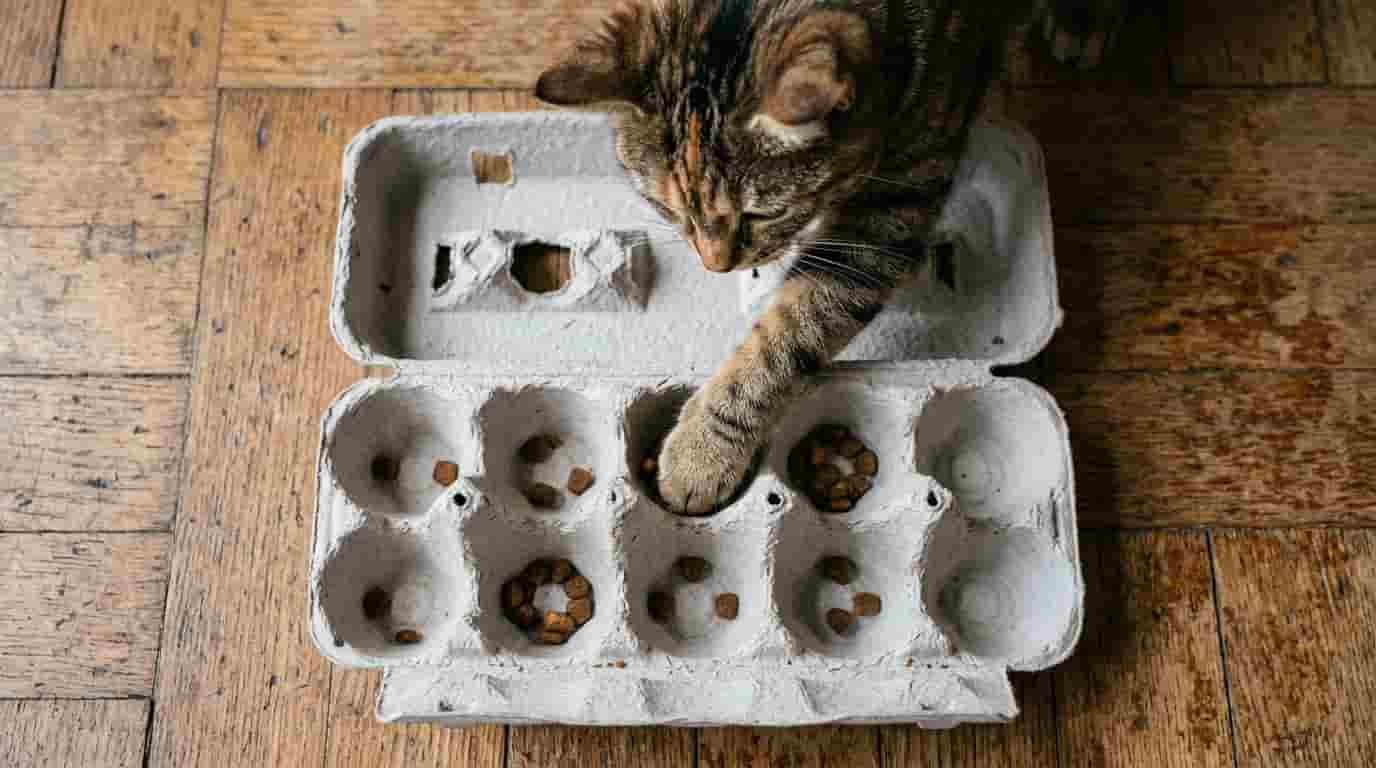
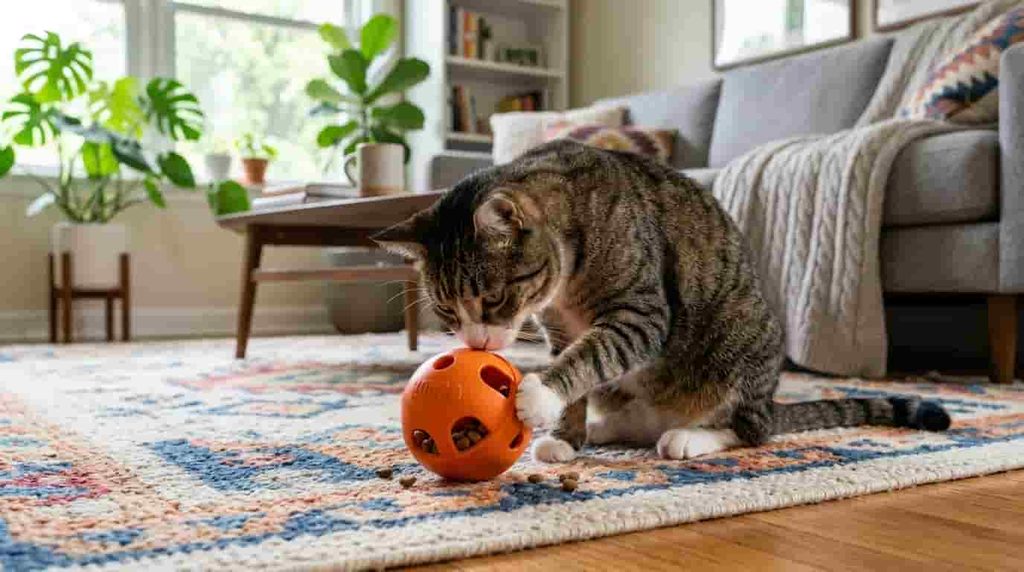
Working out how to reach food, remembering where food is stored, and manipulating simple food puzzles demonstrate clear problem-solving.
Opening or Manipulating Objects
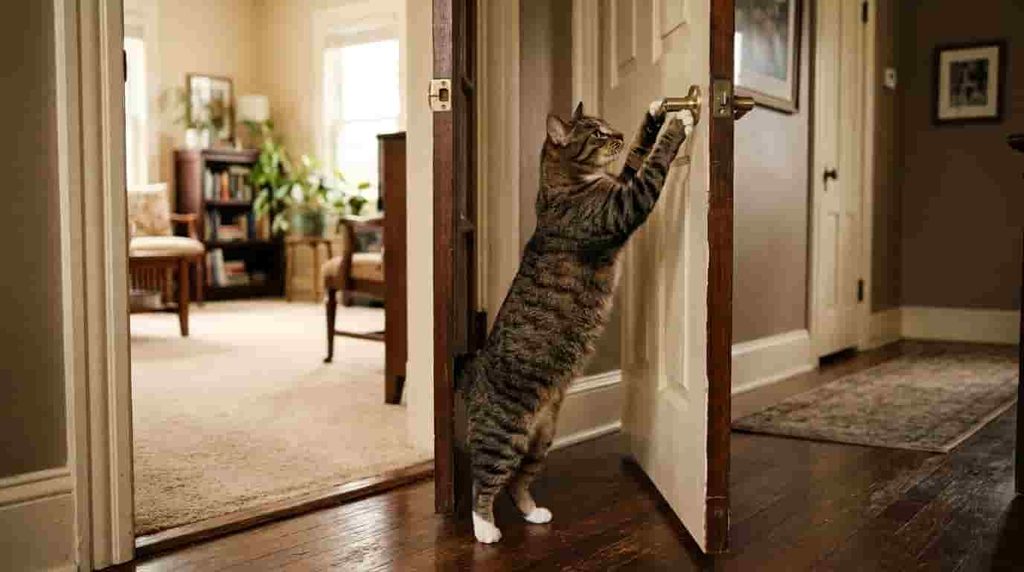
Cats often display impressive coordination by pushing doors, pulling at objects, moving lightweight barriers, or manipulating accessible handles. More complex object manipulation—such as door opening—is examined in Can Cats Learn to Open Doors? How Smart Cats Figure It Out
Finding Hidden Toys
Cats use acute sensory information and memory to locate misplaced or hidden objects.
Getting Attention from Humans
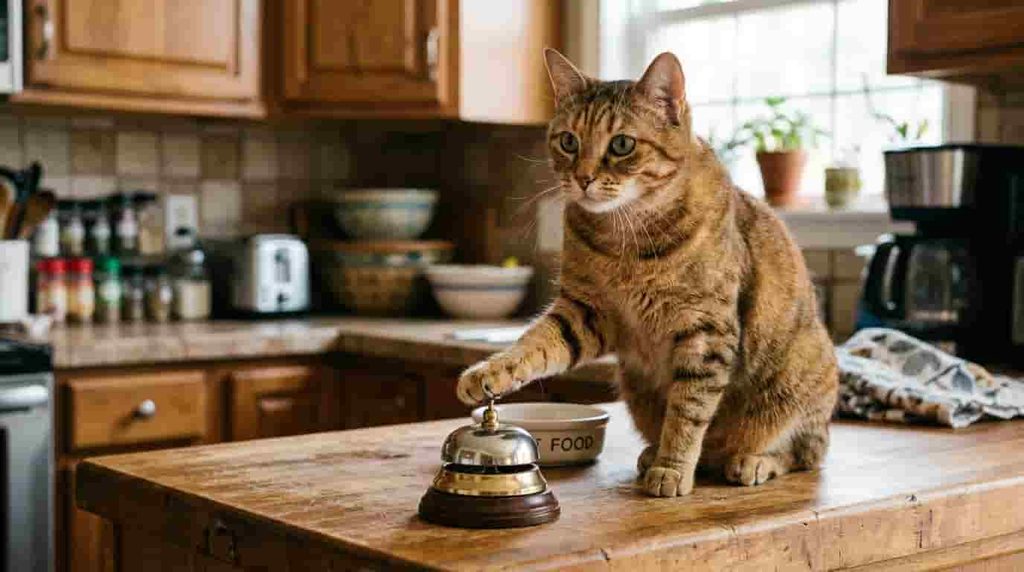
Cats quickly learn which specific vocalizations or physical behaviors produce an immediate response from their owners.
What Problem-Solving Skills Do Cats Have?
Spatial Awareness
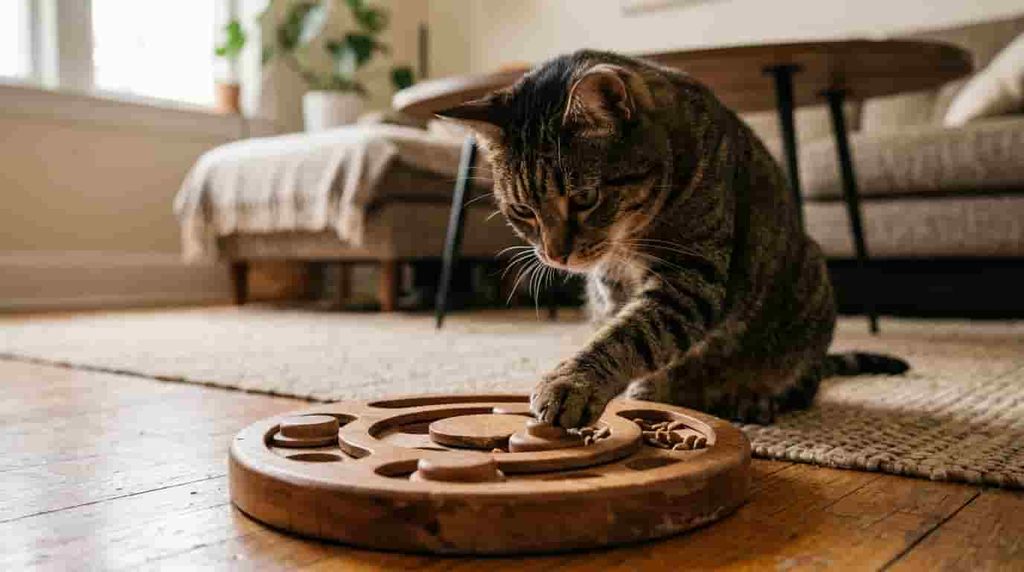
Cats understand distances, routes, object positions, and accessible spaces, which aids greatly in jumping, climbing, and navigating household furniture.
Memory
Remembering locations, routines, successful actions, and familiar objects allows cats to navigate their world efficiently.
Cause-and-Effect Learning
Cats quickly learn that one specific action produces a particular result.
Flexible Behavior
Successful problem-solving requires changing strategies rather than endlessly repeating a failed action.
Attention and Observation
Watching an environment closely helps cats decide what physical action to take next.
Are Some Cats Better Problem Solvers Than Others?
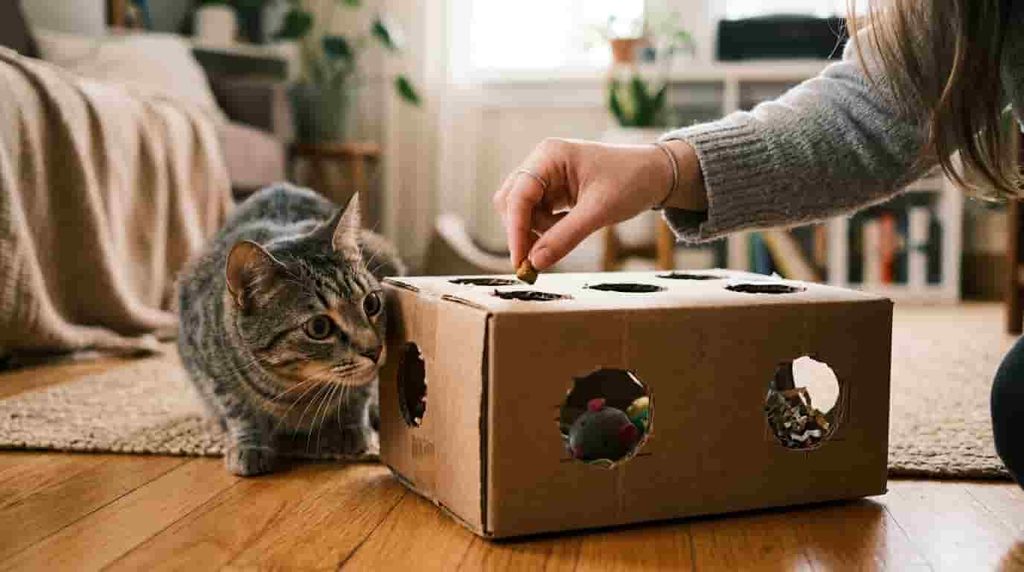
- Experience Matters: Cats with more opportunities to explore and interact with objects develop better practical skills.
- Motivation Matters: Performance improves significantly when the reward is valuable, whether it involves food, play, attention, or a preferred location.
- Personality Matters: Differences in curiosity, confidence, persistence, caution, and willingness to explore heavily influence success, though individual cats should never be broadly labeled as “smart” or “dumb.”
- Age Can Affect Performance: Kittens learn rapidly through exploration, adult cats apply previous experience, and older cats may exhibit changes in cognitive performance.
Can Cats Learn From Their Mistakes?
Cats change their behavior based on outcomes, learning which actions yield rewarding results. However, a failed attempt does not always mean a cat learned a permanent lesson, as behavior depends heavily on motivation, environment, previous experience, rewards, and stress levels. Owners may notice cats trying a new route, repeating a successful action, abandoning an ineffective strategy, or returning later to a familiar challenge.
Can Cats Solve Puzzles and Mental Challenges?
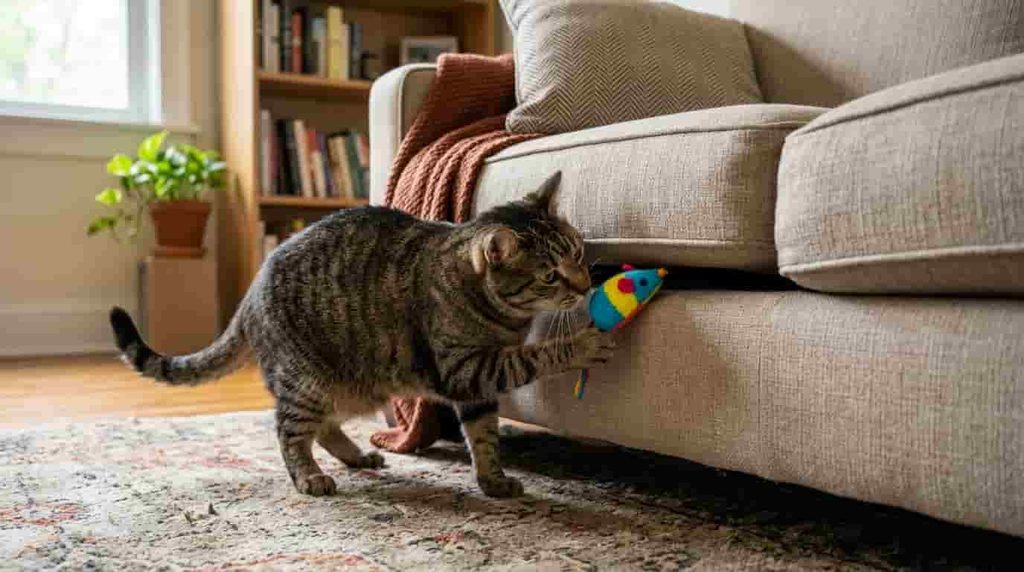
Puzzle activities and enrichment toys encourage exploration, food-seeking behavior, object manipulation, focus, and natural instincts.
Types of Problem-Solving Activities
- Food puzzles and treat-dispensing toys
- Hide-and-seek games
- Simple object-based challenges
- Finding hidden treats during interactive play
Always start with easy challenges, make the goal understandable, allow the cat to succeed, increase difficulty gradually, keep sessions short, and stop immediately if the cat shows frustration.
How Can You Encourage Problem-Solving in Your Cat?
- Introduce food puzzles gradually.
- Hide treats or toys in safe, accessible places.
- Rotate activities regularly to prevent boredom.
- Provide safe exploration opportunities, including climbing frames, boxes, tunnels, and varied textures.
- Reward useful behavior through positive reinforcement, a concept closely tied to structured training methods detailed in Can Cats Learn Tricks? Easy Tricks and Training Tips for Cats.
What Should You Avoid When Giving Cats Problem-Solving Challenges?
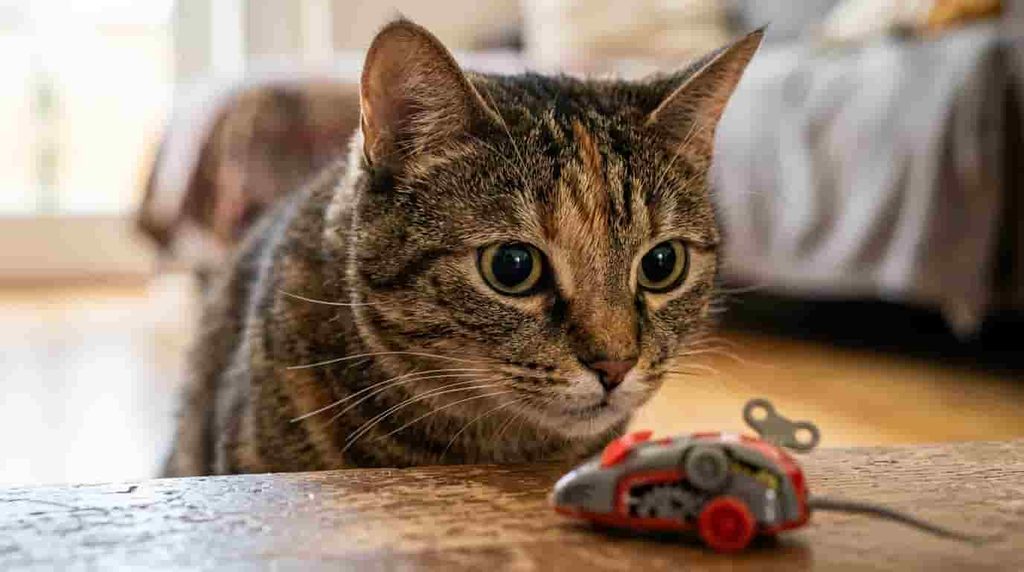
- Making Puzzles Too Difficult: Impossible challenges lead directly to frustration and disinterest.
- Using Unsafe Objects: Avoid small items that could be swallowed, sharp materials, loose strings, or objects that can collapse and trap the cat.
- Forcing Participation: Always allow cats to disengage when they choose.
- Confusing Frustration with Intelligence: A cat ignoring a puzzle may simply find it unrewarding or uninteresting.
Does Solving Problems Mean A Cat Is Intelligent?
Problem-solving is one vital sign of feline intelligence, which also encompasses learning, memory, adaptability, communication, environmental awareness, and social learning. Comparing cats can be misleading because individual strengths vary wildly—a cat that excels at opening doors may show little interest in food puzzles. Everyday intelligence is also easy to overlook in routines like anticipating feeding times or finding preferred sleeping spots.
Can Cats Learn Complex Skills?
Cats learn complex skills through repetition, rewards, and consistent training. While training involves deliberately teaching a behavior, problem-solving is a cat’s response to an obstacle. Repeated successful experiences make tasks easier over time, bridging the gap between natural problem-solving and structured training techniques found in Can Cats Learn Tricks? Easy Tricks and Training Tips for Cats
Can Cats Solve Problems Better With Practice?
Familiar challenges become easier as cats remember useful strategies and repetition builds predictable responses. Practice should always remain fun and rewarding, avoiding any transition into stressful work.
A Simple Problem-Solving Game to Try at Home
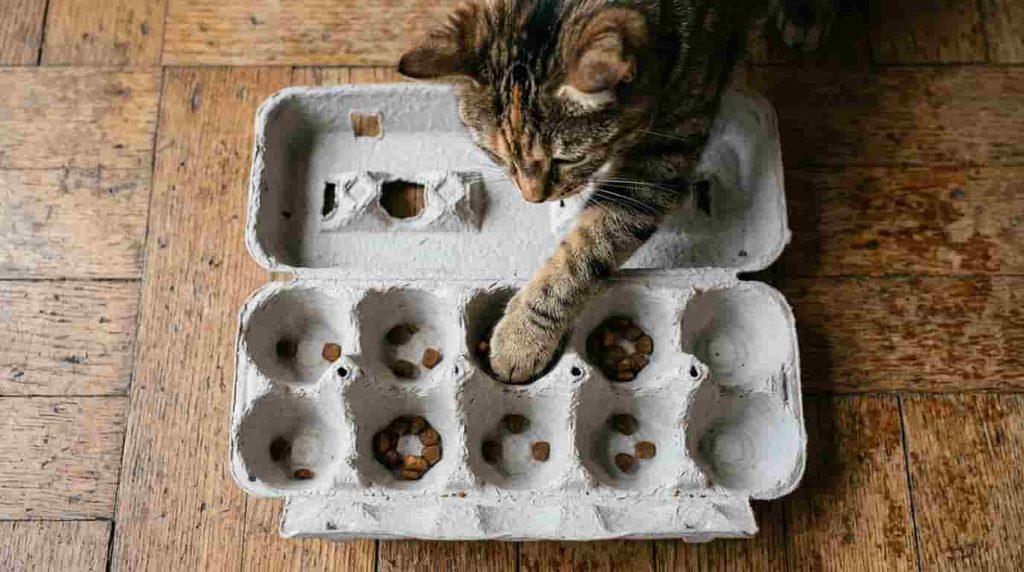
The Simple Treat-and-Box Challenge:
- Use a safe, open cardboard box.
- Place a favorite treat or toy where the cat can see it inside.
- Allow the cat to freely explore the box.
- Reward successful interaction.
- Gradually make access slightly more challenging over time, stopping if the cat loses interest.
This activity demonstrates exploration, motivation, persistence, cause-and-effect learning, and object interaction as pure enrichment rather than an intelligence test.
What Does Problem-Solving Tell Us About Cats?
Cats are capable, adaptable learners who adjust their behavior to reach specific goals. Their abilities vary widely between individuals, and motivation heavily influences performance. Problem-solving connects deeply to memory, learning, and environmental awareness, proving that a cat’s intelligence should never be judged solely by how quickly it completes a puzzle.
Frequently Asked Questions About Cat Problem-Solving
1. Can cats solve problems on their own?
Yes, cats can independently work through many simple challenges, utilizing trial and error, observation, and memory.
2. Are cats good at problem-solving?
Cats are effective problem solvers, especially when a challenge matches their individual motivation and physical abilities.
3. What is a good problem-solving toy for a cat?
Simple food puzzles and interactive treat-dispensing toys that allow for gradual increases in difficulty work best.
4. Can problem-solving activities make cats smarter?
Enrichment provides valuable mental stimulation and opportunities to learn, though it should not be viewed as a guaranteed way to increase a cat’s baseline intelligence.
5. How can I tell if my cat enjoys a puzzle?
Signs of enjoyment include active engagement, repeated attempts, relaxed body language, and returning to the activity voluntarily.
Conclusion: Can Cats Solve Problems?
Can Cats Solve Problems? Yes, cats can solve many practical problems using learning, memory, observation, exploration, and trial and error. Individual abilities vary, and motivation heavily influences performance, but safe puzzles and mental enrichment provide wonderful outlets for natural feline instincts. Problem-solving represents just one facet of the remarkable cognitive life of cats.
What is a clever problem your cat has solved, or what puzzle does your cat enjoy the most? Let us know below!