

Can Cats Remember Where They Live? How Cats Find Their Way Home
Introduction: Can Cats Remember Where They Live?
Can Cats Remember Where They Live? Cats can remember familiar places and use memory, learned landmarks, smells, environmental cues, and other navigation skills to recognize familiar territory. A cat’s ability to return home is far more complex than simply “remembering an address.”
Understanding this behavior requires exploring the difference between recognizing a familiar home, remembering a previous location, navigating through familiar territory, and finding a way back after becoming lost. Cats can become disoriented, especially after being moved, transported far away, exposed to unfamiliar surroundings, or experiencing illness or stress.
This article examines how feline memory works, how cats recognize their homes, how outdoor cats navigate, whether indoor cats remember where they live, how long cats may remember familiar places, and what owners should do if a cat goes missing.
Can Cats Remember Where They Live?
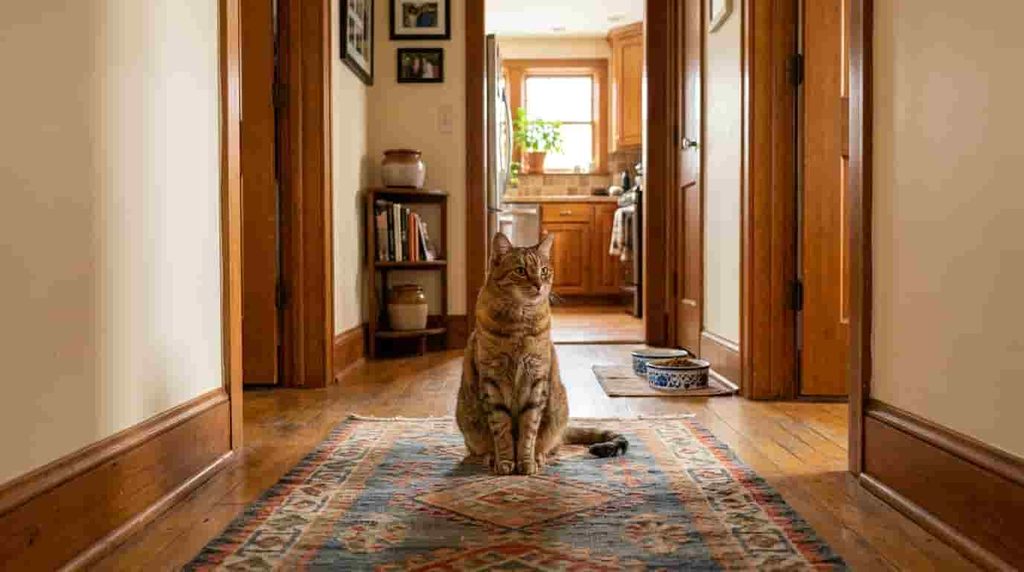
Cats can form memories of familiar environments and recognize places associated with safety, food, shelter, and routine. Because researchers cannot simply ask a cat what it remembers, conclusions about feline memory come from behavioral and cognitive research.
A cat’s “home memory” involves several types of information working together:
- Spatial memory
- Familiar smells
- Visual landmarks
- Sounds
- Routine
- Learned associations
Cats do not necessarily understand “home” in the exact same conceptual way humans do, but they build robust mental representations of safe, resource-rich territories.
What Does a Cat Actually Remember About Home?
A cat may remember:
- The layout of familiar areas
- Locations of food and water
- Sleeping and hiding places
- Entry and exit points
- Familiar people and animals
- Regular household sounds
- Familiar scents
- Routes through familiar territory
This is more accurately described as a collection of learned associations and spatial memories than a human-like mental map.
How Cats Remember Familiar Places

Spatial Memory
Spatial memory allows animals to learn relationships between locations and environmental cues. This cognitive skill helps cats move effortlessly around familiar environments, connecting food areas, resting spots, litter areas, doors, hiding places, and familiar routes.
Scent and Familiar Smells
Cats have a highly developed sense of smell. Familiar scents provide rich environmental information, helping cats identify familiar areas and recognize people or animals.
Visual Landmarks
Cats use recognizable environmental features such as buildings, fences, trees, walls, paths, and other fixed features. Familiar landmarks are particularly useful when a cat regularly travels through the same territory.
Sounds and Routine
Familiar sounds also provide vital clues, including household sounds, familiar voices, other animals, traffic patterns, and regular neighborhood activity. Cats rely heavily on these sounds to learn predictable daily routines.
Do Cats Have Spatial Memory?

Evidence indicates that cats possess strong spatial learning and memory abilities. Spatial memory allows animals to learn relationships between locations and environmental cues, which is crucial for navigation. However, spatial memory does not mean cats always know exactly where they are or can navigate any distance. It is important to distinguish between remembering a familiar route, recognizing a familiar location, and successfully navigating an unfamiliar area.
How Spatial Memory Helps Outdoor Cats
Outdoor cats rely on spatial memory to learn safe paths, territory boundaries, food sources, resting locations, places where they encounter threats, and routes between important resources.
How Do Cats Find Their Way Home?
Familiar Landmarks
Recognizable features help cats orient themselves. Familiar neighborhoods are much easier to navigate than completely unfamiliar areas.
Scent Cues
Environmental scent plays a major role, though scents can change due to weather, traffic, construction, cleaning products, and other environmental factors.
Learned Routes
Outdoor cats develop repeated travel routes. Regular movement through an area helps them become familiar with their surroundings through learned navigation rather than an unexplained “sixth sense.”
Other Possible Navigation Cues
While animal navigation studies explore factors like sun position, the Earth’s magnetic field, and environmental gradients, the exact contribution of these mechanisms to a particular domestic cat finding its way home is not fully established.
Will My Cat Come Back Home?

Some cats do return after wandering or becoming temporarily lost, but owners should never assume a missing cat will automatically find its way home. Factors that influence whether a cat returns include familiarity with the area, distance from home, indoor versus outdoor experience, age, personality, stress or fear, physical condition, and environmental obstacles. Immediate search and recovery efforts are vital if a cat disappears.
Why a Cat Might Not Return Even If It Remembers Home
Memory alone does not guarantee a safe return. Cats may fail to return due to:
- Being trapped somewhere
- Injury or illness
- Fear and panic
- Being accidentally transported
- Getting lost in unfamiliar surroundings
- Being unable to cross roads or other barriers
- Being taken in by another person
Do Indoor Cats Remember Where They Live?
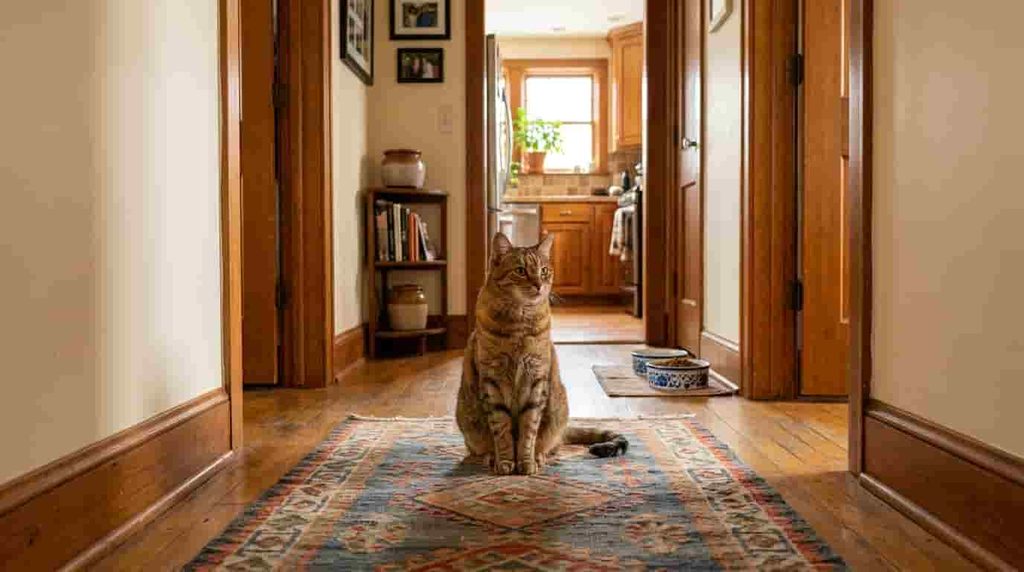
Yes, indoor cats can learn and remember their familiar home environment. Indoor cats have strong memories of rooms, feeding areas, favorite sleeping spots, doors and windows, household routines, and family members. However, an indoor cat is typically less familiar with outdoor navigation than a cat that regularly explores outside.
What Happens If an Indoor Cat Gets Outside?
An indoor-only cat reacts differently from an experienced outdoor cat, often hiding nearby, remaining silent, staying close to the escape point, becoming frightened by unfamiliar surroundings, or moving only at quiet times.
If an indoor cat escapes:
- Search nearby first.
- Check hiding places under porches and cars.
- Search quietly without loud calling that might frighten them further.
- Place familiar scents outside.
- Alert neighbors, local shelters, and animal services.
- Ensure identification and microchip information are up to date.
Do Cats Remember Where They Lived Before?
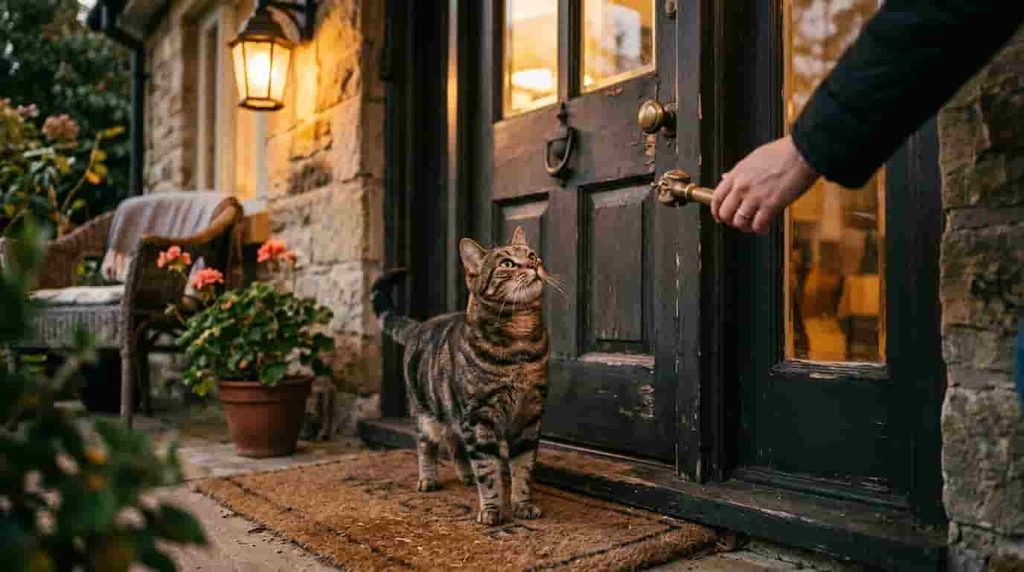
Cats can retain memories of previous environments, but the strength and duration of those memories vary. Recognizing a previous home is different from wanting to return to it, and a cat will not necessarily remember a former home indefinitely.
Do Cats Remember Their Old Houses?
Recognition depends on how long the cat lived there, how strongly the place was associated with food and safety, how recently the cat left, whether the new environment is stressful, and whether familiar scents remain.
How Long Do Cats Remember Where They Live?
There is no reliable universal time limit for how long a cat remembers a particular home. Different types of memory last for different periods, and strongly learned associations persist longer than brief or unimportant experiences.
Do Cats Remember Their Home After Being Away?
During short trips, boarding, temporary stays with family, veterinary hospitalization, or moving house, returning to a familiar environment can trigger recognition through multiple familiar cues.
How Far Away Can A Cat Find Its Way Back Home?

There is no dependable distance at which a cat can always find home. Distance alone does not determine navigation success; factors like familiarity with territory, physical barriers, buildings, weather, noise, and whether the cat wandered gradually or was transported play major roles.
How Far Away Can A Cat Smell Its Owner?
There is no reliable universal distance at which a cat can detect its owner’s scent. Scent detection depends heavily on wind, air movement, environmental conditions, odor strength, and competing smells. While cats recognize familiar scents, they cannot track an owner over great distances.
How Long Will A Cat Remember Its Owner?
Cats recognize familiar people through combinations of scent, voice, appearance, routine, and past experiences. While long-term recognition is possible, memory retention differs between individual cats and situations, and recognition does not follow a single universal timeframe.
Do Cats Have a Better Sense of Direction Than We Think?

Cats possess impressive sensory and learning abilities, but their navigation is not supernatural. They combine multiple sensory and learned cues, and success depends heavily on prior familiarity with the area. Describing a cat’s homing ability as a “GPS” is inaccurate; they rely on combined learned and sensory data rather than continuous location tracking.
Can Cats Remember a New Home After Moving?
Cats can learn a new home and build new location-based memories.
How to Help a Cat Learn a New Home
- Start with a quiet, secure room.
- Provide familiar bedding and belongings.
- Keep food and water in consistent locations.
- Maintain predictable daily routines.
- Gradually introduce additional rooms.
- Keep indoor cats safely inside during the adjustment period.
What to Do If Your Cat Cannot Find Its Way Home

- Search close to home first: Check under cars, beneath porches, in sheds, garages, and bushes.
- Search during quiet hours: Frightened cats are more active when the environment is calm.
- Use identification: Ensure microchips, collars, and tags are updated.
- Contact local resources: Notify nearby veterinary clinics, animal shelters, rescues, and community lost-pet networks.
Common Myths About Cat Memory and Homing
- Myth: Every Cat Can Always Find Its Way Home. Memory does not eliminate physical barriers or disorientation.
- Myth: Cats Know Exactly Where Their Home Is at All Times. Familiar-place recognition is not continuous location tracking.
- Myth: Cats Can Smell Their Owner From Any Distance. Environmental conditions strictly limit scent detection.
- Myth: Indoor Cats Have No Spatial Memory. Indoor cats learn detailed layouts of their homes.
- Myth: A Cat That Leaves Home Does Not Want to Return. Wandering behavior often stems from fear, traps, or disorientation rather than abandonment.
What Cat Memory Tells Us About Feline Intelligence
Remembering places is part of broader feline cognition. Cats can learn associations, remember routines, navigate familiar spaces, solve environmental problems, and adjust behavior based on experience, as explored further in Can Cats Learn to Open Doors? How Smart Cats Figure It Out, Can Cats Learn Tricks? Easy Tricks and Training Tips for Cats, and Can Cats Solve Problems? Understanding Their Problem-Solving Skills
A Simple Example of How a Cat Uses Memory

A cat that regularly spends time in a fenced garden may learn the location of the back door, favorite hiding places, feeding area, and familiar paths around the yard. If it wanders into a neighboring garden, those learned landmarks and familiar scents may help it recognize the route back. This hypothetical illustration shows how feline navigation involves several forms of memory working simultaneously.
How Cat Owners Can Support Healthy Memory and Navigation
Supporting feline cognition involves consistent routines, safe environmental exploration, interactive play, food puzzles, familiar resting spaces, microchipping, updated identification, and regular veterinary care. Mental stimulation supports normal feline behavior.
Conclusion: Can Cats Remember Where They Live?
Can Cats Remember Where They Live? Cats can remember familiar environments and build spatial memories of places that matter to them through spatial memory, smell, landmarks, sound, and learned routes. However, remembering home does not guarantee that a missing cat will return on its own, making prompt action essential if a cat disappears. Feline memory and spatial learning highlight the remarkable cognitive abilities of cats.
Has your cat ever surprised you by remembering a special place or finding its way home? Let us know below!
Frequently Asked Questions
1. Do cats remember where they live after being away?
Cats can retain memories of familiar environments, though recognition depends on prior familiarity and the duration of absence.
2. Do cats remember their old homes?
Cats can retain memories of previous environments, but there is no guarantee they will recognize or return to an old home. Familiar smells and routines aid recognition.
3. How far away can a cat find its way home?
There is no reliable maximum distance. Success depends on familiarity, environmental conditions, physical barriers, and the individual cat.
4. Do indoor cats remember where they live?
Yes, indoor cats learn detailed information about their home, including rooms, routines, resources, people, sounds, and familiar scents.
5. How long will a cat remember its owner?
Cats can recognize familiar people after periods apart through scent, voice, appearance, and learned associations, though memory duration varies by individual.