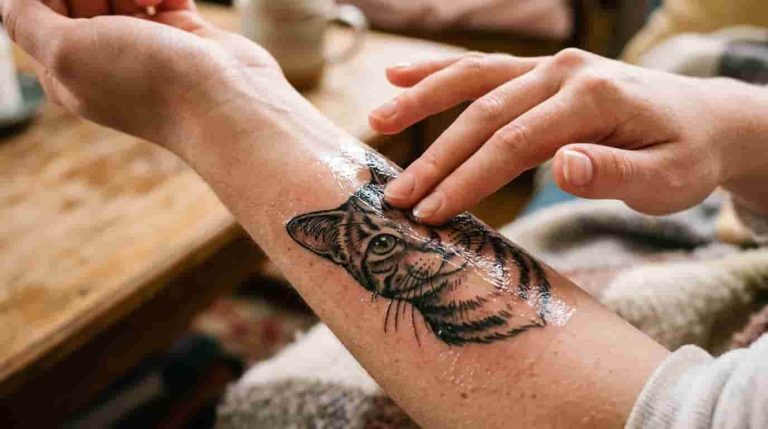

Cat Hair Loss: The Causes, Symptoms, and Solutions to Cat Hair Loss
Introduction:
Cat hair loss might surprise you during a normal grooming session. You expect some regular cat hair shedding on your furniture daily. However, finding sudden bare patches can trigger instant worry for any dedicated pet parent.
Feline alopecia is the medical term for this stressful condition. It affects many cats worldwide. You might notice your cat shedding excessively or scratching the same spot constantly. This guide will help you understand the core issues behind your pet’s thinning coat.
Furthermore, we will look beyond the usual everyday answers. We want to find real, actionable solutions for your furry friend today.
Understanding Cat Hair Loss and Its Main Triggers
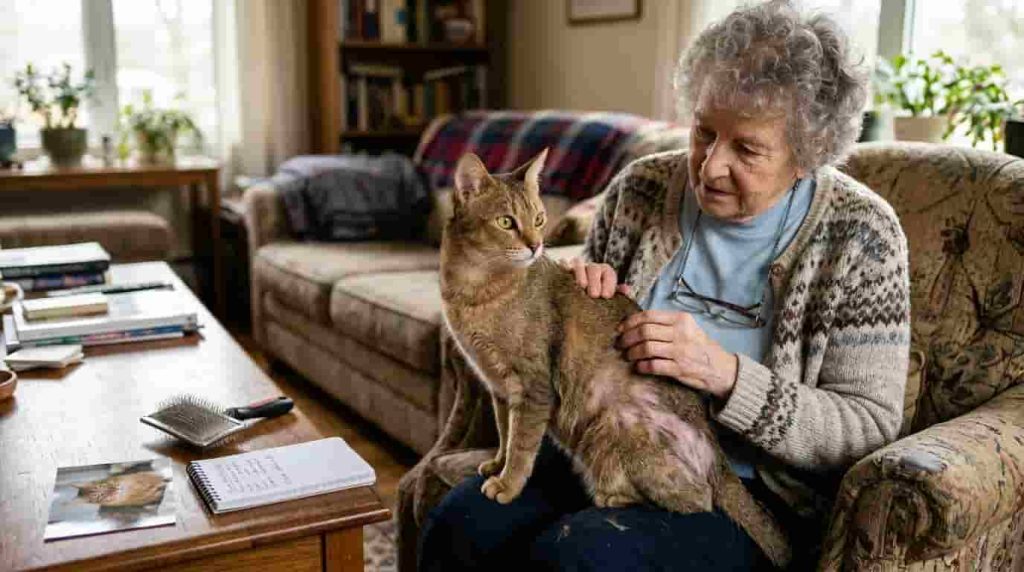
Many unique factors can cause sudden hair loss in cats. First, common external parasites like fleas cause severe itching. Cats scratch these areas constantly to find quick relief. As a result, they pull out their own fur.
Second, severe allergies often trigger rapid cat hair thinning. Your pet might react poorly to specific ingredients in their food. Additionally, environmental dust or chemical cleaners can cause bad skin reactions.
According to the Cornell University College of Veterinary Medicine, stress also plays a massive role in feline coat health. Major changes at home can cause deep anxiety. Therefore, a stressed pet might groom themselves excessively until bald spots on cats appear.
Quick Guide to Fur Loss Triggers
- Fleas & Parasites: Causes intense scratching and tiny red bumps.
- Food Allergies: Leads to chronic licking and red, inflamed skin.
- Emotional Stress: Results in compulsive grooming and bare lines on the legs.
Primary Symptoms of Hair Loss in Cats to Watch For
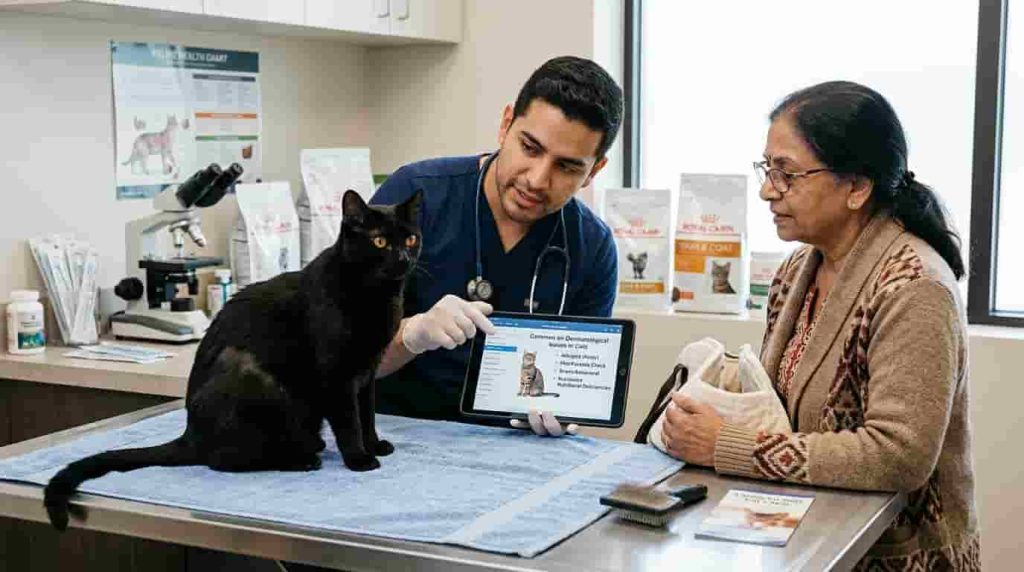
You must monitor your pet’s daily grooming habits closely. Regular licking is completely normal for a clean feline. However, constant biting or chewing at the skin signals a genuine problem.
You should check your cat’s skin for hidden warning signs. Look for unusual cat bald patches behind the ears or on the belly. Sometimes, the skin underneath looks completely normal and healthy. In other cases, you might notice scabs, redness, or flaky patches.
Physical symptoms often point to deeper underlying health problems. For example, severe internal health imbalances can weaken fur roots over time. If your cat shows other warning signs like weight changes or litter box issues, investigate immediately. You can read about [cat UTI signs] to understand how internal stress alters feline behavior.
Common Cat Skin Conditions That Destroy Fur
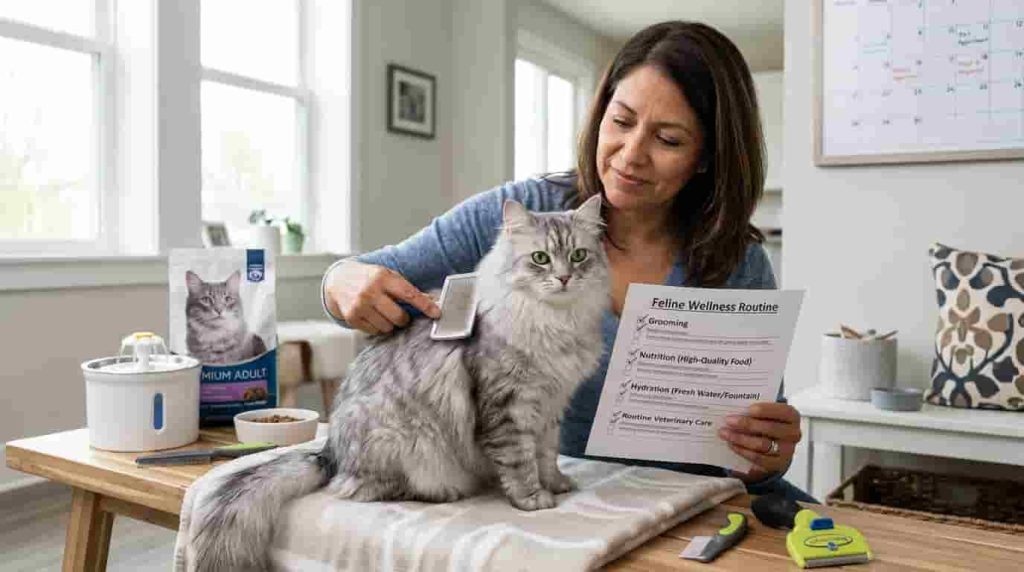
Ringworm is a highly contagious fungal infection that targets feline skin. It creates perfectly circular cat bald spots that look red and scaly. This fungus feeds directly on the protein in your cat’s hair shafts.
Mites can also burrow deep inside your cat’s ears and skin layers. This infestation causes intense irritation and constant scratching. Consequently, the fur falls out in large clumps around the head and neck.
Chronic bacterial infections also block healthy hair growth. These infections usually develop after a cat breaks the skin from scratching. A wounded cat might also suffer from internal parasites. You can check for [cat worm symptoms] to ensure parasites are not draining your pet’s vital nutrients.
Treating Cat Hair Loss Safely at Home

Your trusted veterinarian must diagnose the exact issue first. Then, you can start a targeted treatment for cat hair loss. For example, your vet might prescribe specific topical medications to kill stubborn parasites.
Dietary changes can also yield excellent results for allergic pets. You can switch to a limited-ingredient diet to eliminate common allergens. Additionally, omega fatty acid supplements help strengthen the skin barrier effectively.
Consider the real life example of a cat named Max. Max developed large, symmetrical bald spots on his lower back. His owner discovered a hidden flea allergy was causing the severe reaction. After starting proper flea control and soothing topical baths, Max stopped chewing his fur completely.
Effective Cat Hair Loss Remedies and Prevention Tactics

Preventing hair loss in cats requires a very consistent daily routine. First, apply high quality flea prevention treatment every single month without fail. This single step prevents the most common trigger for feline fur loss.
Second, reduce environmental stress inside your home. Provide quiet hiding spaces and interactive toys to keep your cat calm. Calm cats do not engage in nervous over-grooming behaviors.
Regular brushing also helps you spot early signs of feline alopecia. You can detect thinning areas before they turn into large bald patches. If you notice other issues during grooming, like irritated eyes, read about [cat eye redness] to help them recover quickly.
The Path to Regrowing Cat Hair Successfully
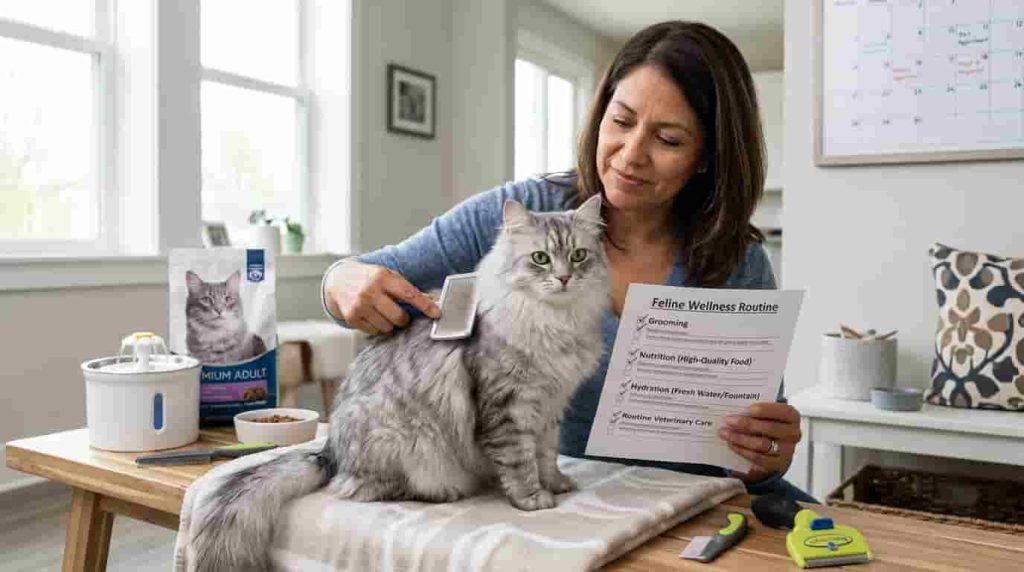
Patience is absolutely essential when managing cat hair loss over time. Feline fur grows in distinct cycles. Therefore, you will not see new hair overnight.
It usually takes several weeks for fresh peach fuzz to appear on the skin. Keep your cat away from known allergens during this recovery period. Furthermore, ensure they receive premium nutrition to support new hair production.
You can visit the ASPCA website for more expert tips on feline wellness. They offer excellent resources on maintaining a safe home environment for recovering pets. With proper care and time, your cat’s coat will regain its beautiful, glossy shine.
Conclusion
In conclusion, managing cat hair loss requires careful observation and quick action. You must identify the core reasons for cat hair loss to choose the right remedy. Your veterinarian can guide you through the best cat hair loss treatment for your specific situation.
Protecting your cat’s coat involves reducing stress, giving good food, and preventing pests. Start your cat hair loss prevention plan today to keep your pet comfortable. Soon, you will see healthy fur regrowing beautifully.
Did your pet ever lose their fur? Please share your personal experiences in the comments below to help other cat owners!
Frequently Asked Questions
Your cat might have fleas, a fungal infection, or a food allergy. These issues cause intense itching, so cats lick themselves until bald spots form. Stress can also cause compulsive grooming.
Yes, anxiety triggers a behavioral condition called psychogenic alopecia. Stressed cats lick their skin continuously to soothe themselves. This habit eventually pulls out the hair.
You should use monthly flea prevention and feed your cat premium food. Keep their environment calm and brush their coat gently every day. Always consult your vet before applying home remedies.
Yes, the fur usually grows back once you treat the root cause. The regrowth process takes time because feline hair grows in slow cycles. You will notice new fuzz within a few weeks.
You should see a vet if the skin looks red, scaly, or starts bleeding. Also, seek help if your cat seems miserable and scratches constantly. A vet will find the exact cause quickly.