7 Ancient Cat Traditions That May Surprise You
Introduction:
Ancient cat traditions often leave modern pet owners scratching their heads. Have you ever wondered why your cat insists on sitting in a sunbeam for hours? Perhaps you question why they guard the door when you use the restroom. These quirky behaviors actually stem from deep roots in feline history.
Many people view their cats as simple house pets. However, these animals carry a rich legacy within their DNA. By learning about ancient cat traditions, you gain a better understanding of your companion. Let us explore the fascinating world of feline folklore together.
The Roots of Ancient Cat Traditions
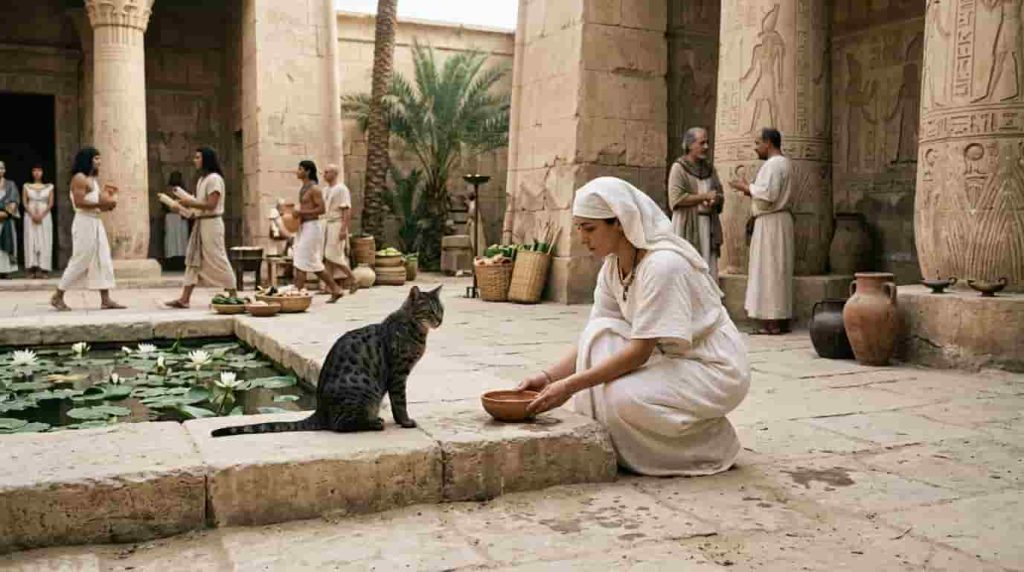
Ancient cat traditions started long before humans invited cats into their homes. Scientists at the Cornell University College of Veterinary Medicine note that cats became domesticated on their own terms. They realized that human grain stores attracted mice. Consequently, cats moved closer to human settlements to hunt.
This partnership changed everything for the species. Early humans respected these predators for their efficiency. As a result, many cultures developed unique ceremonial cat practices to honor them. These actions were not just habits but expressions of deep respect.
Furthermore, these ancient cat traditions helped shape the way cats interact with us now. Your cat still possesses the hunting instincts that once made them legends. When your cat brings you a “gift,” they are following an ancient feline tradition of sharing prey. Understanding this helps you see that your cat is a tiny hunter.
If you want to dive deeper into how history shaped our view of cats, you should read 7 Ancient Cat Myths That Survived For Thousands Of Years. It clarifies why some old stories still influence how we treat our pets. Also, consider learning more about the 7 Reasons Ancient Egyptians Worshipped Cats to see the full scope of their historical influence.
Rituals and Historic Cat Beliefs

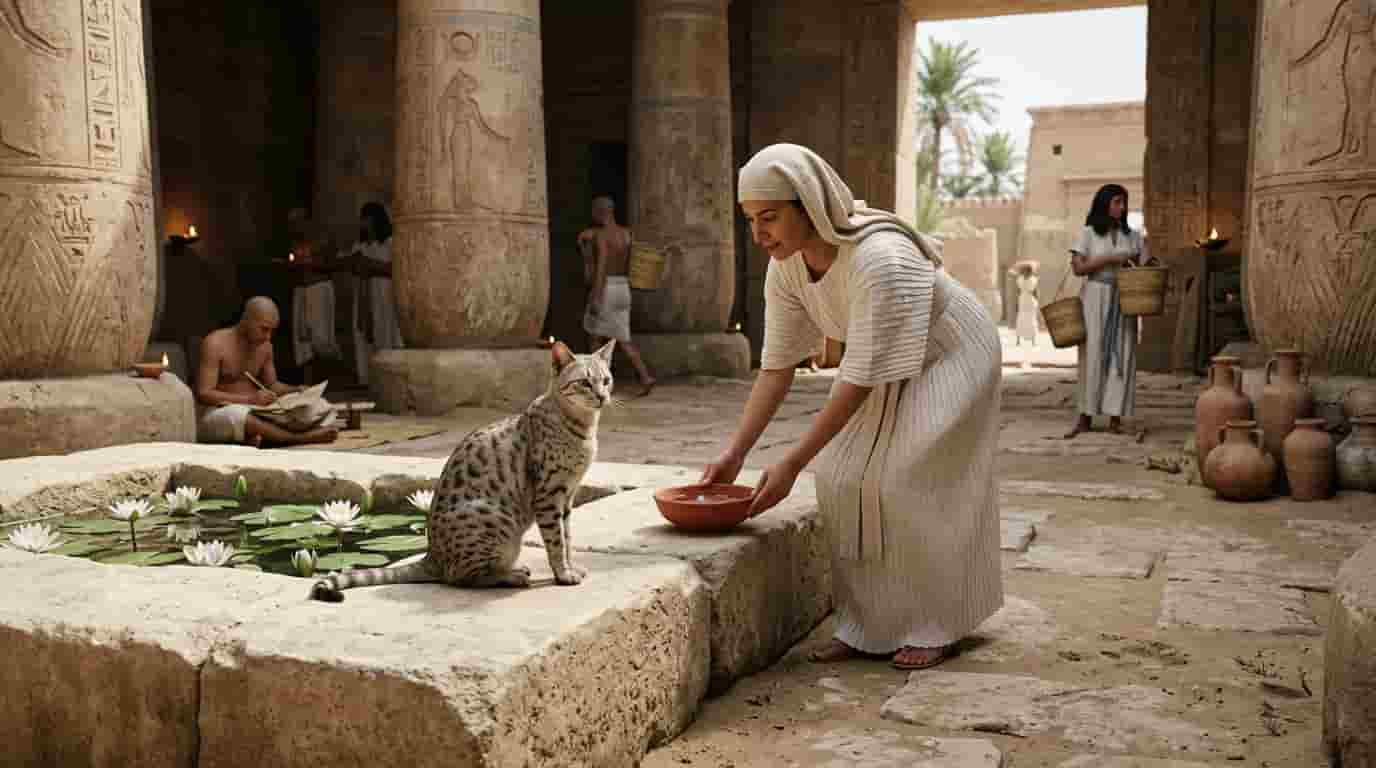
We often forget that historical cat rituals influenced how people lived. In many societies, the cultural significance of cats reached extreme levels. People believed that cats could bridge the gap between our world and the spirit realm. Because of this, they treated cats with immense care.
One common practice involved feeding cats the best portions of a meal. This behavior mirrors the ancient cat customs where cats lived as royalty. Today, we still see echoes of this when we spoil our pets with premium food. We naturally want our cats to feel like the queens and kings they once were.
Additionally, the cat mythology surrounding these animals added to their mysterious allure. Some cultures believed that a cat could ward off evil spirits simply by staring at a wall. You might observe your cat staring at nothing and feel a bit uneasy. Rest assured, this is just another way they scan their environment for movement.
If you find this topic fascinating, look into 5 Reasons Killing A Cat Was A Serious Crime In Egypt. It highlights how serious these ancient cat traditions really were. Legal protection for cats is a concept that truly started in the sands of time.
The Seven Traditions That Shaped Cats

Ancient cat traditions vary wildly across time and geography. Every culture added unique layers to our collective feline history. Here are seven traditions that highlight these deep connections:
- Mourning Rituals in Egypt: When a family cat died, members shaved their eyebrows to show deep grief.
- The First In Blessing: In Russia, people let a cat enter a new home first to clear negative energy.
- Shipboard Guardians: European sailors kept cats on ships to bring good luck and protect food from rodents.
- The Beckoning Cat: Japan popularized the Maneki-neko to bring wealth and good fortune to shops.
- Freyja’s Milk Offerings: Norse farmers left milk in fields to earn favor from the cats of goddess Freyja.
- Wedding Sneezes: Italian folklore suggests that a cat sneezing near a wedding brings luck to the couple.
- Sacred Temple Life: Ancient societies provided cats with premium food and care as honored temple residents.
These ancient cat customs remind us that cats were once treated as divine partners.
Traditional Cat Customs and Modern Behavior
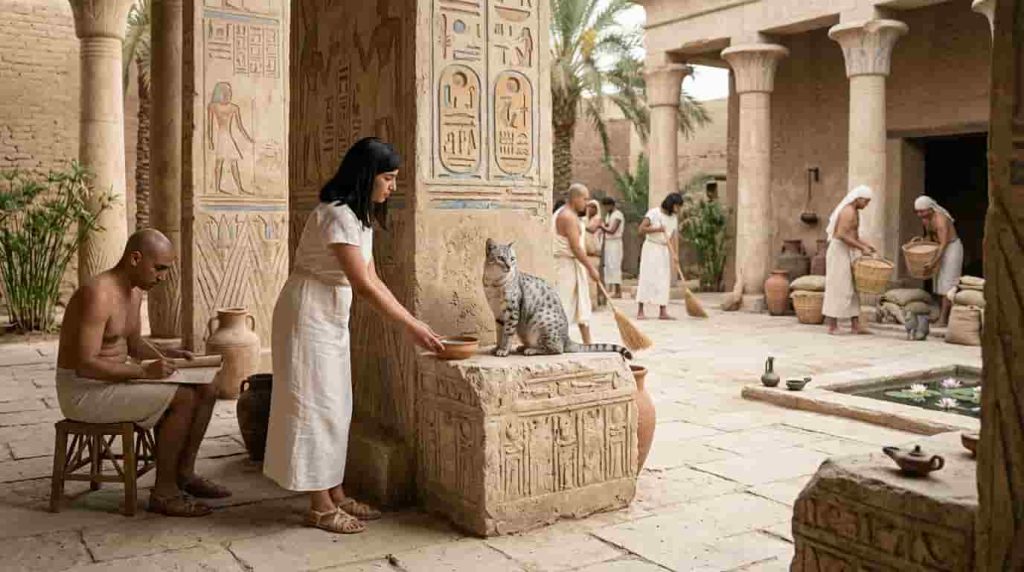
Many traditional cat customs revolve around the cat’s need for security. Ancient cat traditions taught us that cats prefer elevated positions. By sitting high up, they keep a watchful eye on their territory. This allows them to spot danger before it arrives.
One example involves my own cat, Luna. Whenever I clean the kitchen, she leaps onto the top of the refrigerator. She stays there until I finish my chores. This behavior fits perfectly with ancient feline traditions of safety and observation.
Furthermore, cat worship practices often focused on the cat’s ability to heal. People thought that a cat’s purr held magical, medicinal properties. Modern science now supports this old theory. Experts from VCA Animal Hospitals explain that a cat’s purr frequency can actually reduce human stress.
Therefore, your cat is doing more than just relaxing when they purr on your lap. They are performing one of the most comforting ancient cat traditions imaginable. They are actively trying to soothe your nervous system. You are truly lucky to have such a powerful companion.
Understanding Feline Folklore and History
Feline folklore varies greatly across different continents and eras. Every society left its mark on how we interpret feline history. Sometimes these stories portray cats as protectors of the home. Other times, they depict cats as mysterious, solitary wanderers.
The ancient cat worship that defined Egypt shifted over centuries. It evolved into the folklore we recognize today in various cultures. Despite these changes, the core of ancient cat traditions remains stable. Cats still demand respect and space on their own terms.
Also, many traditional cat beliefs suggest that cats choose their humans. They do not merely live with us; they form a partnership based on trust. You must earn your cat’s loyalty every single day. This is a vital part of keeping their ancient instincts satisfied.
Keep in mind that these ancient cat traditions serve as a reminder of our bond. We share our lives with creatures who have walked alongside humans for millennia. Take time to appreciate the small habits your cat shows you. Each one tells a story from the past.
How to Honor These Ancient Feline Traditions

You can embrace these ancient cat traditions in your daily life. Start by creating a space where your cat feels completely safe. Provide perches, tunnels, and quiet corners for them. This honors the ancient feline traditions of territorial security.
Furthermore, observe your cat’s play patterns carefully. Use toys that mimic the movement of natural prey. This satisfies their deep-seated urge to hunt. When you engage in this way, you tap into centuries of feline history.
Additionally, pay attention to how your cat communicates with you. Tail position, ear movement, and blinking all convey specific messages. By learning this language, you participate in a silent, meaningful dialogue. You strengthen the bond that has connected humans and cats since the beginning.
Always remember that these ancient cat traditions are not just relics. They are living parts of your pet’s daily experience. By respecting these needs, you create a happier, healthier home. Your cat will definitely appreciate the effort you put into understanding them.
Conclusion: Living with History
In conclusion, our pets offer us a direct link to the past. Ancient cat traditions continue to influence how cats eat, sleep, and play. We must cherish these behaviors instead of trying to change them. By respecting these habits, we honor the long journey that brought us together.
Take a moment today to watch your cat with new eyes. Notice how they move and react to their surroundings. You are witnessing a legacy that spans thousands of years. We would love to hear about your own experiences. Does your cat display any unique habits that might link back to ancient cat traditions? Please share your stories in the comments section below!
Frequently Asked Questions
Your cat might be tracking tiny insects or sounds you cannot hear. This behavior is a common part of their natural hunting instincts.
Many believe that cats form strong bonds only with people they trust. While they do not choose us in a human sense, they definitely select who they feel safe with.
Kneading is a behavior cats learn as kittens to stimulate milk flow from their mothers. As adults, they do it when they feel safe and comforted.
Most domestic cat behaviors stem from wild instincts used for survival. These instincts have been refined over thousands of years of living near humans.
It is usually harmless for cats to chase small bugs. However, ensure no toxic chemicals are present where your cat likes to hunt.