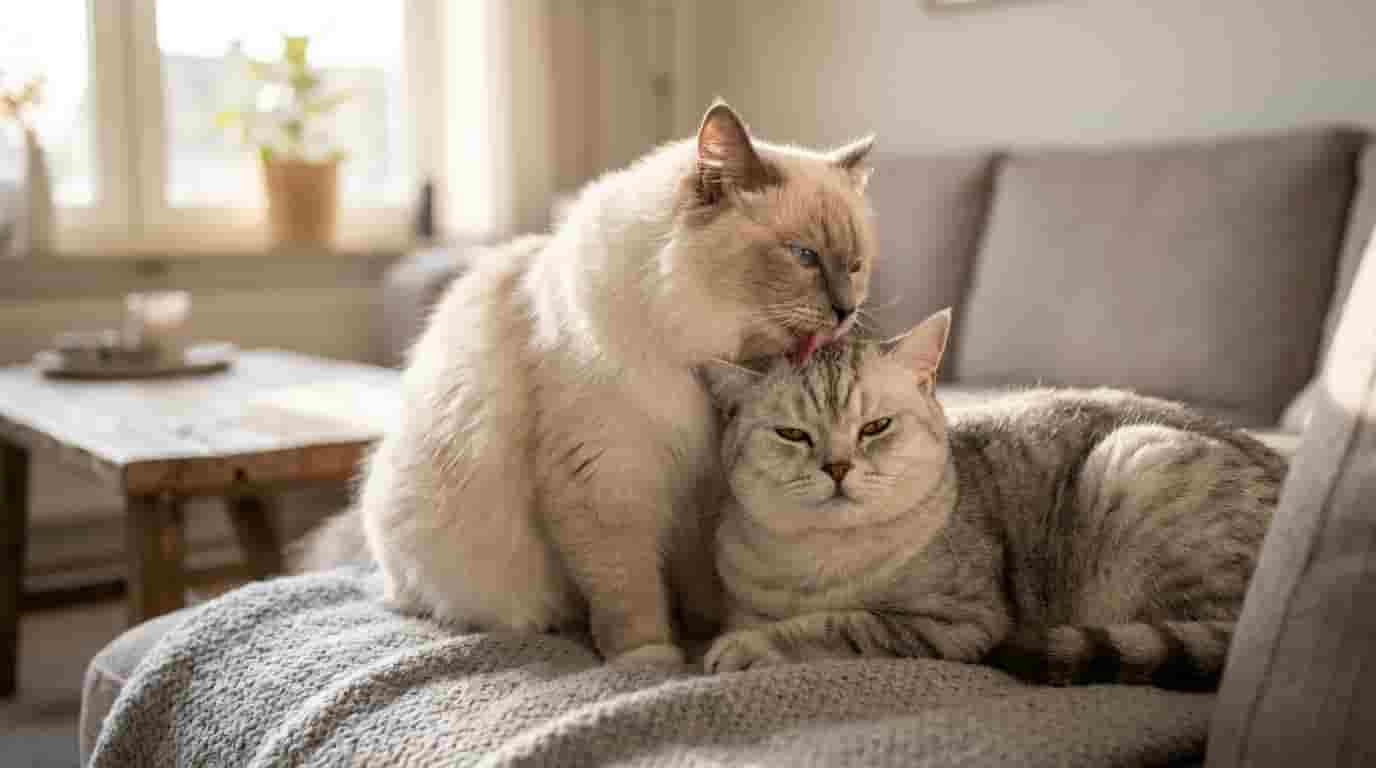
Cat Grooming Others: Why cats lick each other and what it means.
Introduction:
Cat Grooming Others behavior is a fascinating topic that many multi pet owners puzzle over daily. You might look down at your living room rug and see your two felines licking each other peacefully. Then, suddenly, one animal swatting at the other completely shatters the quiet moment. This rapid shift from affection to aggression confuses many passionate cat parents who want to understand their pets better. Fortunately, you can read their subtle body language accurately by learning the hidden social rules behind mutual feline washing.
Understanding communal licking habits helps you manage peace within your expanding multi pet household safely. Most amateur owners assume that felines only lick to clean dirt out of their fur coats. However, specialized animal behaviorists view mutual washing as a highly complex tool for social communication. This detailed behavioral guide will walk you through the secret world of feline interactions step by step. Let us discover the exact biological reasons behind mutual licking habits right now together.
Observing your pets helps you spot subtle shifts in their daily moods before conflicts occur. You might also notice strange behaviors when they watch you during the quiet midnight hours. If you want to know why they do this, read our insightful guide on Cat Staring Secrets to understand nighttime behaviors. Exploring these unique actions allows you to build a highly peaceful and happy environment for your pets. Now, let us dive deep into the specific mechanics of social feline licking.
The Hidden Psychology Behind Cat Grooming Others
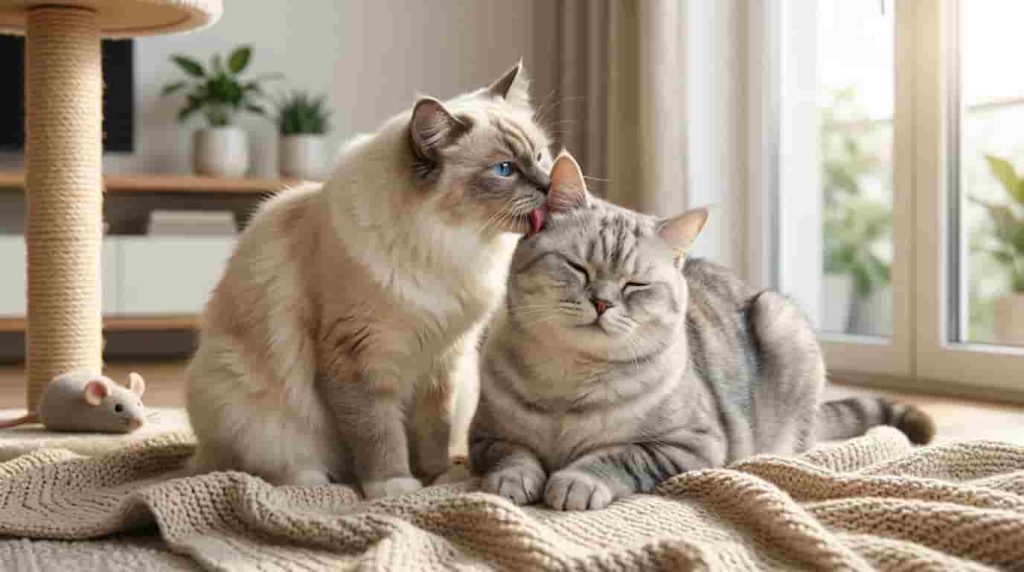
The core biological driver behind Cat Grooming Others activity is a social process called allogrooming. Felines use their rough tongues to wash specific areas on their companions that are very hard to reach. For example, a cat cannot lick the top of its own head or its neck area easily. Therefore, a friendly companion steps in to clean these tricky spots thoroughly using their own saliva. This helpful system forms the foundation of a highly functional and organized feline colony.
Communal licking also helps a group of domestic animals create a single shared group scent profile. This mixed scent acts like a secret password that allows family members to identify each other instantly. Additionally, this comforting group smell lowers general tension across your living room furniture significantly. Therefore, you should view regular mutual washing as a wonderful sign of deep psychological bonding. It shows that your domestic pets accept each other as true family members.
If your pets seem highly anxious and refuse to wash each other, look for external environmental stressors. You can identify these hidden issues by reviewing our detailed checklist on Cat Anxiety Triggers in modern homes. Identifying hidden triggers helps you restore natural bonding behaviors like mutual licking between your pets. Creating a calm sanctuary space allows your felines to display their normal social grooming habits completely.
When Affectionate Social Washing Suddenly Turns into a Fight
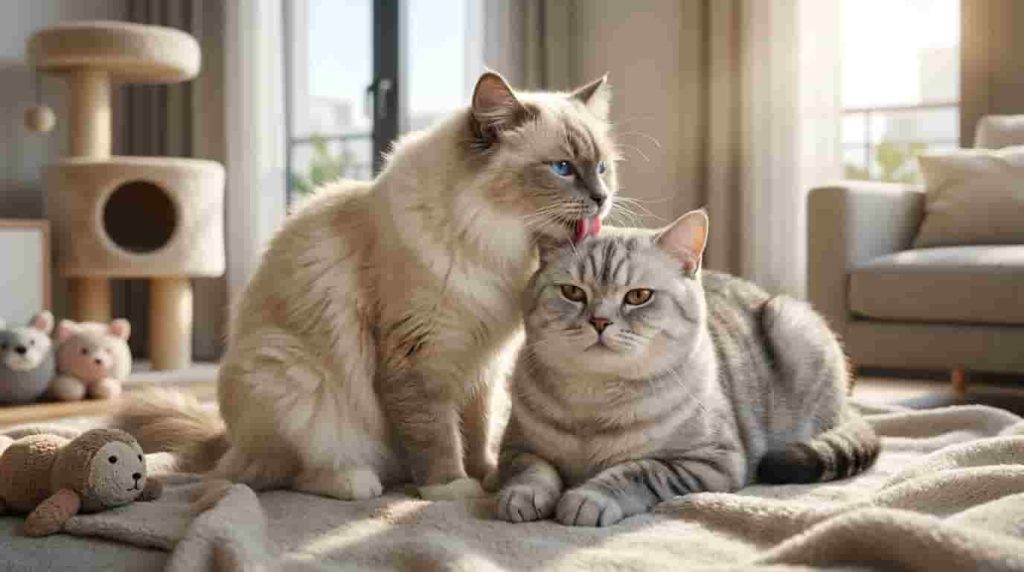
The primary reason why gentle cat grooming others sessions turn into aggressive biting matches is overstimulation. A feline’s skin contains thousands of sensitive nerve endings that fire rapidly during repeated licking. Therefore, an animal might feel sudden discomfort if a companion licks the same spot for too long. They will react by growling, twitching their tails, or swatting with their front paws instantly. This sudden shift is completely normal and represents a clear request for personal space.
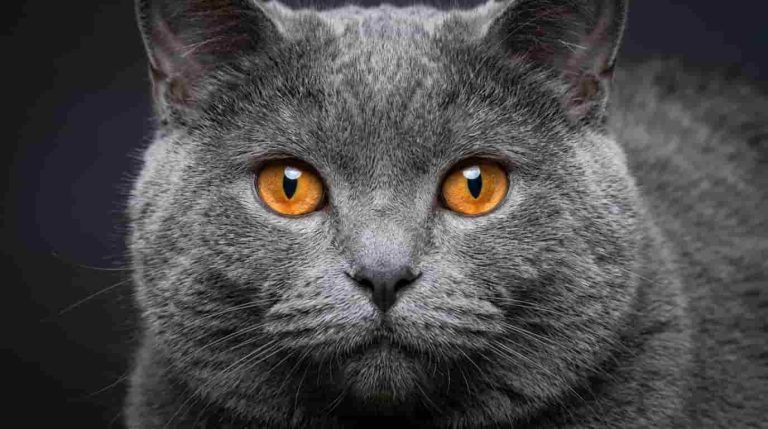
Additionally, social licking sometimes acts as a subtle display of dominance between competing house felines. The dominant animal usually licks the submissive companion to assert control over favorite resting spaces. Consider a real life example involving a dedicated cat owner named Sarah who lived in urban Lagos. She owned a plush British Shorthair and an active Siamese cat who shared a single parlor rug. Sarah often watched her British Shorthair hold the Siamese down gently while licking its ears.
- Watch for flattening ears or swishing tails during mutual washing sessions.
- Separate your felines if you hear low growling or sudden hissing sounds.
- Provide multiple high resting shelves so each animal can retreat easily.
- Avoid interrupting peaceful licking sessions unless physical fighting actually begins.
The Siamese would accept the licking for a few minutes before running under the sofa. Sarah’s experience proves that felines use social washing to establish their domestic hierarchy peacefully without fighting. It helps them maintain order inside a shared space without causing physical injuries to each other. Understanding these subtle dominance games allows you to supervise your multi pet household with total confidence.
How to Support Healthy Cat Grooming Others Habits at Home
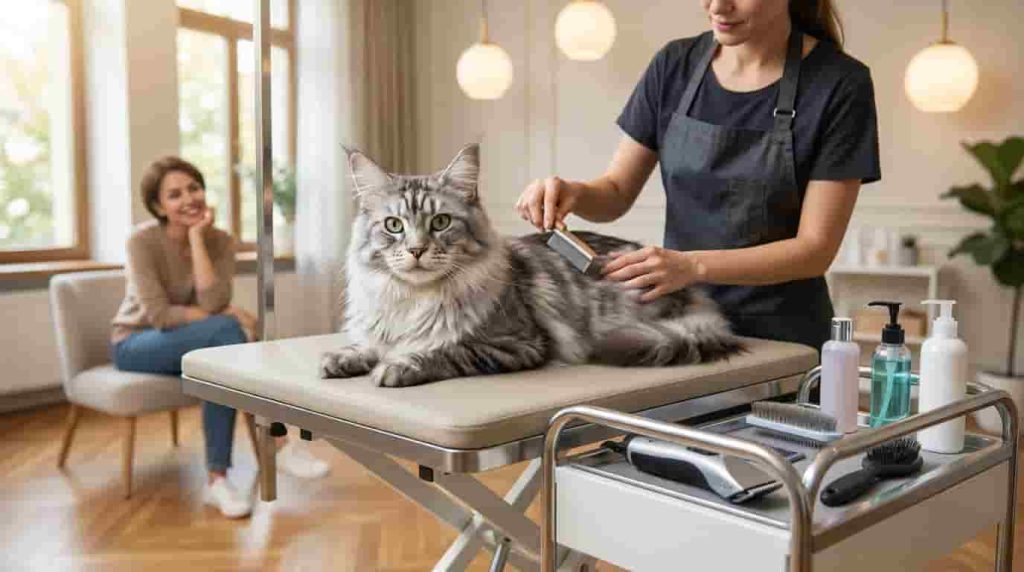
Supporting natural cat grooming others routines requires you to provide the right environment for your pets. You should invest in high quality cat grooming tools like slicker brushes and metal combs. Brushing your felines regularly removes loose undercoat hair before they swallow it during social washing sessions. This simple human intervention lowers the risk of dangerous hairball blockages inside their digestive systems. It also makes their mutual licking sessions much more enjoyable and comfortable.
- Slicker Brushes: Removes dead undercoat fur efficiently to prevent painful mats.
- Metal Combs: Cleans thick fur around the neck and head areas gently.
- De-shedding Tools: Reduces the volume of loose hair floating around your parlor.
- Cat Safe Wipes: Cleans dirt away safely without removing their natural group scent.
According to veterinary health experts at PetMD, regular home coat care prevents serious skin conditions. You should complement your home brushing routine by scheduling visits with professional cat groomers occasionally. These trained experts can wash your pets thoroughly and trim sharp nails safely to prevent scratching injuries. Investing in professional cat grooming services keeps your felines perfectly clean and healthy all year round.
Exploring Professional Feline Grooming Services for Premium Care

Utilizing professional feline grooming services helps maintain optimal coat health in multi pet homes. Many top-rated cat grooming services offer specialized bathing packages designed specifically for anxious domestic felines. These experienced cat groomers understand how to soothe stressed animals using calm handling techniques and quiet spaces. Visiting a local cat grooming salon regularly ensures your pets remain free from painful matting issues.
| Service Type | Key Benefits | Recommended Frequency |
| Mobile Cat Grooming | Reduces travel stress entirely | Every 4 to 6 weeks |
| Cat Grooming Salon | Offers comprehensive deep cleaning | Every 2 months |
| Affordable Cat Grooming | Maintains basic nail trimming | Monthly checkups |
Choosing mobile cat groomers is an excellent path if your pets hate riding in carriers. This convenient option brings a fully equipped washing van directly to your driveway safely. It saves you valuable time while providing top tier care for your favorite animals. Clean coats encourage your felines to continue their natural cat grooming others routines happily.
Distinguishing Between Normal Allogrooming and Obsessive Compulsive Habits
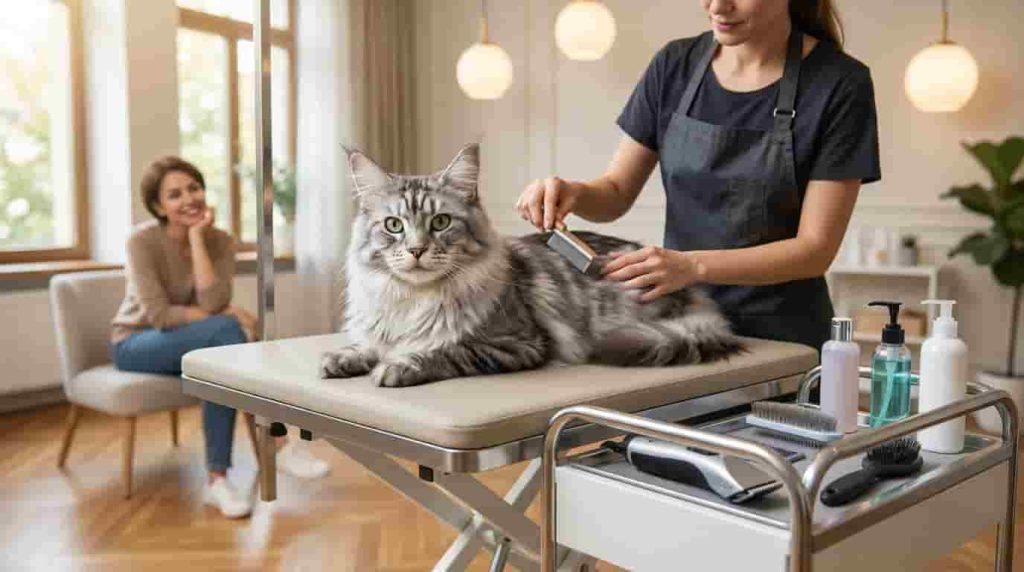
Monitoring your pets helps you differentiate between healthy social bonding and dangerous obsessive behaviors. Normal cat grooming others sessions usually last for a few minutes before the animals fall asleep together. However, a feline suffering from high stress might lick its companion continuously for hours. This obsessive licking can leave bald patches on their companion’s skin over time. You must step in and consult a veterinarian if you notice these extreme habits.
Sometimes, highly stressed felines will also begin chewing on unusual objects around your household. For example, they might start eating plastic grocery bags, clothing threads, or rubber bands. If you notice these dangerous signs, read our comprehensive guide on Cat Pica Signs to protect your pet. Addressing these strange medical behaviors early keeps your beloved household felines perfectly safe and healthy.
Long Term Benefits of Keeping Your Cat Clean and Well Groomed

Maintaining excellent cat care habits ensures your felines enjoy a highly active and vibrant lifestyle. Regular brushing sessions stimulate natural skin oil production, which keeps their fur looking perfectly glossy. It also allows you to check for hidden lumps, skin parasites, or small scratches early. Your steady devotion forms the foundation of a long, healthy relationship with your domestic companions.
Furthermore, dynamic cat grooming tips emphasize the importance of starting coat care routines during kittenhood. Young felines adjust to brushes much more easily than older, stubborn adult animals. You should reward your pets with delicious meat treats after every successful home brushing session. This positive reinforcement connects grooming with pleasant experiences, making future care perfectly stress free for everyone.
Conclusion
Mastering the true meaning behind Cat Grooming Others behavior empowers you to manage your multi pet home perfectly. While mutual washing can occasionally lead to minor swats, it remains a vital tool for social bonding. By providing high quality care tools and monitoring their body language, you ensure a peaceful household. Your careful observation today creates a highly secure, loving environment for your favorite feline family members.
Are you completely ready to support natural Cat Grooming Others habits by upgrading your home brushing tools? Have you already located a certified professional salon near your neighborhood to assist with deep cleaning? Please share your ultimate multi pet stories and grooming questions in our comment section below to help others!
Frequently Asked Questions
This sudden conflict usually happens due to sensory overstimulation during the grooming session. A feline’s skin is highly sensitive, so repeated licking in one spot can cause sudden discomfort. The animal will swat or bite to request personal space immediately.
Washing the neck area is a classic sign of deep social bonding and mutual trust. Felines cannot reach their own necks easily, so they rely on trusted companions to clean these tricky spots. It also helps establish a communal family scent profile.
You should search for experienced cat groomers who operate quiet, feline only facilities in your city. Read online reviews carefully and verify that the salon uses specialized handling techniques for anxious pets. Avoid places that mix dogs and cats together.
Extremely cheap services might indicate poor sanitation standards or untrained staff members who handle animals roughly. True professional feline care requires specialized equipment and gentle training that justify standard retail rates. Always prioritize safety over discounts.
You should brush short haired felines twice a week to remove loose undercoat fur efficiently. Long haired breeds require daily brushing sessions to prevent painful mats and minimize dangerous hairball blockages. Always use soft, high quality slicker brushes.