
How to Stop a Cat From Crying in the Car: Causes and Tips
Introduction
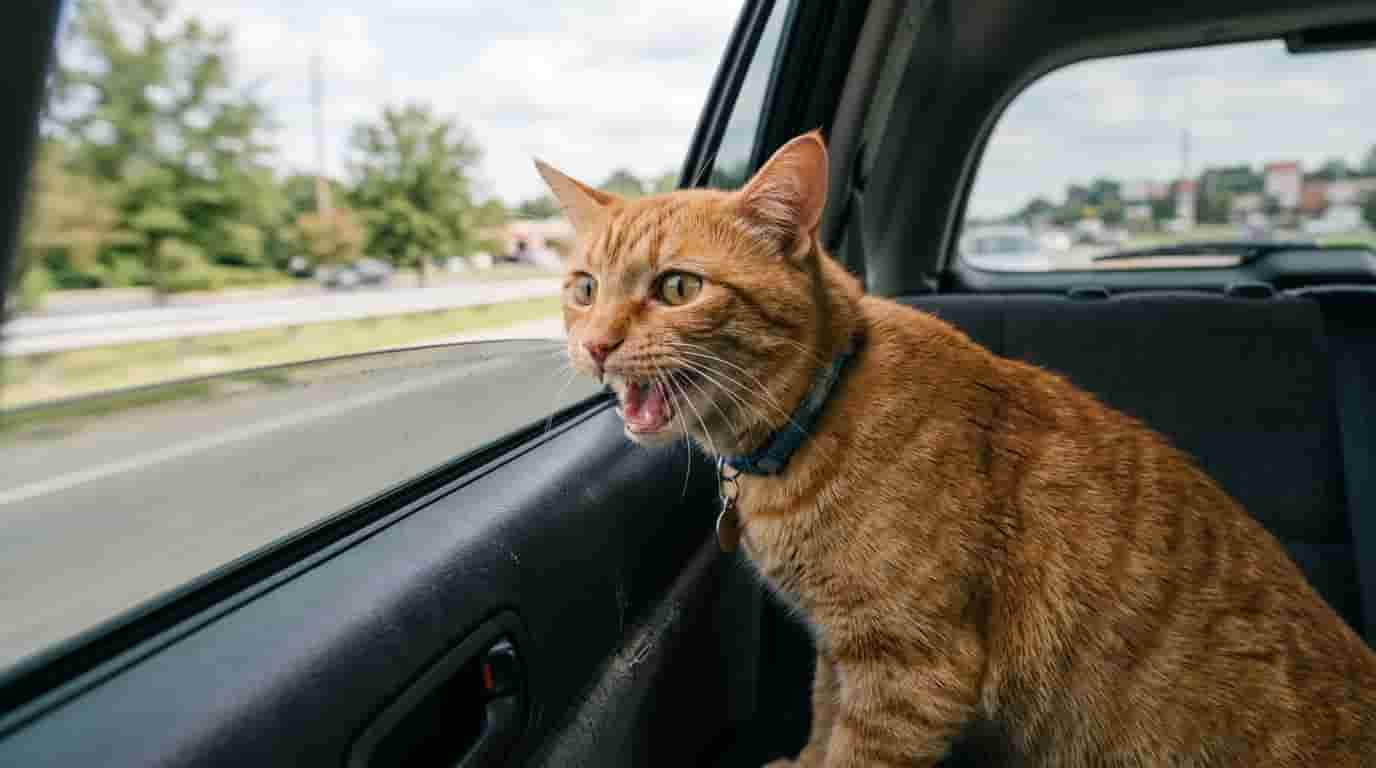
How to Stop a Cat From Crying in the Car is a frequent concern for pet parents. Hearing your feline companion meow, yowl, or cry the moment they are placed in a carrier or hear the car engine start can turn an already stressful trip into an overwhelming experience. Crying is often caused by fear, unfamiliar surroundings, motion, confinement, or previous negative experiences.
The key takeaway is that preparation, carrier training, a calmer environment, and gradual exposure can make car travel significantly easier. However, persistent or severe distress may require veterinary advice.
This article covers:
- Why cats cry in cars
- How to prepare before leaving
- What to do during the ride
- What not to do
- When veterinary help may be needed
Why Does My Cat Cry During Car Rides?
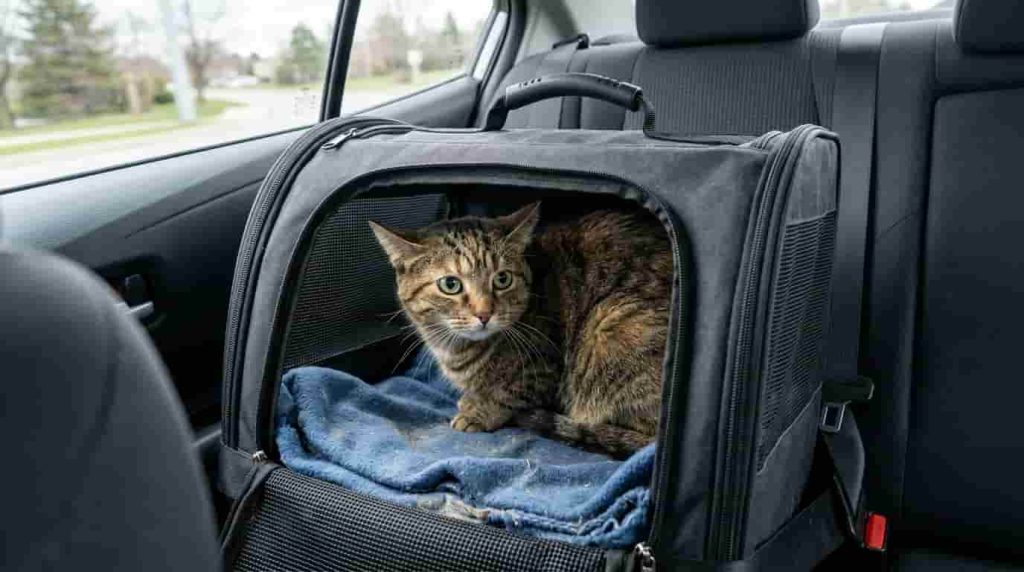
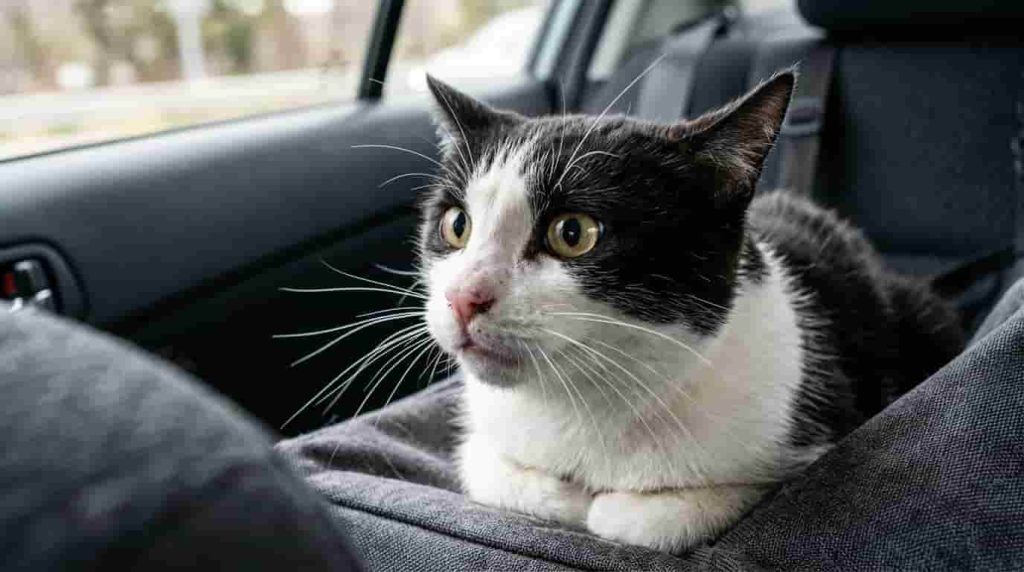
Crying is typically a response to stress, fear, or physical discomfort rather than deliberate disobedience. Understanding the root cause is the first step toward a quieter journey.
Fear and anxiety
Cats thrive on routine and predictability, meaning a car ride disrupts everything they know. Common triggers include:
- Unfamiliar sounds, such as engine noise and road vibrations
- New smells inside the vehicle
- Being away from safe, familiar surroundings
- Previous stressful car experiences that left a negative impression
Managing cat anxiety in the car requires patience and steady desensitization. Implementing smart cat car ride anxiety tips can transform how your cat perceives travel.
Motion sickness or physical discomfort
Just like humans, cats can experience motion sickness. Signs include:
- Excessive vocalization
- Drooling and lip licking
- Vomiting
- Restlessness
If your cat exhibits repeated or severe symptoms of physical distress, professional veterinary attention is warranted.
The carrier itself may cause stress
For many cats, the carrier is only ever seen before a trip to the veterinarian, making it an immediate symbol of fear. Being confined tightly can increase anxiety, and a carrier that slides around or lacks comfortable padding makes the experience worse. This addresses the common question: “How do you stop a cat from crying in a carrier?”
How to Stop a Cat From Crying in the Car
This is the core practical section for improving your cat’s travel experience.
Get your cat comfortable with the carrier first
Building a positive association before an actual trip is essential.
- Leave the carrier open in your living room as a permanent piece of furniture.
- Add familiar, soft bedding inside.
- Place treats or favorite toys inside to encourage voluntary exploration.
- Never force your cat inside during training.
Learning how to stop cat from crying in carrier scenarios starts long before you turn the ignition. By focusing on calming a cat in the car through early positive reinforcement, you can significantly reduce how to stop cat from meowing in carrier episodes.
Practice short car trips
Gradual exposure is far superior to jumping straight into a long journey:
- Let the cat sit inside the secured carrier while the car is parked.
- Start the engine without driving anywhere.
- Take very short trips around the block.
- Gradually increase travel time.
Make the carrier secure and comfortable
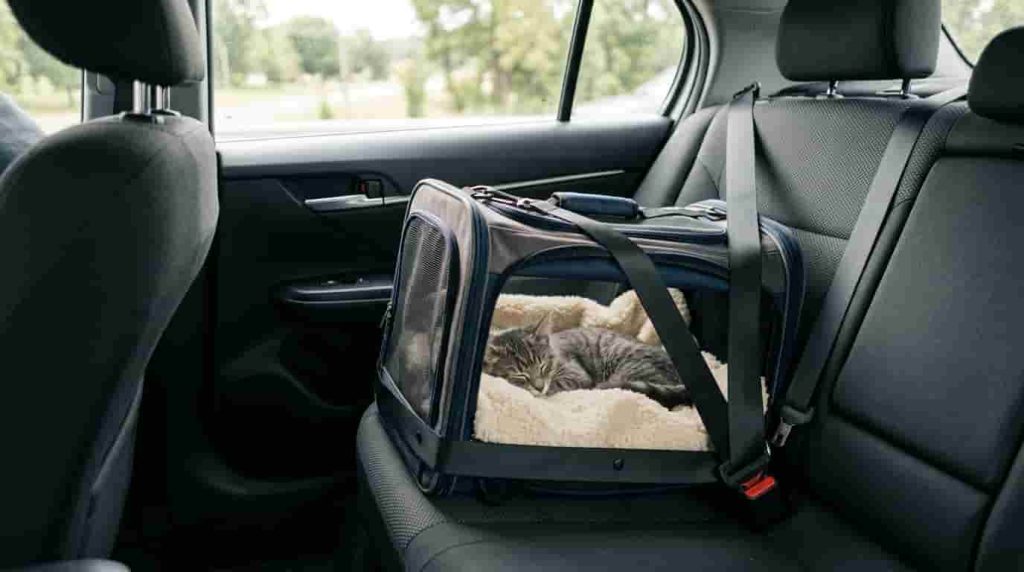
Ensure the carrier is appropriately sized, well-ventilated, and anchored securely on a car seat using a seatbelt or placed firmly on the floorboards where it cannot slide around. Providing stable footing prevents the disorienting feeling of motion.
Keep the car environment calm
Maintain a moderate temperature, ensure good ventilation, and keep music low or off. Gentle driving—avoiding sudden braking and sharp turns—helps maintain a calm cat during car ride conditions, wonderfully soothing a stressed cat in the car.
Cover part of the carrier if your cat finds it calming
Reducing visual stimulation can help some cats settle down. Always ensure you do not block ventilation, and watch your cat’s response closely. Some cats prefer seeing outside, while others become more panicked by racing scenery.
How Can I Calm My Cat During a Car Ride?
Use familiar smells and objects
Place a blanket carrying your cat’s home scent or a familiar toy inside the carrier. Familiarity provides a powerful sense of security in strange environments.
Keep your own behavior calm
Speak softly if your cat responds well to your voice, but avoid shouting or repeatedly unlatching the carrier. Focus primarily on safe, smooth driving.
Avoid opening the carrier during travel
Never allow an unsecured cat to roam freely inside a moving car, as they can wedge themselves under pedals or distract the driver. If you must check on your cat, pull over in a safe location first.
What Can I Give My Cat to Calm Her Down in the Car?
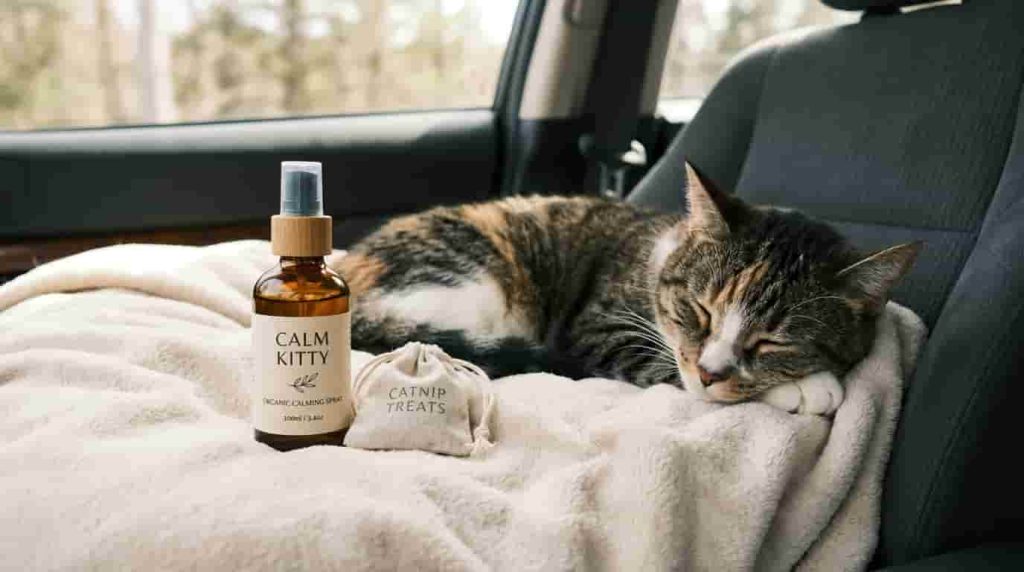
Do not give human medication without veterinary guidance
Human medications are often toxic to cats, and sedating a pet independently can be dangerous. Always consult a professional.
Ask your veterinarian about travel anxiety
For cats experiencing severe panic, vomiting, or excessive panting during every trip, veterinary guidance is essential. According to the American Society for the Prevention of Cruelty to Animals (ASPCA)
, behavioral strategies paired with veterinarian-prescribed supplements or medications can safely manage severe travel stress.
How to Stop Your Cat From Freaking Out in the Car
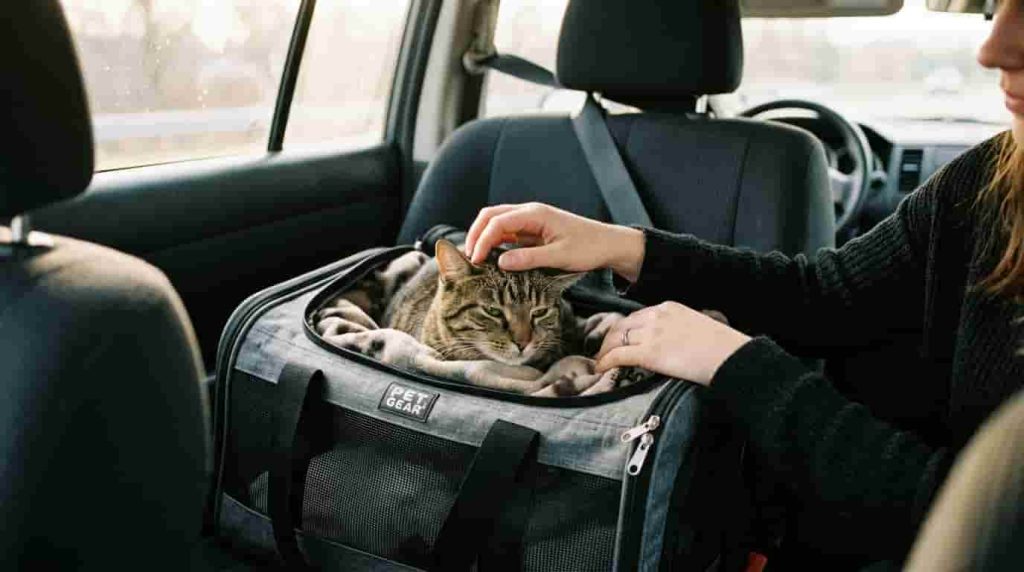
Prepare before the day of travel
Create a pre-travel checklist covering carrier training, practice drives, familiar bedding, and secured placement.
Avoid rushing your cat into the carrier
Chasing a cat around the house right before leaving reinforces fear. Prepare the carrier early and allow calm entry.
Consider the timing of the journey
Plan your trip during quieter traffic hours to minimize sudden stops and delays.
What Should You Avoid When Traveling With a Crying Cat?
- Do not punish or yell at your cat: Crying is an expression of fear, not misbehavior.
- Do not let your cat ride loose: This creates severe safety and escape risks.
- Do not repeatedly open the carrier: Opening it near traffic invites accidental escape.
- Do not ignore serious signs of distress: Persistent panting or vomiting requires immediate attention.
How to Make Future Car Rides Easier
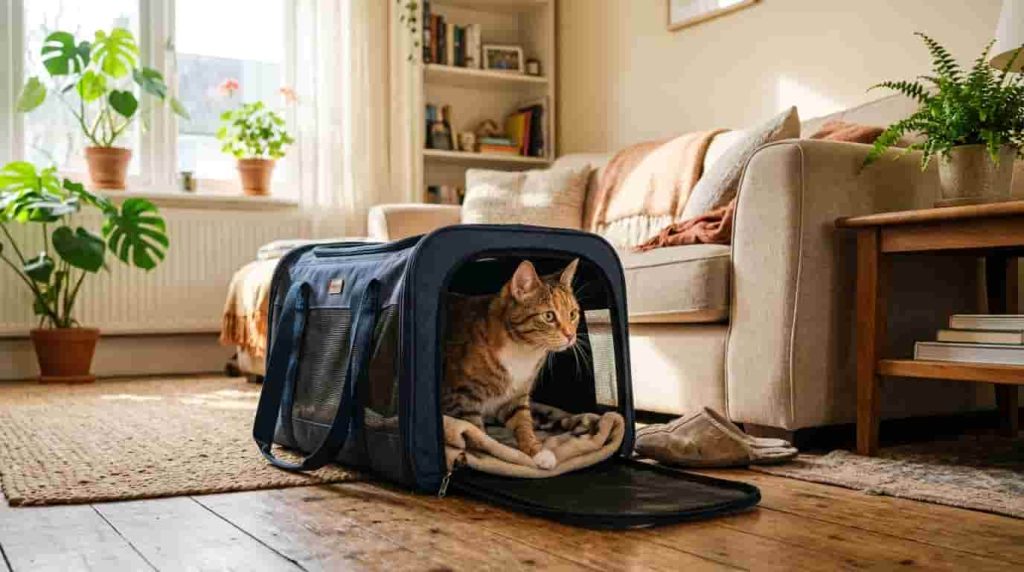
Build positive associations
Associate the carrier with treats and safe experiences so your cat builds confidence over time.
Increase travel time gradually
Follow a steady progression from a stationary vehicle to short drives, slowly building up endurance.
Keep routines consistent
Use the same carrier, familiar bedding, and predictable handling practices every time you travel.
When Is Cat Crying in the Car a Sign of a Bigger Problem?
Signs that need veterinary attention
- Severe or persistent distress
- Vomiting or excessive drooling
- Difficulty breathing or excessive panting
- Weakness, lethargy, or collapse
Cats that may need individualized travel plans
Cats with previous travel trauma or chronic medical conditions require customized travel strategies coordinated with your veterinarian.
A Simple Checklist for a Quieter Cat Car Ride
- Introduce the carrier before travel day.
- Make the carrier comfortable and familiar.
- Practice short trips.
- Secure the carrier properly.
- Keep the car quiet and comfortable.
- Drive smoothly.
- Avoid opening the carrier while the car is moving.
- Watch for signs of severe distress.
- Contact a veterinarian if anxiety or physical symptoms are significant.
- Build travel tolerance gradually over time.
How Long Can a Cat Travel in a Car?
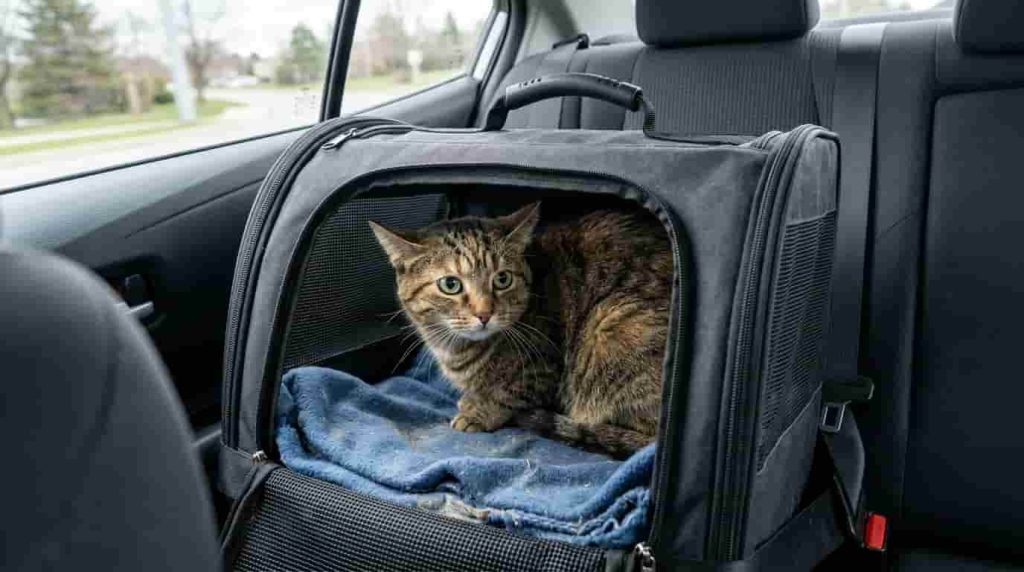
Planning journey lengths carefully is vital for your cat’s well-being. For longer trips, schedule regular breaks to check on food, water, litter access, and cabin temperature. Individual tolerance varies greatly among cats. For a deeper dive into scheduling and safety benchmarks, read How Long Can a Cat Travel in a Car? Safe Travel Times and Tips
.
Related Cat Travel Tips
If this is your cat’s first trip
Preparation, identification tags, secure restraint, and proper supplies are essential for a successful debut journey. Learn more in our guide on How to Travel With a Cat for the First Time: Tips and Essentials
.
For cats that remain anxious despite preparation
If standard desensitization isn’t enough, professional support can make all the difference. Explore practical strategies in How to Keep a Cat Calm During Car Travel: Tips for Easier Rides
.
Frequently Asked Questions
Crying usually stems from anxiety, unfamiliar movement, confinement, and motion sickness. Repeated severe symptoms may warrant veterinary advice.
Focus on carrier training, familiar bedding, gradual exposure, and keeping the carrier stable.
Panting indicates significant stress or overheating. Stop safely and seek veterinary guidance if it persists.
Reducing visual stimulation helps some cats calm down, provided there is adequate ventilation and monitoring.
Yes, veterinarians can evaluate travel anxiety and prescribe safe, species-appropriate calming aids or medications.
Conclusion
Cats usually cry in cars because they are stressed, frightened, uncomfortable, or experiencing motion-related problems. Implementing early carrier training, gradual exposure, a secure environment, and smooth driving can make a tremendous difference. Avoid punishment and unsafe handling, and always consult a veterinarian if severe physical or behavioral symptoms appear. How to Stop a Cat From Crying in the Car is entirely achievable with patience and preparation. What methods have helped your cat stay calm during car rides? Share your experiences below!