How to Keep a Cat Calm During Car Travel: Tips for Easier Rides
Introduction
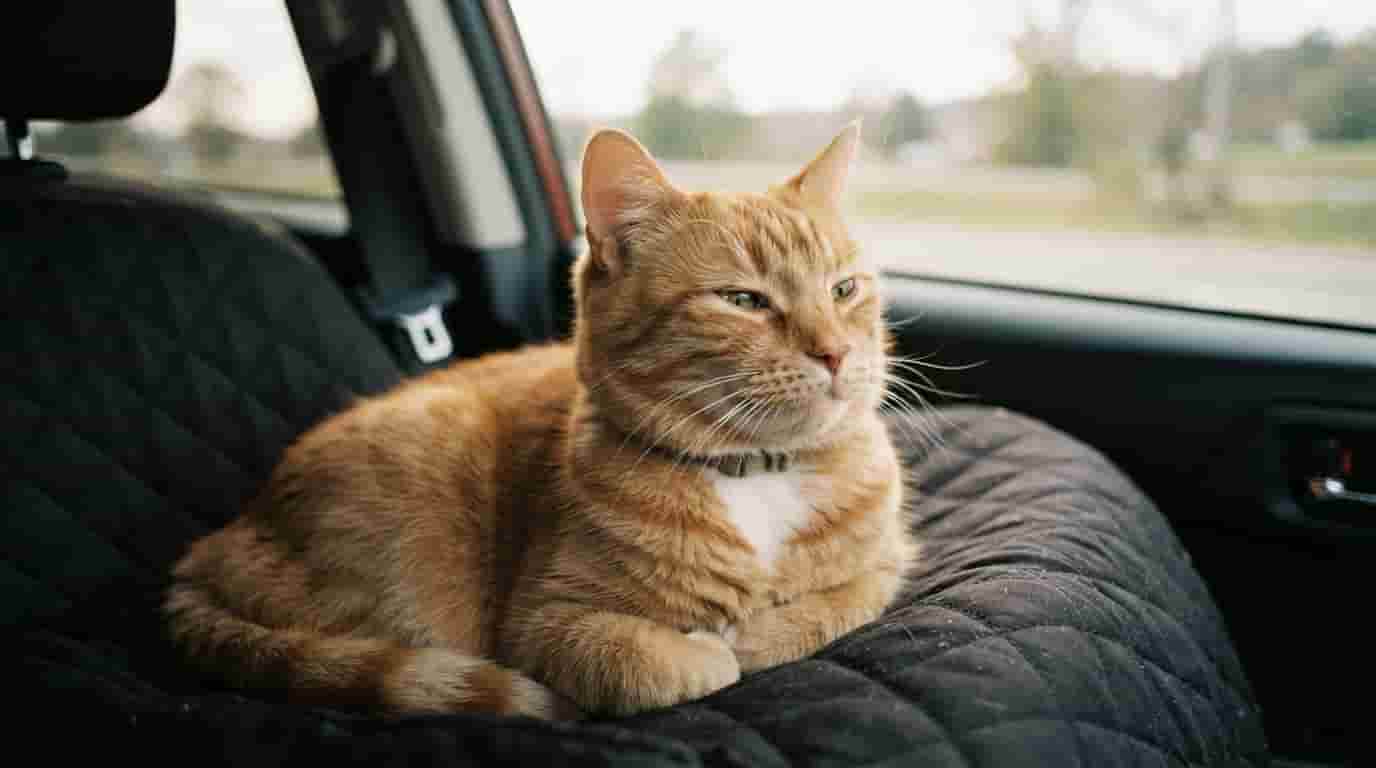
How to Keep a Cat Calm During Car Travel: Tips for Easier Rides. Many pet owners face the daunting challenge of a cat becoming frightened, vocal, restless, or profoundly stressed the moment the car starts moving. Cats frequently find car travel stressful because the unfamiliar movement, roaring sounds, strange smells, confinement in a carrier, and sudden changes in surroundings all trigger intense anxiety.
The most important answer to this common problem is that preparation makes all the difference. Combining a secure carrier, gradual training, a calm in-car environment, and safe travel practices can turn stressful ordeals into manageable journeys. This article covers everything you need to know, including preparing before the trip, choosing and setting up the right carrier, helping your cat adjust to the vehicle, managing the journey itself, spotting signs of severe stress, and knowing when to consult a veterinarian.
How to Keep a Cat Calm During Car Travel
When planning a trip, understanding the core reasons behind your cat’s behavior is the first step toward a smoother ride.
Why Cats Get Anxious in the Car
Cats are creatures of habit who thrive on predictability. Several factors contribute to car anxiety:
- Unfamiliar environments and movement: The sensation of acceleration, braking, and vibration feels unnatural to a feline.
- Sensory overload: Loud engine roars, road noises, and heavy traffic can easily overwhelm sensitive ears.
- Restricted movement: Confinement inside a carrier prevents them from exploring or escaping perceived threats.
- Negative associations: Often, the only time a cat enters a carrier or a car is to visit the veterinary clinic, linking travel directly to fear or discomfort.
- Motion sickness: Physical illness from movement can mimic or amplify psychological anxiety.
Signs Your Cat Is Stressed During a Car Ride
Recognizing early indicators of stress allows you to respond appropriately before panic sets in. Look out for:
- Excessive meowing, crying, or yowling (for more on this, check out our guide on how to stop a cat from crying in the car)
- Restlessness, pacing, or frantic shifting inside the carrier
- Crouching low, trembling, or attempting to hide
- Rapid breathing, heavy panting, or drooling
- Refusing treats or water
- Accidental urination or defecation due to sheer panic
How to Prepare Your Cat Before the Car Journey

Trying to calm a panicked cat once the car is already speeding down the highway is extremely difficult. True peace of mind starts long before you turn the ignition key. If you are new to this process, review our complete guide on how to travel with a cat for the first time
.
Get Your Cat Comfortable With the Carrier
Do not store your cat carrier in a distant closet where it is only retrieved on travel day. Instead, leave it accessible in a common room at home, place familiar bedding inside, and let your cat explore it voluntarily. Reward them with treats or meals near or inside the carrier to build positive associations.
Practice Short Trips Before a Long Journey
Desensitize your feline companion gradually:
- Let your cat spend time sitting in a stationary car inside the carrier.
- Start the engine without driving anywhere so they get used to the sound and vibration.
- Take a very short, low-speed drive around the neighborhood.
- Gradually increase the duration of subsequent trips, always ending on a positive note.
Choose and Set Up the Right Cat Carrier
What Makes a Carrier Comfortable?
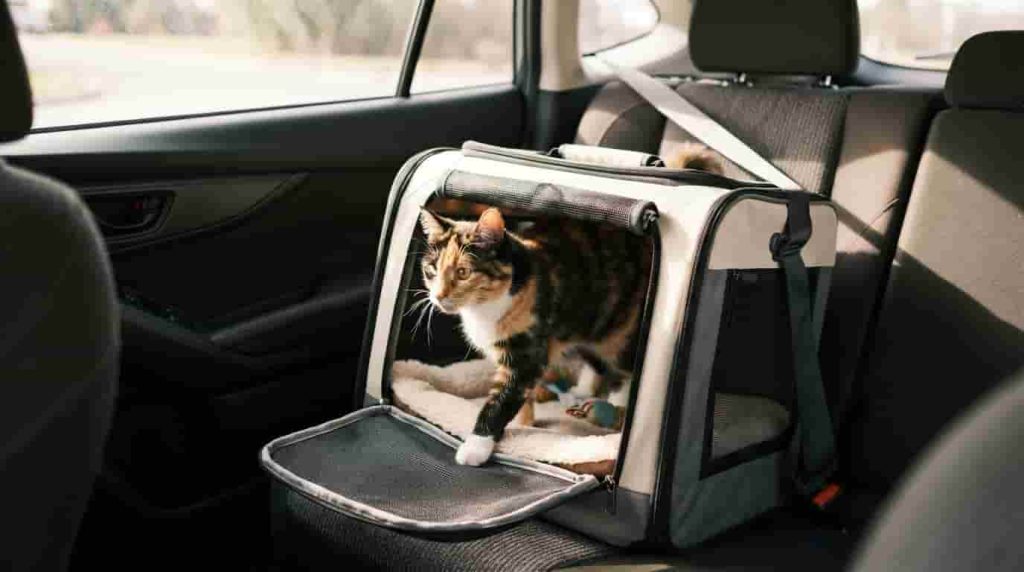
Select a sturdy, well-ventilated carrier that offers enough room for your cat to stand up, turn around, and lie down comfortably. Hard-shell plastic carriers that can be easily cleaned and opened from the top often provide superior safety and accessibility compared to flimsy soft bags.
Add Familiar Items
Line the bottom with an absorbent pad and place a blanket or towel carrying your cat’s familiar scent inside. These comforting smells remind the cat of home, making an alien environment feel much safer.
Secure the Carrier in the Car
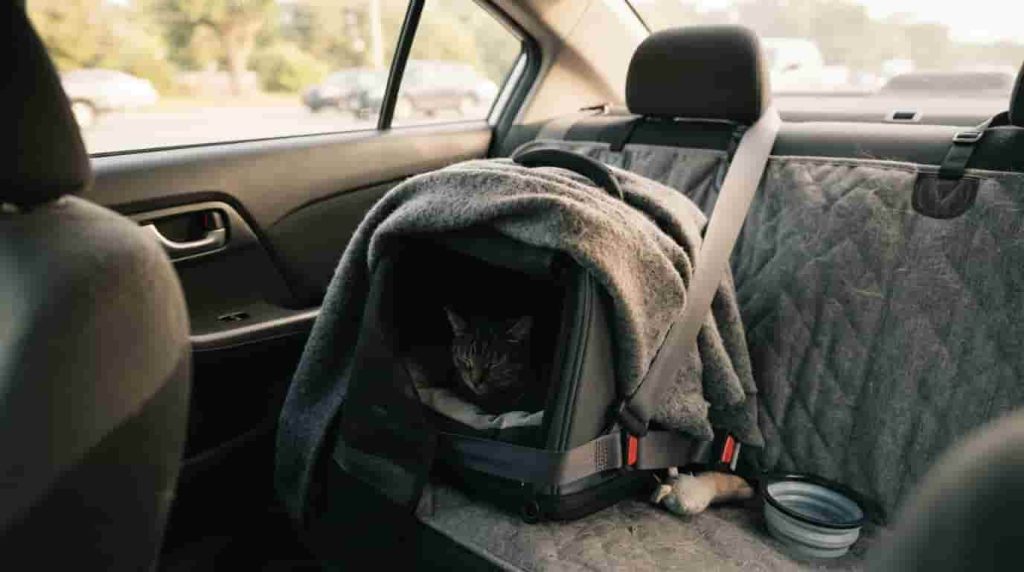
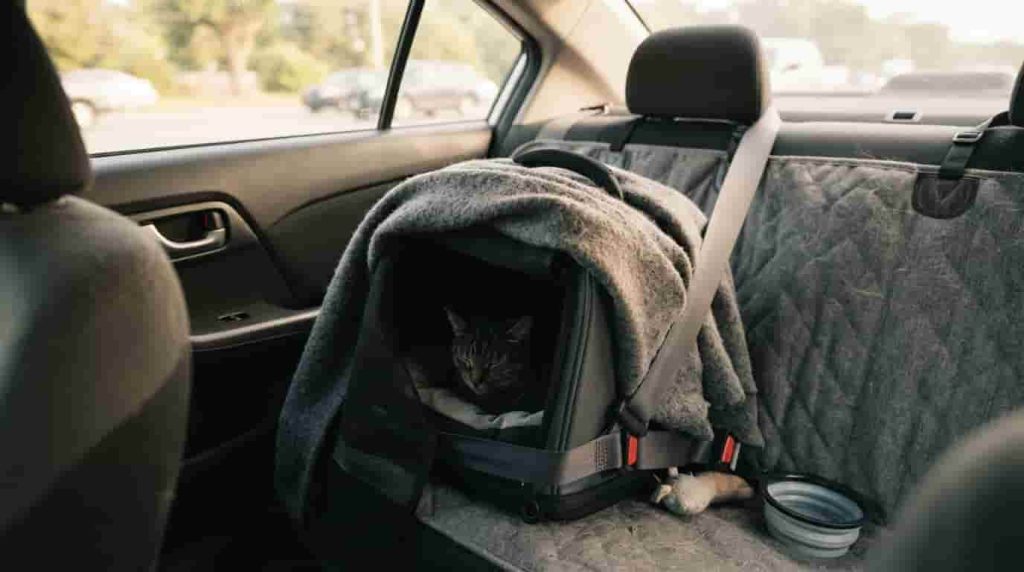
Never allow a cat to roam freely inside a moving vehicle, as this creates a dangerous distraction and a severe injury risk during sudden stops. Place the carrier on a flat seat and secure it firmly using a seatbelt, or wedge it securely on the floor behind the front passenger seat so it cannot slide around.
How to Make the Car Environment Less Stressful
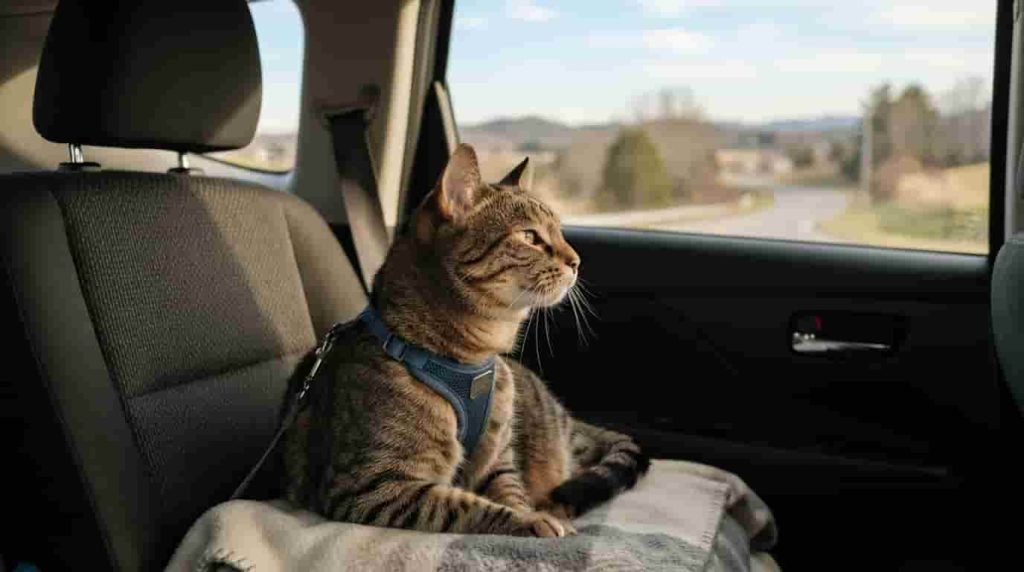
Keep the Car Quiet and Comfortable
Maintain a moderate cabin temperature and ensure good ventilation. Avoid blasting loud music or shouting. Drive smoothly, minimizing sudden acceleration, sharp turns, or hard braking.
Reduce Visual Overstimulation
Rapidly flashing roadside scenery can induce motion sickness and panic. Position the carrier so your cat isn’t staring directly at fast-moving windows, or drape a light, breathable blanket partially over the carrier to create a cozy, den-like atmosphere while maintaining airflow.
What Can You Do to Calm a Cat During a Car Ride?
- Stay Calm Yourself: Cats easily pick up on human stress. Speak in a soothing, quiet voice and avoid frantic attempts to comfort them through the mesh door.
- Maintain Familiarity: Keep your voice gentle and predictable. Avoid trying unverified quick-fix calming products at the last minute.
- Never Open the Carrier: No matter how loudly your cat cries, opening the carrier inside a moving vehicle or near traffic creates an immediate escape risk.
How Do I Stop My Cat From Freaking Out in the Car?
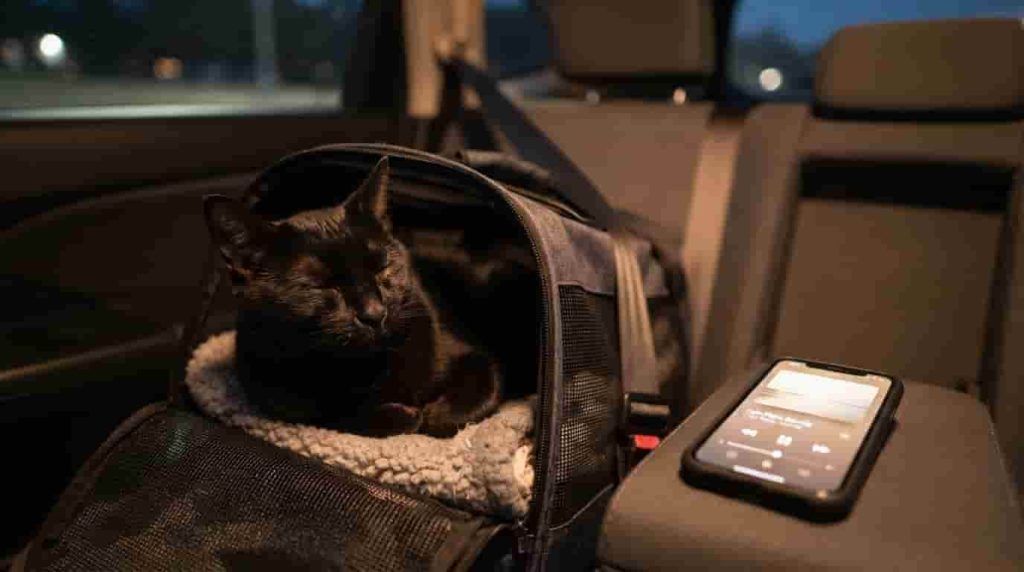
If your cat experiences a full-blown panic attack, use this troubleshooting sequence:
- Identify the Trigger: Is it the heat, the engine noise, the motion, or the carrier itself?
- Step Back: If panic occurs, pull over safely if necessary, shorten future journeys, and return to basic stationary-car desensitization steps.
- Rule Out Medical Issues: Ensure the distress isn’t actually motion sickness, acute pain, or respiratory distress.
What Can I Give My Cat to Relax in the Car?
- Avoid Human Medication: Never administer human over-the-counter sedatives or medications, as these can be toxic or dangerous to cats.
- Consult Your Veterinarian: If your cat suffers from severe travel anxiety, speak with your vet about prescription options, such as mild sedatives or anti-nausea medications designed specifically for felines.
- Use Products Cautiously: While pheromone sprays or calming wipes can support training, do not rely on them as a guaranteed replacement for proper carrier training and gradual exposure.
Can Cats Go on Long Car Rides?
Long-distance travel, such as a cross-country move or relocation, is entirely possible with careful planning. For more details on safe milestones, read our comprehensive resource on how long can a cat travel in a car
.
- Plan Regular Breaks: Stop every few hours in a safe, enclosed vehicle environment to offer water, check on your cat, and provide a portable litter box if needed.
- Monitor Well-Being: Pay close attention to signs of exhaustion, heat stress, or severe distress rather than focusing solely on arrival times.
Common Mistakes That Make Cat Car Travel Worse
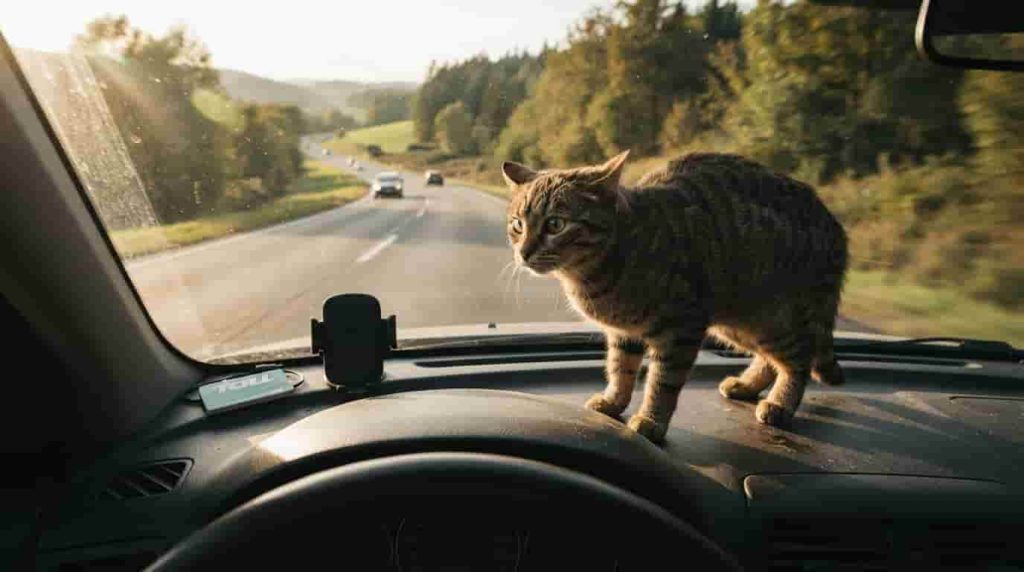
- Mistake 1: Introducing the carrier only on travel day.
- Mistake 2: Taking a multi-hour road trip as your cat’s very first ride.
- Mistake 3: Allowing the cat to roam freely inside the cabin.
- Mistake 4: Opening the carrier door while the vehicle is in motion.
- Mistake 5: Driving aggressively with abrupt stops and starts.
- Mistake 6: Ignoring extreme signs of physical distress or overheating.
- Mistake 7: Experimenting with multiple unproven calming supplements all at once.
How to Keep Your Cat Calm Before, During, and After the Trip
Before the Trip
- Prepare the carrier with familiar bedding days in advance.
- Conduct short practice rides around the block.
- Pack essential supplies, water, and cleaning items.
- Secure the vehicle environment.
During the Trip
- Fasten the carrier securely with a seatbelt.
- Maintain a comfortable climate control setting.
- Drive smoothly and keep ambient cabin noise low.
- Monitor your cat’s breathing and behavior quietly.
After the Trip
- Carry the secured carrier inside to a quiet room before opening it.
- Give your cat time to decompress in a safe, low-traffic space.
- Provide immediate access to fresh water, food, and familiar litter facilities.
When Should You Call a Veterinarian About Car Travel Anxiety?

Contact your veterinarian if your cat experiences persistent vomiting, extreme breathing difficulties, collapse, or severe injury resulting from escape attempts during travel. Professional guidance is also essential if your cat’s anxiety is so profound that routine veterinary visits become completely unmanageable.
Tips for Future Rides
- Keep Practicing: Regular, short, positive trips help desensitize your cat over time.
- Create Positive Associations: Always reward calm behavior immediately following a car journey.
- Learn Triggers: Pay attention to whether your cat is more sensitive to sound, temperature, or motion so you can tailor your approach for future outings.
Conclusion
Mastering how to keep a cat calm during car travel relies far more on thoughtful preparation than on trying to manage panic mid-journey. By prioritizing early carrier training, gradual exposure, secure driving practices, and a comfortable environment, you can drastically reduce your pet’s stress. Every feline responds uniquely, so patience is key. What strategies or tips have worked best to keep your cat calm during car rides? Let us know in the comments below!
Frequently Asked Questions
Focus on prior carrier training, maintaining a stable temperature, securing the carrier safely, and taking regular breaks to offer water and check for comfort.
Excessive vocalization is usually driven by anxiety, unfamiliar sounds, spatial confinement, motion sickness, or negative associations with past vehicle trips.
Yes, placing a light blanket partially over the carrier can reduce stressful visual stimulation, provided there is still adequate ventilation.
You should always consult a veterinarian regarding safe prescription anti-anxiety or motion-sickness medications rather than using human drugs or untested supplements.
Start by leaving the carrier out at home, progressing to stationary car time with the engine running, and finally taking very short, gradual test drives.