
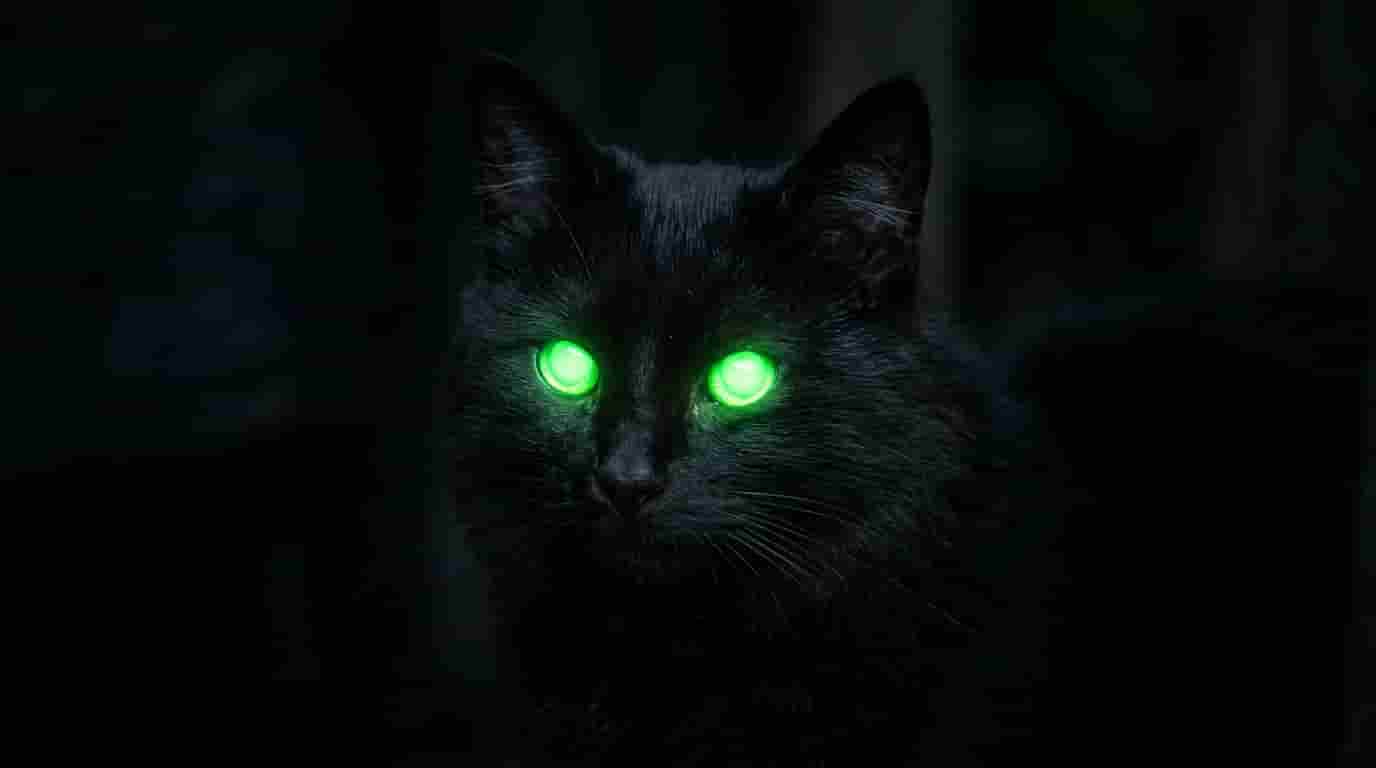
Why Do Cats’ Eyes Glow at Night? The Science Behind Their Eye Shine
Introduction
Why Do Cats’ Eyes Glow at Night? Cats’ eyes do not produce their own light. The apparent glow happens when external light reflects from structures deep inside the eye. The tapetum lucidum serves as the main biological structure behind feline eye shine, closely linked to a cat’s ability to use available light efficiently.
While glowing eyes, pupil dilation, and night vision are closely related concepts, they refer to entirely different optical mechanisms. This article explores how eye shine works, why reflected colors vary, whether cats can see in complete darkness, and when unusual eye changes require professional veterinary attention.
Why Do Cats’ Eyes Glow at Night?
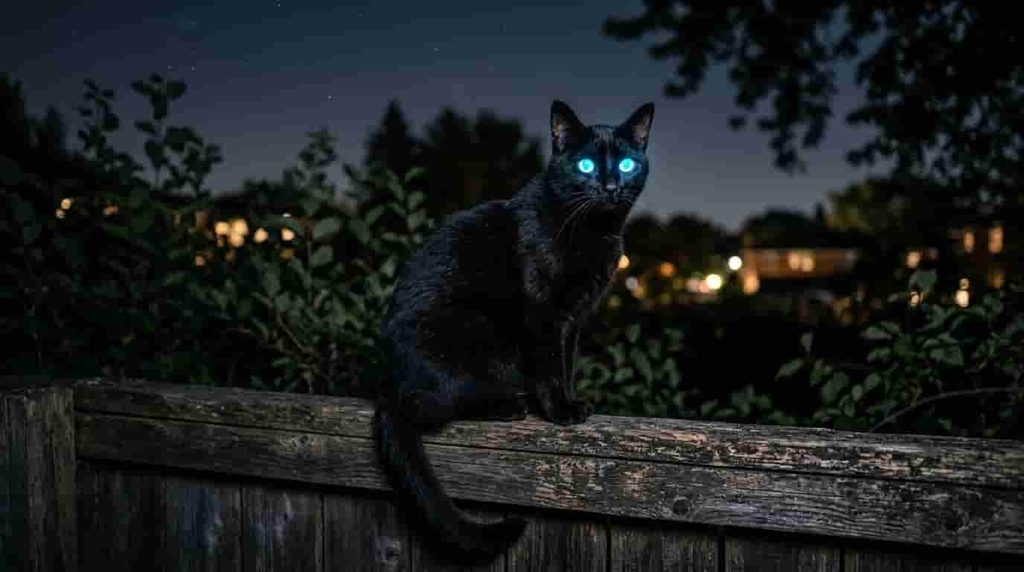
Cats’ eyes appear to glow when an external light source enters the eye and reflects back outward toward an observer. The cat’s eyes are strictly reflecting light rather than creating it. This effect relies on a specialized cat eye reflective layer known as the tapetum lucidum, making the phenomenon most noticeable in darkness or low-light conditions.
The Tapetum Lucidum Creates the Visible Eye Shine
The tapetum lucidum is a specialized reflective membrane located directly behind the retina. When light passes through the retina, the tapetum lucidum bounces unabsorbed light back through the light-sensitive cells a second time. This gives the rods and cones another opportunity to respond to available illumination, driving feline eye glow science and low-light vision.
Why the Glow Seems to Come from Inside the Eye
The reflection can look striking and dramatic in a dark environment because light bounces off the biological mirror-like layer and travels straight back along the exact same path it entered. Observers often describe this using terms like cats’ eyes reflection or feline ocular reflection.
How Does the Tapetum Lucidum Help Cats See in Low Light?
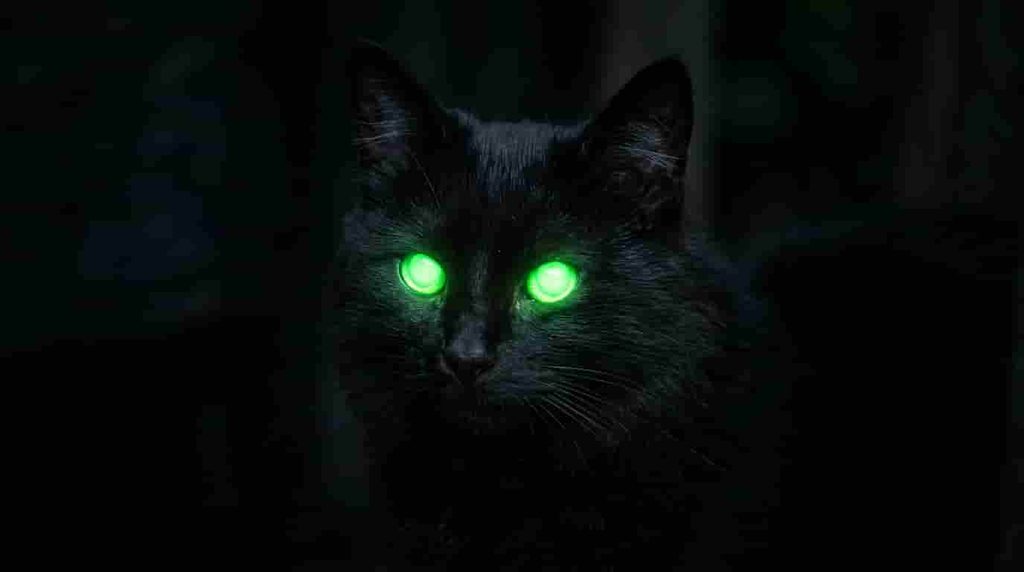
The tapetum lucidum helps cats make maximum use of available light, though it does not allow cats to see without any light at all. This structural feature underpins night vision in cats and nocturnal vision in cats.
Cats Are Adapted to Dim Conditions
Cats are crepuscular, meaning they are most active around dawn and dusk rather than being strictly nocturnal. Their visual system excels in lower-light environments, with eye shine acting as just one component of a larger, highly integrated sensory toolkit.
More than One Feature Supports Feline Vision
- Large pupils that can expand to admit massive amounts of light
- A retina densely packed with light-sensitive rod cells
- The tapetum lucidum reflecting and recycling available photons
Do Cats Really Have Night Vision?
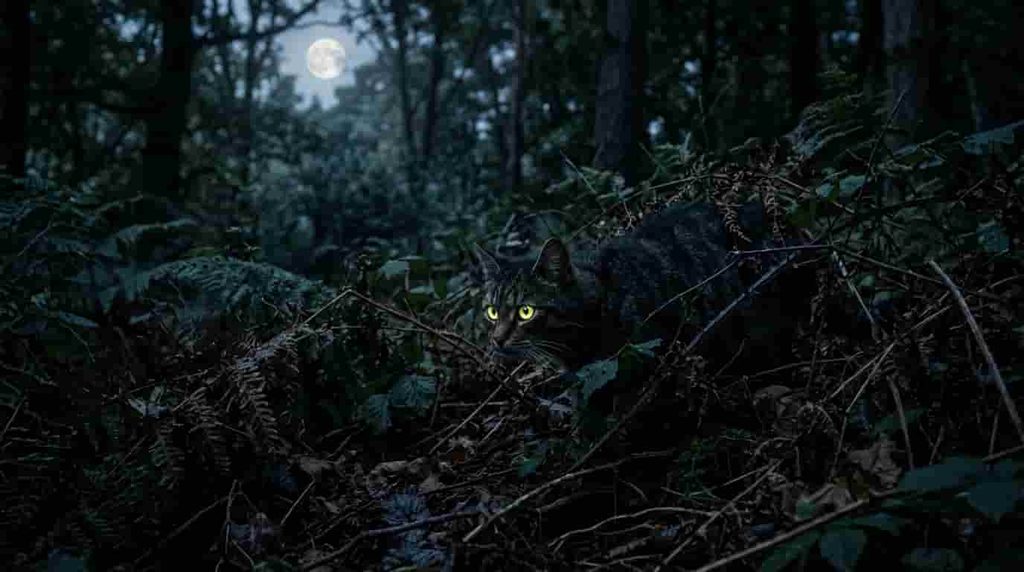
Cats can see significantly better than humans in low light, but they cannot see in complete darkness. To explore this distinction further, read Can Cats See in the Dark? How Well Can Cats See at Night?
.
Why Darkness Still Limits a Cat’s Vision
The eye still requires at least some ambient light to gather visual information. Glowing eyes do not mean cats possess magical night vision; without incoming light for the tapetum lucidum to reflect, the eyes cannot produce a glow nor form an image.
What Cats Notice Differently from Humans
Feline vision prioritizes motion detection and low-light sensitivity over fine color discrimination, giving them a distinct advantage when tracking quick movements in dim environments.
Why Do Cats’ Eyes Shine Different Colors?
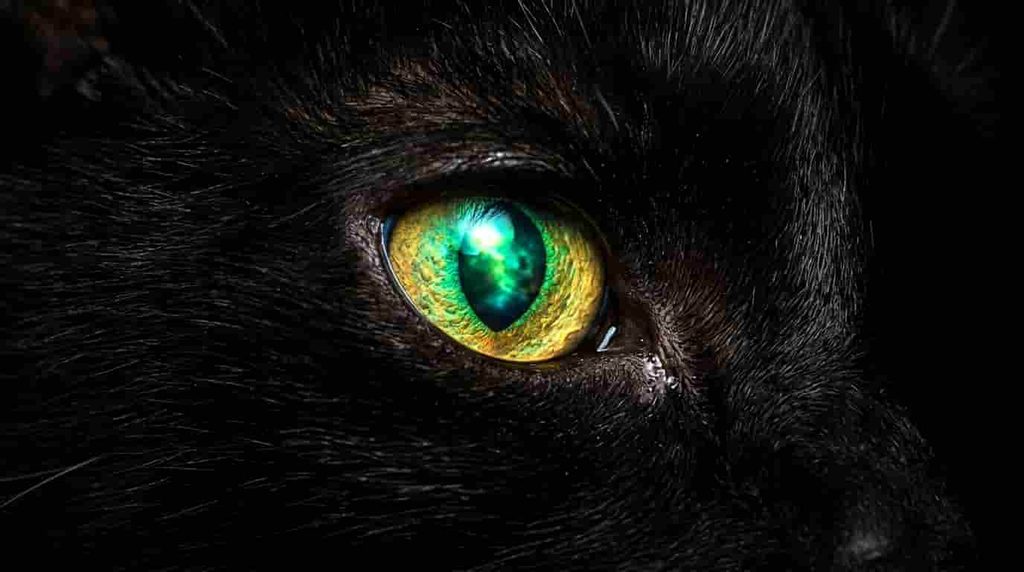
Eye shine can appear in various colors depending on the individual cat, genetics, the angle of the light source, and viewing conditions. One glow color does not indicate a specific breed or health status.
The Angle of the Light Matters
The position of the observer and the light source changes the path of the reflection. For example, a flashlight held at a sharp angle might produce a brilliant greenish eye shine, while a direct beam straight on looks entirely different.
Eye Shine Can Vary Between Cats
Biological variations in the tapetum layer mean reflections can look green, yellow, blue, or even orange-red depending on the cat and the environment.
Why Do Cats’ Eyes Glow at Night but Not in Bright Daylight?
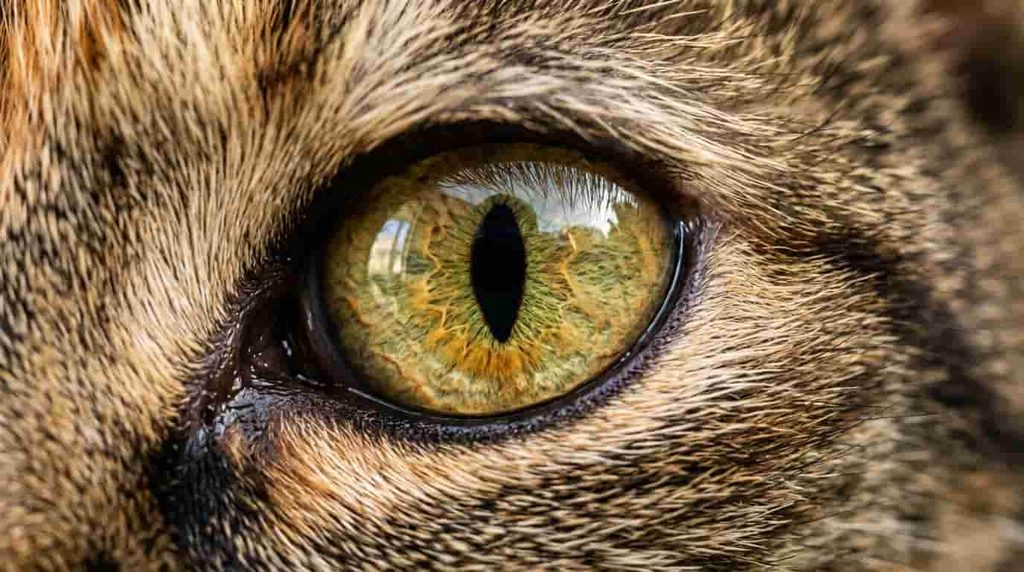
Eye shine stands out when the surrounding environment is dark and the pupils are wide open. In bright daylight, the mechanics change completely.
Darkness Makes Reflected Light Easier to Notice
The stark contrast between a bright reflection and a dark background makes eye shine visible, while bright ambient surroundings wash out the reflection entirely.
Pupil Size Can Affect How Much Light Enters the Eye
Pupils widen dramatically in dim conditions to maximize light intake. For details on how the aperture changes, see Why Do Cats’ Pupils Get So Big? What Dilated Pupils Mean
.
Why Do Cats Have Vertical Pupils and How Does Pupil Shape Affect Their Eyes?
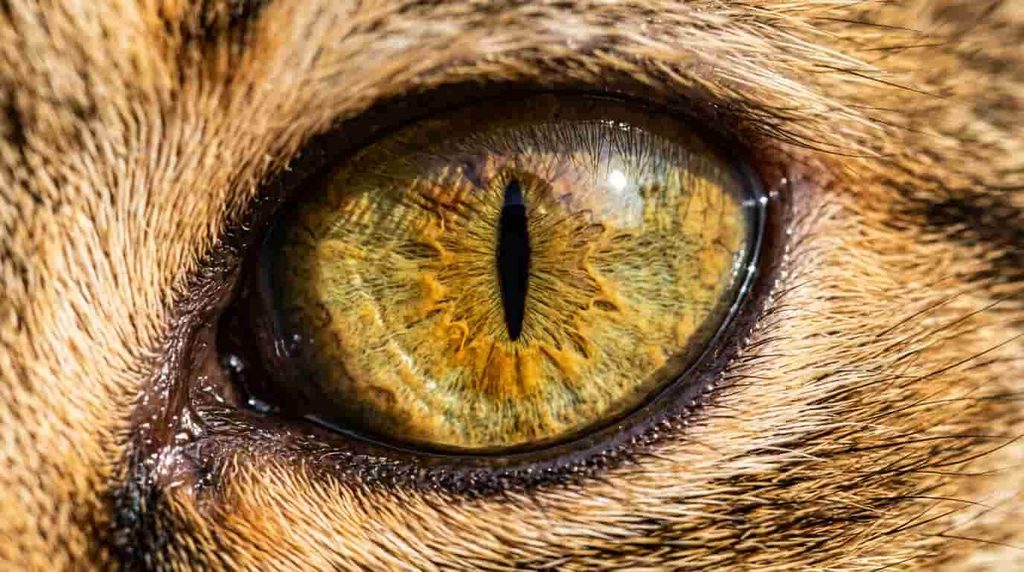
Pupil shape and eye shine operate as separate features within the feline visual system, though both regulate light. To understand how slit pupils protect the eye in bright sun, review Why Do Cats Have Vertical Pupils? The Surprising Reason Behind Them
.
Do Dogs and Cats’ Eyes Glow for the Same Reason?
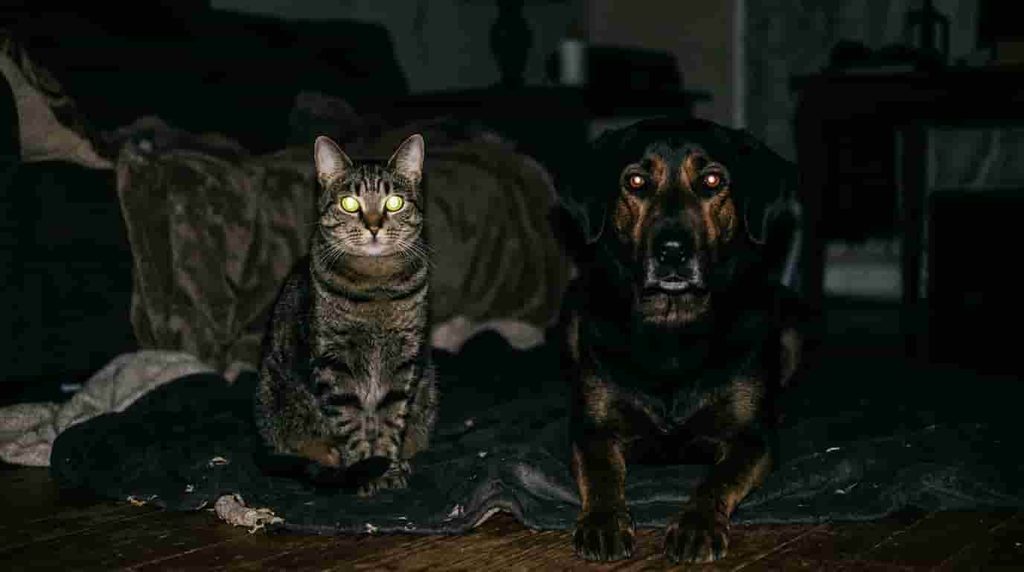
Many animals possess a tapetum lucidum or similar reflective structures, though the appearance, color, and intensity of eye shine vary wildly across species. Animals lacking reflective eye structures do not show visible eye shine, but that absence does not mean they have poor night vision.
Is Cat Eye Glow the Same as Glow-in-the-Dark?
Cats’ eyes do not store, generate, or produce light. The entire phenomenon requires an external light source. Without any light at all, the tapetum lucidum has nothing to reflect, proving that cat eyes are not literally “glow-in-the-dark.”
What Can Cats’ Eyes Tell You About Their Health?
Normal reflected eye shine is not a health problem. However, structural changes in how an eye reflects light or looks in everyday lighting can sometimes warrant veterinary attention.
Changes Worth Paying Attention To
- Persistent cloudiness across the cornea
- Unusual redness, swelling, or watering
- Frequent squinting or signs of ocular pain
- Abnormal eye discharge
- Sudden shifts in navigation or vision
- A new or unexpected white reflection in photographs
- A sudden difference in reflection appearance between the left and right eye
Common Myths About Cats’ Glowing Eyes
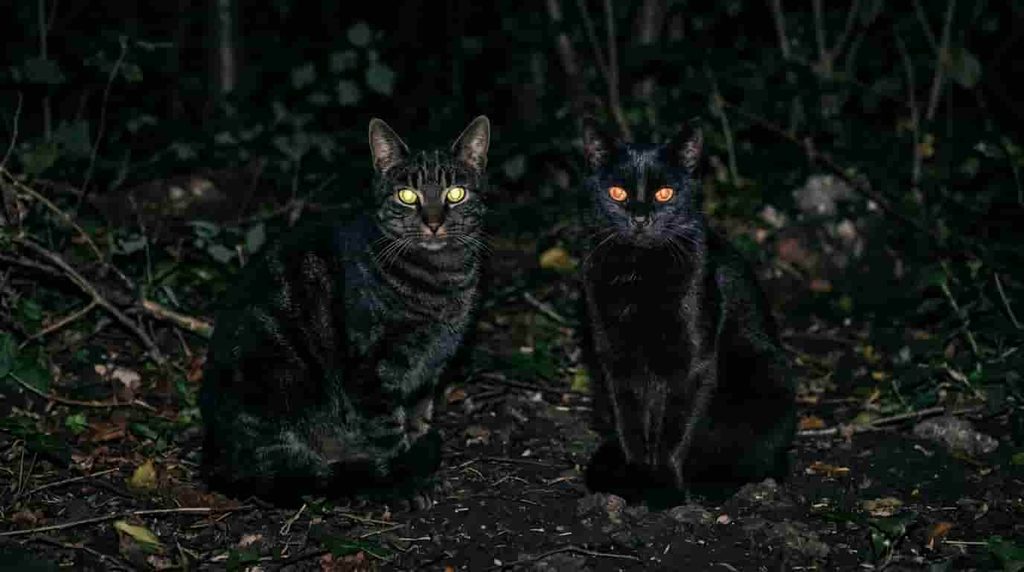
- Myth: Cats’ eyes produce their own light. Fact: The visible glow is entirely reflected light.
- Myth: Cats can see in complete darkness. Fact: Cats require some available light to see.
- Myth: Eye glow means a cat has perfect night vision. Fact: Eye shine is just one anatomical feature supporting feline sight.
- Myth: Every animal’s eyes glow the same way. Fact: Reflective eye structures differ greatly between species.
- Myth: Any unusual eye reflection is harmless. Fact: Persistent or abnormal changes in eye appearance should be assessed by a veterinarian.
Understanding the Science of Cat Eyes in Everyday Life

Cat owners encounter eye shine when photographing pets with a flash, catching headlights on a driveway, or scanning a dark room with a flashlight.
Hypothetical Example: A cat walks through a dim hallway while light from a nearby room shines toward its face. Its eyes appear to glow brilliantly because photons pass through the retina, strike the tapetum lucidum, and bounce straight back toward the observer’s viewpoint.
Why Do Cats’ Eyes Glow at Night? The Simple Answer
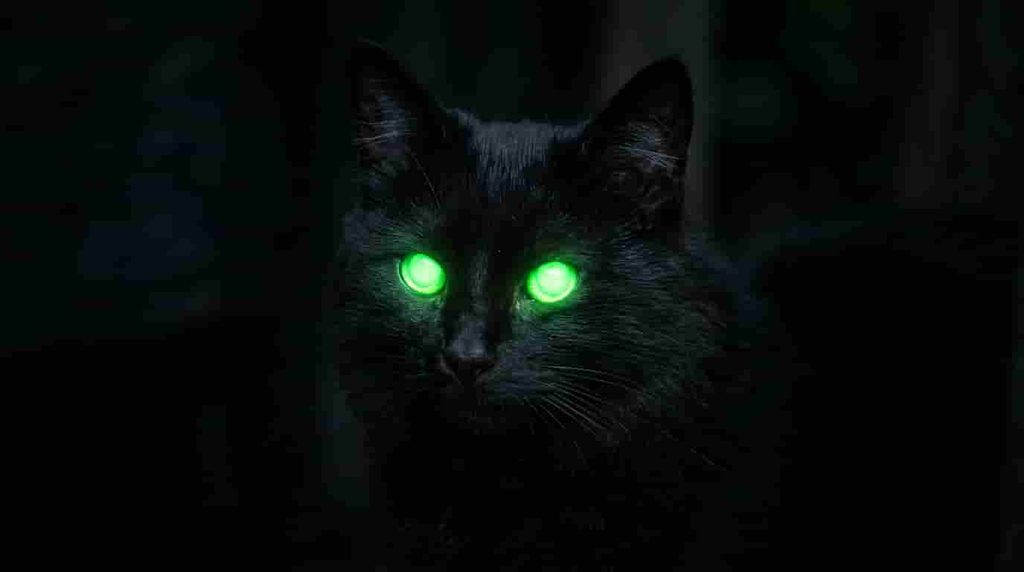
Why Do Cats’ Eyes Glow at Night? Cats’ eyes appear to glow because incoming external light reflects from the tapetum lucidum and returns toward the observer. This reflective system maximizes low-light sensitivity, though it requires ambient light to function. Pupil size, nocturnal adaptations, and the tapetum lucidum all work together to form an extraordinary visual system.
What color do your cat’s eyes appear to glow when catching the light in a dim room? Share your observations in the comments below!
Frequently Asked Questions
The apparent glow is reflected light bounced back by the tapetum lucidum, which requires an external light source to function.
Cats possess exceptional low-light vision adapted for crepuscular hunting, but they cannot see in absolute, pitch-black darkness.
Eye shine colors vary based on the chemical composition of the tapetum, the angle of the light source, and the observer’s viewing position.
Humans lack a tapetum lucidum. The red-eye effect seen in flash photography is caused by light reflecting off blood vessels in the retina, not a reflective membrane.
Consult a veterinarian immediately if you notice sudden asymmetry in eye shine, persistent cloudiness, discharge, squinting, or signs of pain.