

Cat Flea Allergies: Why one bite can cause total hair loss.
Introduction:
Cat Flea Allergies often begin with a single, tiny bite. You notice your cat scratching more than usual. Suddenly, patches of fur disappear, and the skin looks angry and red.
Most owners assume this behavior means common itching. However, a deeper, invisible battle rages on your pet’s skin. You need to know why this happens to stop the cycle.
Uncovering Cat Flea Allergies and Their Impact
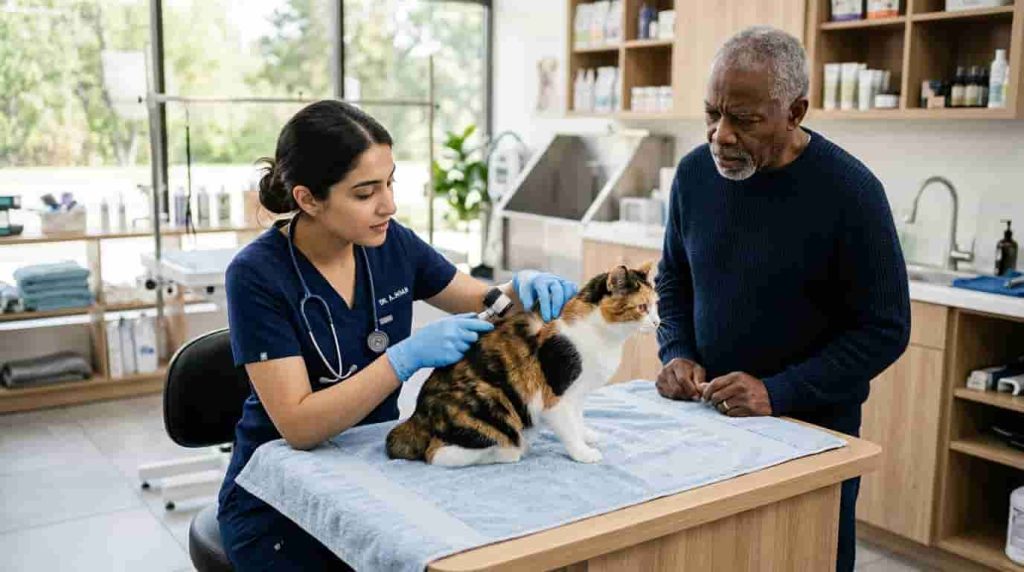
Cat Flea Allergies occur when a cat reacts to flea saliva. This saliva triggers an intense immune response. Consequently, even one flea bite causes massive, ongoing irritation.
Many cats suffer silently before their owners notice major signs. You might see them licking a specific area constantly. This grooming obsession leads to raw skin and missing fur.
If you observe these behaviors, check for other health issues. For example, read Cat Cancer Warning: Spotting unusual lumps and bumps early to rule out other problems. Always watch your pet closely for any sudden changes.
Identifying Symptoms of Cat Flea Allergies
You should look for specific clues on your cat. Common signs of flea allergies in cats include scabs, crusts, and hair loss. Most cats lose hair near the base of the tail.
Additionally, you might see small bumps on their back. These bumps indicate feline flea allergy dermatitis. If left untreated, the skin becomes thickened and dark.
Some cats exhibit extreme restlessness due to this condition. They move constantly because the itching never stops. Therefore, managing cat flea allergies requires quick and effective action.
Treating Cat Flea Allergies Through Professional Care
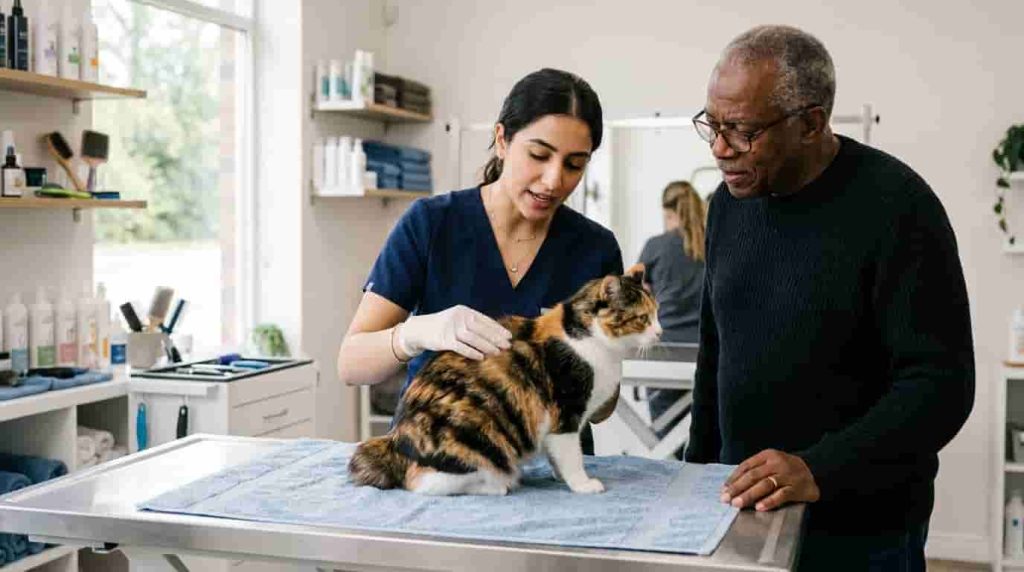
Treating cat flea allergies involves two main steps. First, you must kill all fleas currently on your cat. Second, you need to eliminate fleas in your home environment.
Many vets recommend prescription preventatives for the best results. These products work fast to break the flea life cycle. Furthermore, they provide long term cat flea allergy relief.
VCA Animal Hospitals explains that one missed dose allows the problem to return. You must maintain strict prevention for several months. Consistency keeps your feline flea allergy under control.
Effective Cat Flea Allergy Treatment Options
Your vet might prescribe steroids to stop the intense itching. These meds help the skin heal while you kill the fleas. Additionally, you should use soothing baths to calm inflamed spots.
Make sure you avoid harsh chemicals that sting damaged skin. Always follow the advice of a trained medical professional. This ensures you provide safe cat flea allergy treatment for your pet.
Also, keep your home clean by washing all pet bedding. Flea eggs hide deep within rugs and soft furniture. Prevention of cat flea allergies requires constant vigilance in your house.
Managing Cat Flea Allergies for Long Term Health
You build a safer environment by staying proactive. Most cases of feline allergic reactions to fleas require year round control. Never stop your prevention routine during the winter months.
Fleas survive in warm homes even when it snows outside. Therefore, you maintain your feline flea allergy protection every single day. This simple habit keeps your cat comfortable and calm.
If your cat seems confused or uncoordinated, investigate further. Sometimes health issues look similar. Read Cat Stroke Symptoms: What to do if your cat loses balance to distinguish these emergencies.
Understanding the Allergic Reactions to Flea Bites in Cats
The severity of allergic reactions to flea bites in cats varies. Some cats show minor redness, while others suffer massive hair loss. Genetics play a large role in how they react.
Once a cat develops this allergy, they stay allergic for life. You cannot cure it, but you can manage it perfectly. Consequently, you learn to spot the first signs of trouble.
Keep a log of when you apply your preventative medicine. Also, document any recurring symptoms of cat flea allergies you see. This data helps your vet adjust their care plan accordingly.
Why Consistent Prevention Matters
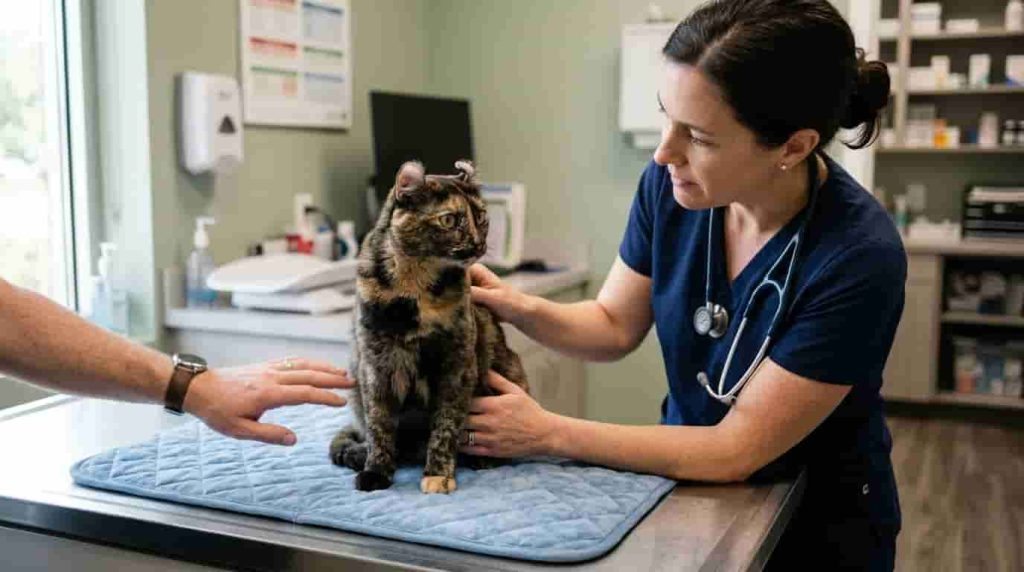
Cat flea allergy prevention saves your cat from endless misery. You save them from infections caused by constant biting. Additionally, you avoid expensive bills for treating skin damage.
When you notice a problem, act with confidence. Your vet acts as your primary partner in this health journey. They provide the most effective tools for your specific needs.
Don’t forget other important aspects of their wellness. For instance, learn about Cat Worming Schedule: Protecting indoor cats from parasites to cover all bases. Healthy cats live longer, happier lives with you.
Final Thoughts on Cat Flea Allergies
Cat Flea Allergies turn simple bites into serious skin problems. You hold the power to stop this pain immediately. Use quality preventatives and stay consistent with your schedule.
Your cat trusts you to keep them safe and itch-free. By following these steps, you build a happy, healthy home. Do you have a story about helping your cat overcome fleas?
Please share your experience in the comments below!
Frequently Asked Questions
Yes, indoor cats get fleas through windows, doors, or even by hitching a ride on your clothing. Indoor pets still require regular flea protection.
Look for excessive scratching, hair loss near the tail, and small scabs on the skin. If your cat seems very itchy, consult your veterinarian.
There is no cure for the allergy itself, but you can manage it effectively. Consistent flea control prevents the reaction from ever starting.
Visit your vet to get fast-acting flea medication and potentially soothing anti-itch medication. Never use human creams or sprays on your cat.
Yes, if your cat has fleas, the environment likely contains eggs and larvae. Vacuum often and wash all bedding to remove them from your home.