How to Get a Kitten Used to Being Alone: A Complete Beginner’s Guide
Introduction:
How to Get a Kitten Used to Being Alone becomes an urgent question when your work schedule forces you back to the office. What happens inside a tiny pet mind when front doors close and quiet rooms go completely silent?
You grab your car keys and step toward the front entrance. Suddenly, your tiny feline companion races across hardwood floors, crying frantically at your shoes.
Your heart sinks as those big round eyes stare directly into yours. Every new pet parent dreads this exact moment of guilty departure.
Leaving a young pet home by itself feels stressful and risky. Will your pet knock over lamps, shred window curtains, or cry endlessly until you return?
Natural feline instincts make young animals look for constant safety within a familiar group. Small kittens expect continuous warmth, social play, and protective contact during early life months.
Fortunately, learning proper home routines changes everything for growing animals. You can easily build confidence in young pets through systematic daily practice.
Understanding basic emotional needs helps you prevent destructive habits before they start. Let us explore proven steps to make home departure simple, peaceful, and safe for everyone.
How to Get a Kitten Used to Being Alone Through Safe Spaces
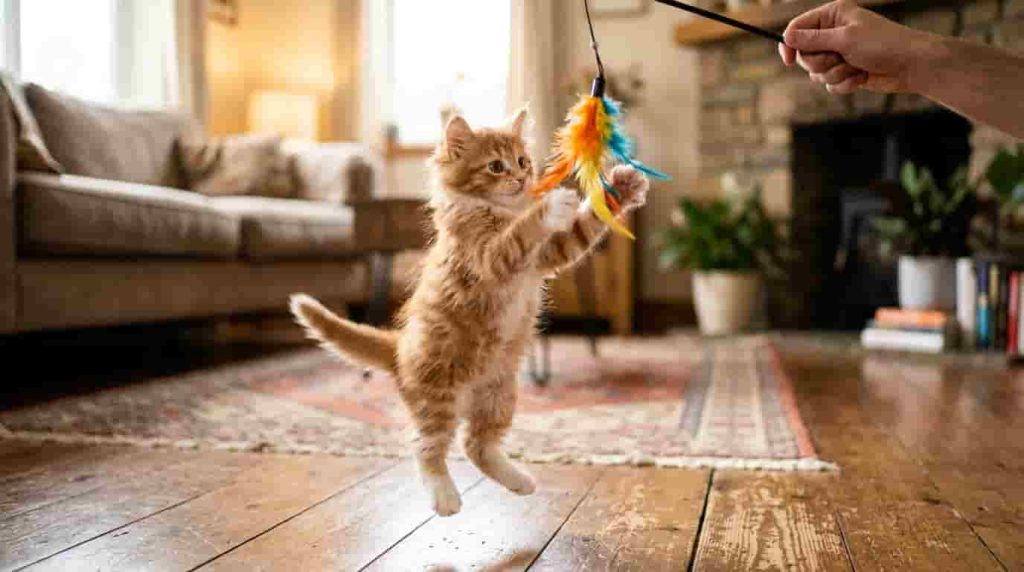
Creating a dedicated quiet zone gives your pet a secure home base when family members leave the house. Pick a small bedroom, laundry room, or warm bathroom with easily cleanable flooring surfaces.
Place a soft fleece bed, fresh water bowl, litter box, and familiar toys inside this private area. Consequently, your pet associates this special room with comforting naps rather than lonely isolation.
Setting Up a Secure Room for Kitten Alone Time Training
Effective kitten alone time training relies heavily on environmental safety and emotional comfort. Hide loose electrical cords, chemical bottles, and tiny swallowable objects before closing doors.
Leave an unwashed cotton shirt carrying your natural scent inside their sleeping basket. Your familiar smell calms nervous energy while your pet rests quietly during morning hours.
You can explore why young pets make constant vocal sounds by reading Why Is My Kitten Meowing Nonstop? right now.
Veterinary experts at the American Veterinary Medical Association recommend gradual room adjustment for young animals. Safe spaces protect curious pets from household accidents while building essential confidence every single day.
Building Confidence with Short Separation Steps
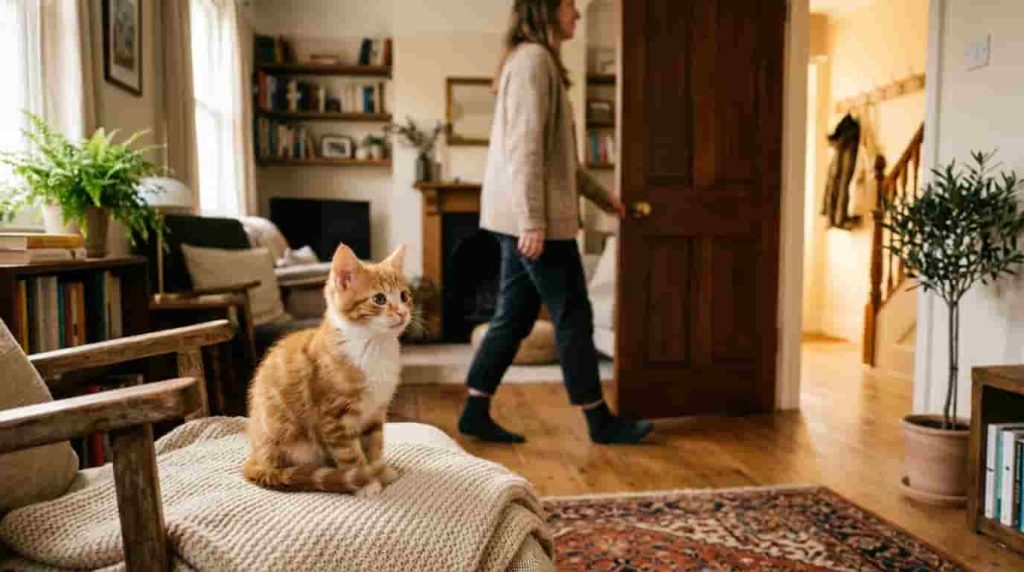
Rushing your departure routine often triggers sudden panic for unadapted young animals. Instead, practice leaving your pet inside their secure room for brief two-minute intervals while remaining home.
Walk out quietly without making dramatic emotional goodbyes or giving anxious physical cuddles. Return calmly before your pet gets upset, offering a small crunchy treat as a positive reward.
Applying Kitten Independence Training in Daily Routines
Consistent kitten independence training teaches growing pets that departures are completely normal daily events. Slowly increase separation periods from five minutes to thirty minutes over two full weeks.
Because young animals thrive on predictable patterns, keep your exit actions steady and quiet. Pick up your metal keys and coat without leaving the house immediately.
This desensitization process removes fear from common departure signals over time. You can learn about normal resting habits by reading Why Is My Kitten Breathing Fast While Sleeping? today.
Gradual exposure prevents panic while showing your pet that you always return home safely.
Preventing Boredom with Interactive Solo Toys
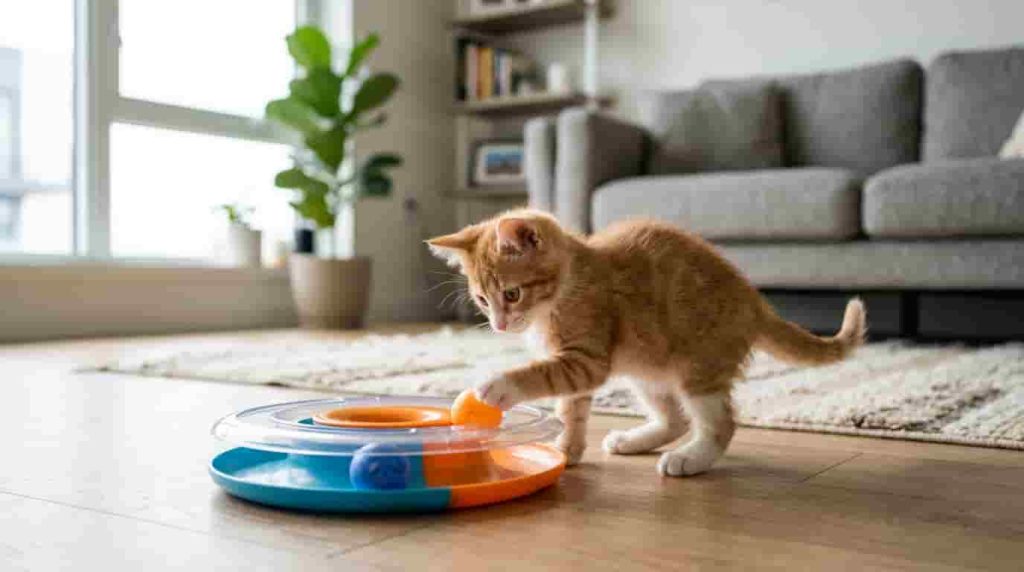
Bored pets naturally search for mischief when left without mental stimulation for several hours. Distracting your pet with engaging puzzle feeders turns quiet solo hours into fun hunting games.
Food puzzle toys release tasty treats slowly as your pet rolls them across the floor. Thus, your companion focuses on solving food puzzles instead of missing your physical presence.
Managing Cat Separation Anxiety with Engaging Activities
Managing cat separation anxiety requires active mental engagement during early morning hours. Rotate different toys daily so your pet stays curious about new objects in their play area.
- Leave puzzle toys filled with crunchy treats near sleeping spots.
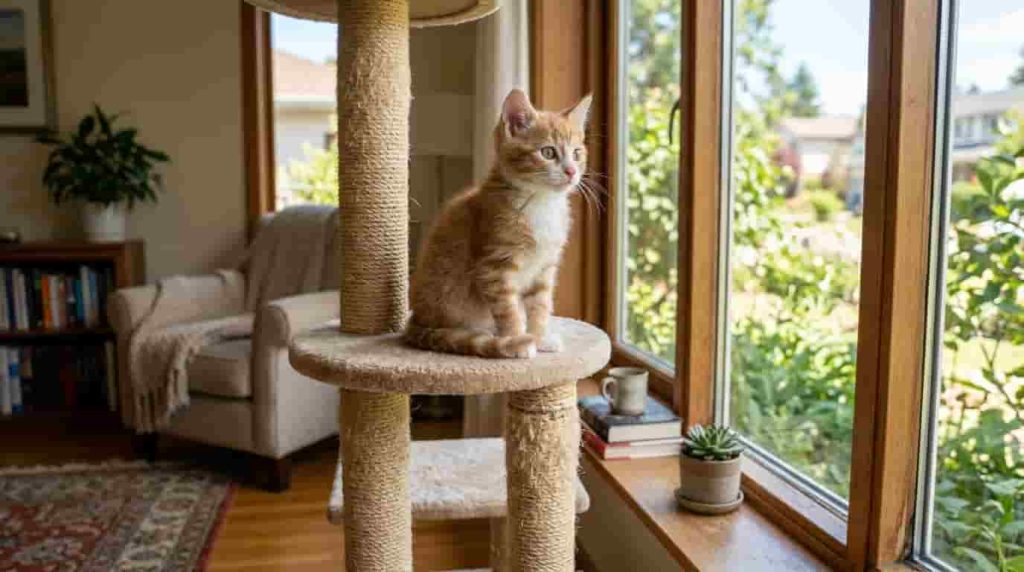
- Position a stable scratching post near an elevated window perch.
- Hide small kibble pieces around the room for foraging fun.
- Turn on soothing classical music or specialized pet television channels.
Providing rich environmental enrichment keeps growing minds active, calm, and fully entertained.
Establishing Consistent Daily Play Routines
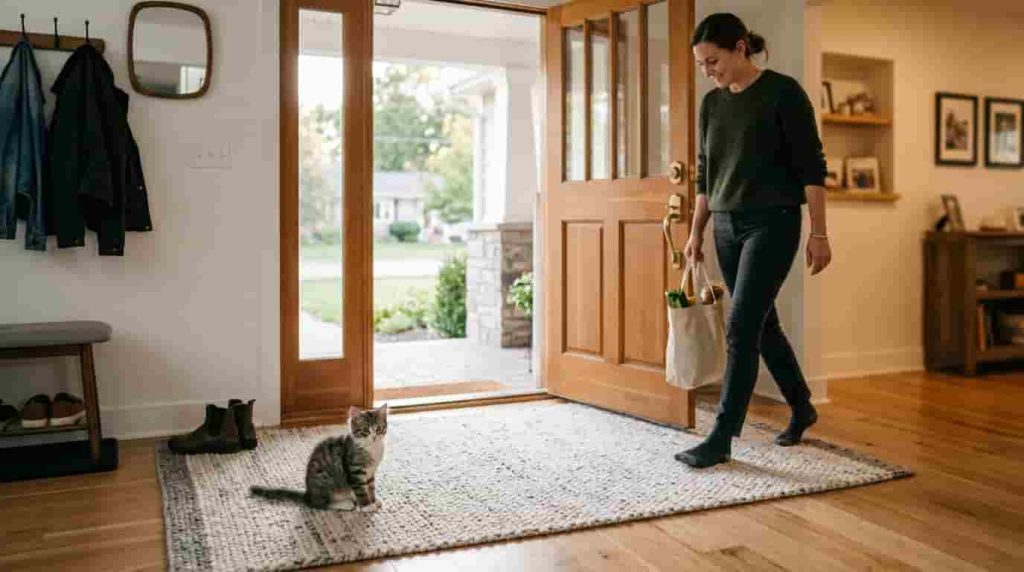
Energetic pets need structured physical exercise before you head out the door each morning. Spend fifteen minutes playing actively with feather wands or rolling small plastic balls across carpets.
Run your pet around the room until they pant softly and collapse happily onto blankets. Following play with a nutritious meal satisfies natural hunting instincts, triggering deep natural sleep cycles.
Practicing Kitten Socialization Techniques Before Departure
Applying positive kitten socialization techniques includes teaching structured energy management cycles. A well-fed, tired pet sleeps peacefully for several hours while you attend to daily work tasks.
If your pet struggles with nighttime restlessness too, review How to Stop a Kitten from Waking You Up at Night right now.
Veterinary specialists at the Cornell Feline Health Center emphasize that structured play reduces behavioral stress significantly. Daily exercise channels nervous energy constructively, promoting restful naps during quiet home hours.
Consistent activity schedules make solo time a natural resting period rather than a scary event.
Maintaining Low Key Departures and Arrivals
Overly emotional exits create unnecessary anxiety for sensitive young animals watching near doors. Avoid long hugs, dramatic baby talk, or anxious physical lingering as you walk outside.
Simply step out quietly without making eye contact or raising your voice levels. Similarly, remain calm when returning home so your arrival stays ordinary and peaceful.
Solving Problems with Kitten Alone Behavior Solutions
Implementing proper kitten alone behavior solutions requires emotional restraint from loving pet parents. Ignore frantic leaping or loud vocal cries until your pet sits down calmly on the floor.
Reward relaxed behavior with gentle chin scratches once your pet settles down quietly nearby.
- Walk out quietly without making dramatic emotional statements.
- Keep arrival greetings calm until all four paws touch the floor.
- Ignore demanding attention-seeking behaviors immediately after entering rooms.
- Reward relaxed body postures with favorite treats and quiet praise.
Calm emotional energy reassures your pet that separations are completely safe and routine events.
How to Get a Kitten Used to Being Alone Safely
Knowing how to get a kitten used to being alone helps you balance work responsibilities with proper pet care. Start with short practice sessions, enrich their safe environment, and maintain predictable daily routines.
With patient daily effort, your pet will learn that solo home time is safe, comfortable, and temporary.
Final Thoughts on Kitten Independence
Learning how to get a kitten used to being alone builds a strong foundation for a healthy lifelong friendship. You now understand how safe rooms, short training steps, puzzle toys, and quiet departures create confident pets.
Patience and daily consistency prevent separation distress while keeping your home environment peaceful for everyone.
Replacing departure guilt with structured practice transforms stressful mornings into easy daily routines. Embracing these simple training techniques helps your young pet grow into a self-assured, happy adult cat.
How does your kitten react when you step out the door? Share your personal stories and favorite training tips in the comments below!
Frequently Asked Questions
Kittens under four months old should not stay alone for longer than two to four hours at once. Young animals require frequent meals, litter box access, and regular supervision to stay safe and healthy. Older kittens can gradually handle six to eight hours once properly trained.
Leaving a dim nightlight on helps young pets navigate unfamiliar rooms and locate their litter boxes easily. Although felines see well in dim light, complete pitch darkness can confuse very young animals. A small plug-in light provides comfortable security in safe rooms.
Adopting two kittens together provides constant social interaction, mutual play, and comfort when owners leave for work. Paired pets burn energy together, which reduces boredom and prevents destructive behavioral habits naturally. Two young animals keep each other entertained during long solo hours.
Young pets cry because closing doors separates them from their social group and creates sudden uncertainty. Natural feline instincts drive them to seek contact, warmth, and reassurance from available family members. Gradual separation training teaches them that closed doors are temporary and safe.
Leaving a young pet loose in a large unsupervised house creates significant safety risks from chewable cords and small gaps. Confine your pet to a thoroughly kitten-proofed safe room until they reach six months of age. Expand their house access gradually as they demonstrate reliable house manners.