

How to Stop a Kitten from Waking You Up at Night
Introduction:
Kitten disturbance at night creates sudden exhaustion for tired pet parents who just want eight hours of peaceful sleep. Why does your sweet furry companion transform into a tiny midnight track star the moment your bedroom lights go off?
The alarm clock reads three fifteen in the morning. Soft bed covers shift suddenly as tiny sharp claws pounce directly onto your sleeping toes.
You groggily sit up while a high-pitched meow echoes across your dark bedroom. Every exhausted pet owner knows the sheer frustration of these midnight wake up calls.
Sleep deprivation quickly ruins the joy of bringing a cute new pet into your daily life. Will you ever enjoy a full night of uninterrupted rest again?
Many people assume young cats naturally stay awake and hunt throughout the entire night. However, true feline biology tells a completely different story about nocturnal habits.
Kittens actually follow crepuscular energy rhythms, meaning they feel most active during dusk and dawn hours. Understanding these natural biological clocks helps you fix midnight chaos easily.
Simple daily adjustments turn late night antics into peaceful, quiet sleep routines for your whole household. Let us discover why these wild midnight sprints happen and how to solve them step by step.
1. Evening Energy Burn Fixes Kitten Disturbance at Night
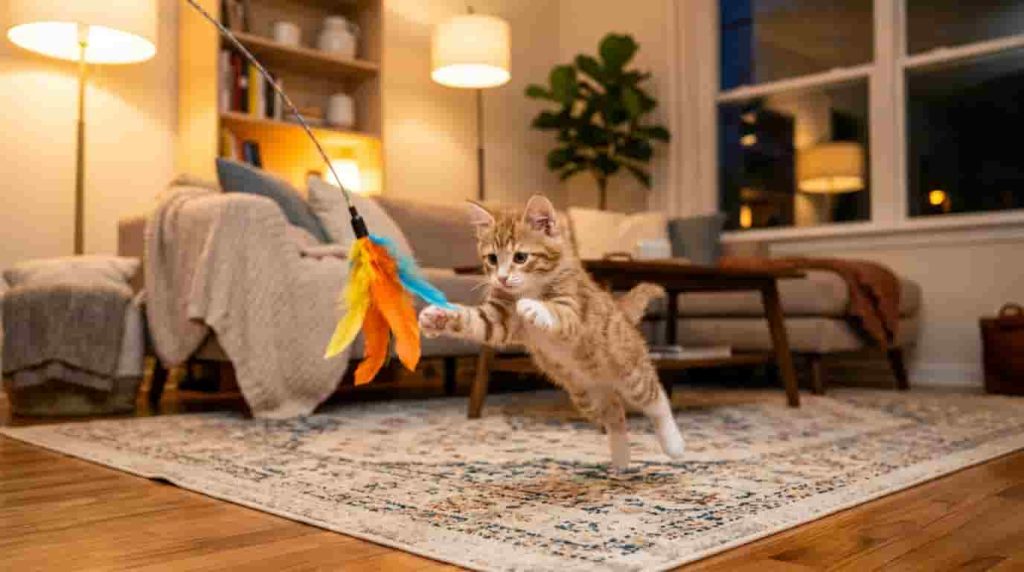
Unspent daytime energy leads directly to wild midnight sprints across your bed sheets. Young animals store massive amounts of physical stamina that requires active outlets before bedtime.
Engaging your pet in structured play sessions right before dinner burns off this excess stamina naturally. Consequently, tired pets prefer sleeping soundly through the night over chasing phantom shadows.
Interactive Play Sessions Prevent Kitten Disturbance at Night
Planning interactive play helps prevent kitten disturbance at night by fulfilling natural predatory instincts. Use wand toys, feather teasers, or small rolling balls to run your pet across living room floors.
Continue playing until your companion pouts softly, breathes deeply, and lays down on the carpet. This intense physical exertion simulates a real wild hunt, preparing their minds for quiet rest.
You can learn about normal resting respiration by reading Why Is My Kitten Breathing Fast While Sleeping? right now.
Veterinary experts at the Cornell Feline Health Center emphasize that daily structured play reduces behavioral stress significantly. Active evening play sessions set the stage for quiet hours and continuous sleep.
2. Strategic Late Dinners Trigger Natural Sleep Cycles

Wild felines naturally follow a predictable behavioral sequence of hunting, catching, eating, grooming, and sleeping. Offering a large meal immediately after evening play completes this natural biological sequence perfectly.
A full belly signals to the brain that the hunt ended successfully. Thus, heavy digestion naturally induces deep muscle relaxation and lengthy sleep periods.
Using Bedtime Mealtimes as Nighttime Meowing Solutions for Kittens
Implementing strategic mealtimes serves as effective nighttime meowing solutions for kittens struggling with late hunger. Divide daily food rations so your pet receives their largest wet food portion right before you sleep.
Consider using timed automated feeders if your companion still wakes you up for early morning breakfast. Automated feeders teach animals that humans do not control early morning food distribution.
You can explore why young pets make continuous loud calls by reading Why Is My Kitten Meowing Nonstop? today.
Providing late meals satisfies physical hunger while keeping young pets quiet until sunrise.
3. Strict Reaction Control Stops Attention Seeking Habits

Responding to midnight meowing with soft talking, petting, or feeding accidentally reinforces bad behaviors. Your pet views any human interaction, even mild scolding, as a fun reward for making noise.
If you jump out of bed at three in the morning, your pet learns that crying gets immediate attention. Therefore, staying completely still and silent breaks this frustrating cycle permanently.
Applying Calming Techniques for Restless Kittens at Bedtime
Mastering behavioral responses works alongside calming techniques for restless kittens during early training weeks. Pull blankets over your shoulders, close your eyes, and ignore all midnight noises completely.
Consistency is vital because giving in even once resets your training progress completely back to day one.
- Ignore midnight cries completely without speaking or moving under covers.
- Avoid offering middle of the night snacks or sudden play sessions.
- Keep bedroom doors closed consistently if you prefer private sleeping spaces.
- Reward quiet morning behavior only after your official wake up alarm rings.
Patience during the first few nights teaches your pet that nighttime meowing achieves nothing.
4. Creating Dedicated Safe Zones Ensures Quiet Hours
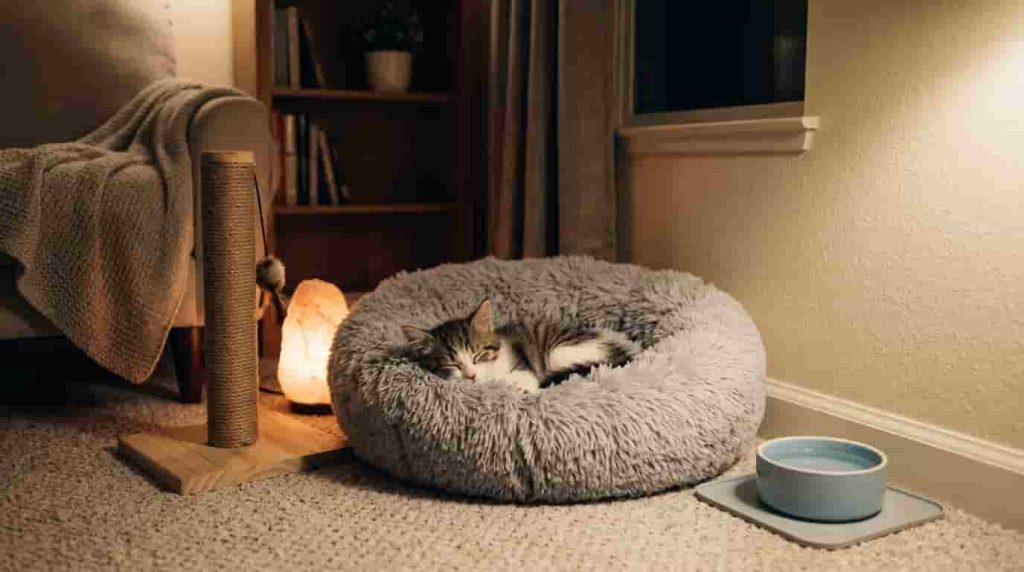
Allowing unrestricted access to your bed often encourages late night pouncing and clawing under blankets. Setting up a comfortable safe room gives your pet a private space for sleeping quietly overnight.
Furnish this cozy area with a soft fleece bed, clean litter box, fresh water, and safe solo toys.
Setting Up Environments for Quieting a Loud Kitten at Night

Proper room organization plays a vital role in quieting a loud kitten at night safely. Leave unwashed cotton clothing carrying your scent inside their sleeping basket to provide emotional comfort.
Safe rooms keep curious young pets from chewing electrical cords or knocking over fragile home decor items overnight.
You can read about building home confidence by exploring How to Get a Kitten Used to Being Alone: A Complete Beginner’s Guide today.
Official guidelines from the American Veterinary Medical Association recommend safe confinement for young animals overnight. Secure spaces protect growing pets from household hazards while establishing healthy sleep boundaries.
5. Daytime Enrichment Prevents Midnight Boredom Spells
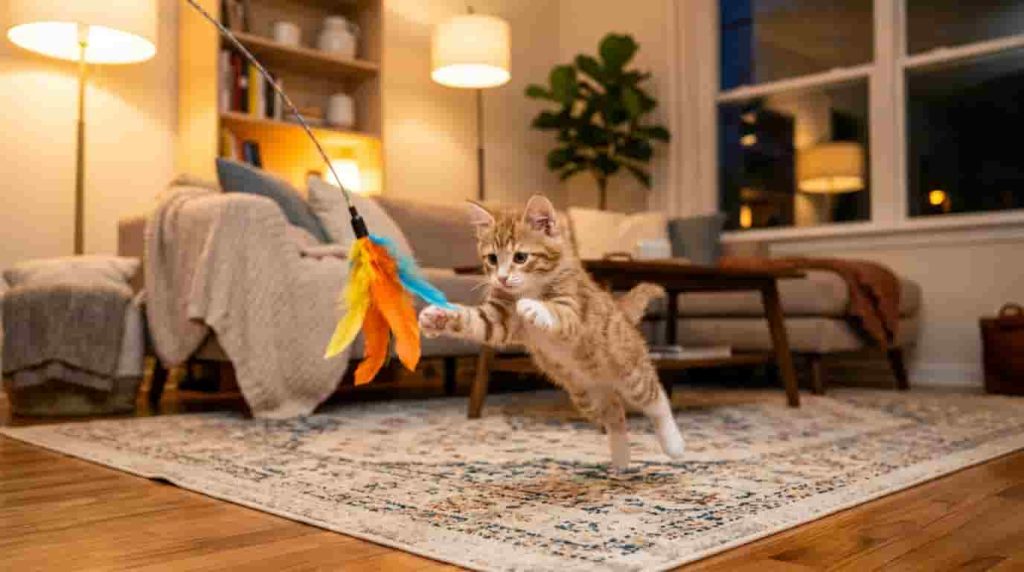
Boredom during afternoon hours leads directly to restless evening energy and midnight vocalizations. When pets sleep all day while you work, they wake up fully energized just as you go to sleep.
Providing engaging daytime activities keeps minds active while you attend to daily work responsibilities.
Managing Reasons for Kitten Nighttime Behavior Problems
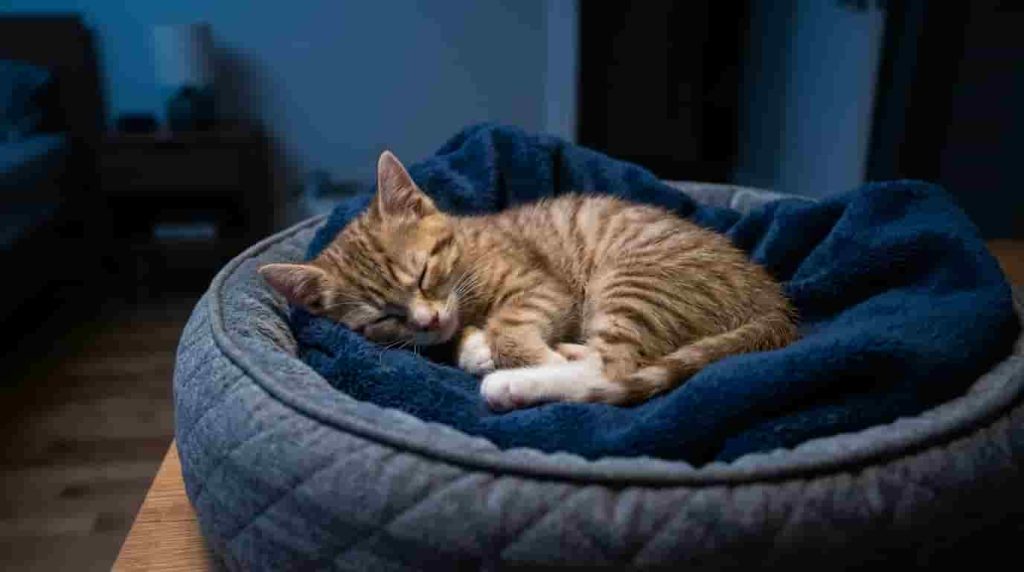
Understanding underlying reasons for kitten nighttime behavior helps you design better daytime enrichment routines. Position elevated cat trees near sunny windows so your pet watches passing outdoor birds safely.
Scatter puzzle feeders and safe scratching posts around living rooms to encourage daytime physical activity.
- Place stable window perches near bird feeders for engaging daytime viewing.
- Hide kibbles inside puzzle toys to stimulate natural foraging instincts.
- Leave safe solo toys out during morning hours to prevent afternoon boredom.
- Schedule brief morning play sessions before leaving home for work daily.
Active daytime hours ensure your companion feels genuinely tired when night falls.
Final Thoughts on Ending Kitten Disturbance at Night
Resolving Kitten disturbance at night requires patience, structured routines, and consistent behavioral boundaries every single day. You now know how evening play, late meals, zero attention, and safe spaces fix midnight waking.
Sticking to these proven steps transforms exhausting nights into peaceful rest for your entire household.
Replacing late night frustration with structured care strengthens your bond while building great sleeping habits. Embracing these simple daily habits helps your young companion mature into a quiet, well-adjusted adult cat.
What funny midnight antics does your kitten pull when you try to sleep? Share your personal stories and favorite sleep tips in the comments below!
Frequently Asked Questions
Young pets wake owners up due to excess stored energy, hunger, or attention-seeking habits. Their natural crepuscular instincts make them feel naturally active during dusk and dawn hours. Structured play and late meals help align their sleep schedule with yours easily.
Yes, ignoring midnight cries teaches your pet that vocalizing does not gain human attention or food. Talking, petting, or feeding during late hours accidentally rewards bad behavior and reinforces nighttime crying. Stay completely silent and still until your scheduled morning alarm rings.
Yes, keeping your bedroom door closed helps establish clear sleeping boundaries for young animals. Provide a safe room equipped with a bed, litter box, water, and quiet toys. Consistent boundaries prevent midnight pouncing while keeping your pet completely safe overnight.
Most young pets adapt to human sleep schedules within one to three weeks of consistent training. Maintaining strict routines regarding evening play, late dinners, and ignoring midnight cries speeds up progress significantly. Consistency from every family member remains essential for fast results.
Yes, young pets naturally settle down as they mature and their physical energy levels stabilize. However, establishing proper daily routines prevents temporary youthful antics from becoming permanent adult habits. Proper training ensures quiet nights throughout your pet’s adult life.