What Is the Most Vocal Cat Breed? Talkative, Noisy and Singing Cat Breeds
Introduction:
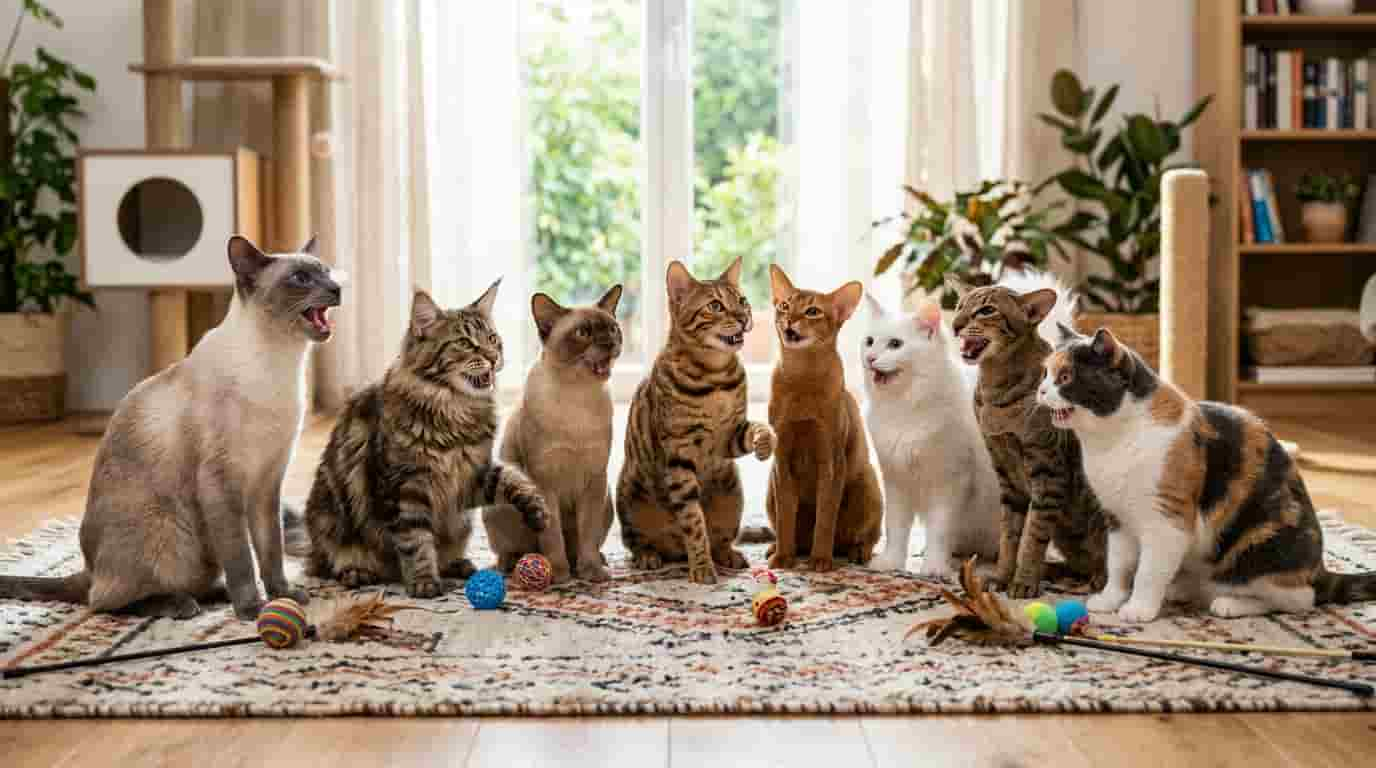
Vocal Cat Breeds : When exploring the fascinating world of feline communication, one quickly realizes that cats possess an extraordinarily diverse vocabulary. While no single cat on Earth holds a universal crown for being the absolute loudest creature, certain feline groups are exceptionally well-known for frequent, varied, or intense vocalizations. When investigating talkative cats, it helps to look beyond a simple meow and understand the vast spectrum of sounds felines make—including soft chirping, rhythmic trilling, sharp yowling, demanding calls, and interactive, back-and-forth “conversations” with their humans.
While individual personality always plays a monumental role within every household, Siamese cats and their close relatives in the Oriental family are especially famous for their chatter. Whether you live in a quiet suburban single-family home or a bustling apartment building where thin walls make every sound travel, understanding a cat’s vocal tendencies can help you choose the ideal companion for your lifestyle, much like evaluating behavioral traits in a What Is the Most Loyal Cat Breed? Most Loving, Affectionate and Friendly Breeds
guide when looking for total devotion. In this comprehensive guide, we will examine the most vocal breeds, explore why some cats love to talk while others remain silent, look at how vocality intersects with other personality traits, and provide actionable tips for living harmoniously with a chatty feline.
What Is the Most Vocal Cat Breed?
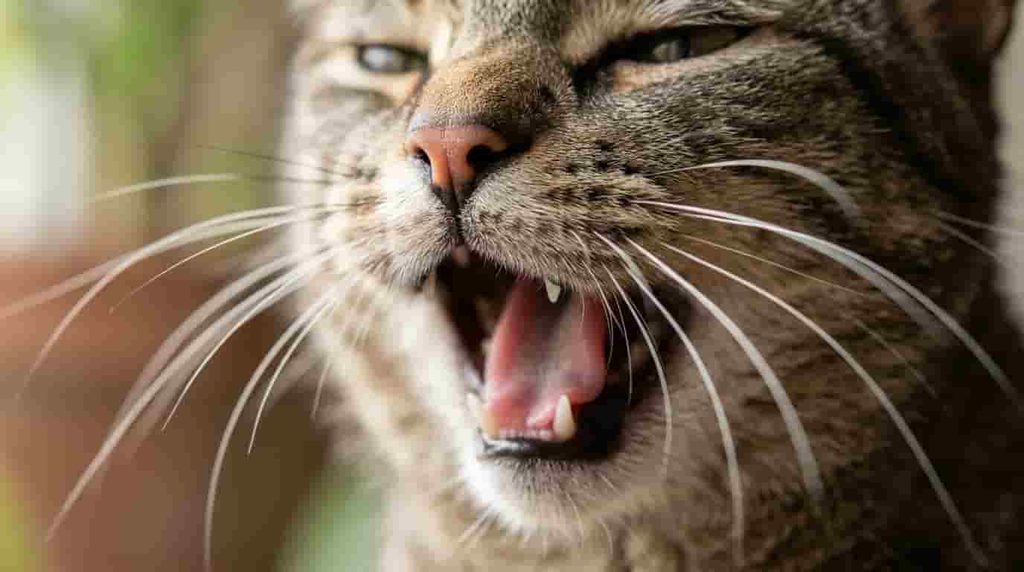
The Siamese cat is universally and widely regarded as the most vocal cat breed due to its legendary reputation for constant, expressive, and conversational communication. Unlike many other cat breeds that only meow when they are actively hungry or seeking attention, a Siamese often narrates its entire day. They respond directly to human voices with a distinctive, sweeping range of vowel-like sounds, melodic trills, and loud, demanding calls.
However, determining the absolute “most vocal” cat remains somewhat subjective because vocal behavior is notoriously difficult to rank using a single universal measurement. An individual cat’s unique personality, age, living environment, daily social needs, and learned behavior heavily influence how much they vocalize.
Why Siamese Cats Are So Talkative
Siamese cats possess a remarkably strong social nature and an intense, almost dog-like desire to interact with their human families. They do not just make random noise; they genuinely converse. Their vocalizations often feel deliberate, as if they expect a clear reply from you and will stubbornly keep talking until they get one. If you stop to talk back to a Siamese, you will often notice their pitch and tone shifting as if they are maintaining a real dialogue.
Is the Siamese the Noisiest Cat?
While Siamese cats are exceptionally talkative, a cat being “vocal” is not the same as being “noisy” in an unpleasant or disruptive way. Many owners find the chatty, opinionated nature of a Siamese endearing and comforting rather than annoying. However, because their calls can carry across a house, they certainly qualify as high-volume communicators compared to more reserved breeds.
Top 10 Most Vocal Cat Breeds
While individual cats can always differ based on their upbringing and personal temperament, the following ten breeds are widely recognized across the feline fancy for their relatively strong vocal tendencies and interactive communication styles.
1. Siamese
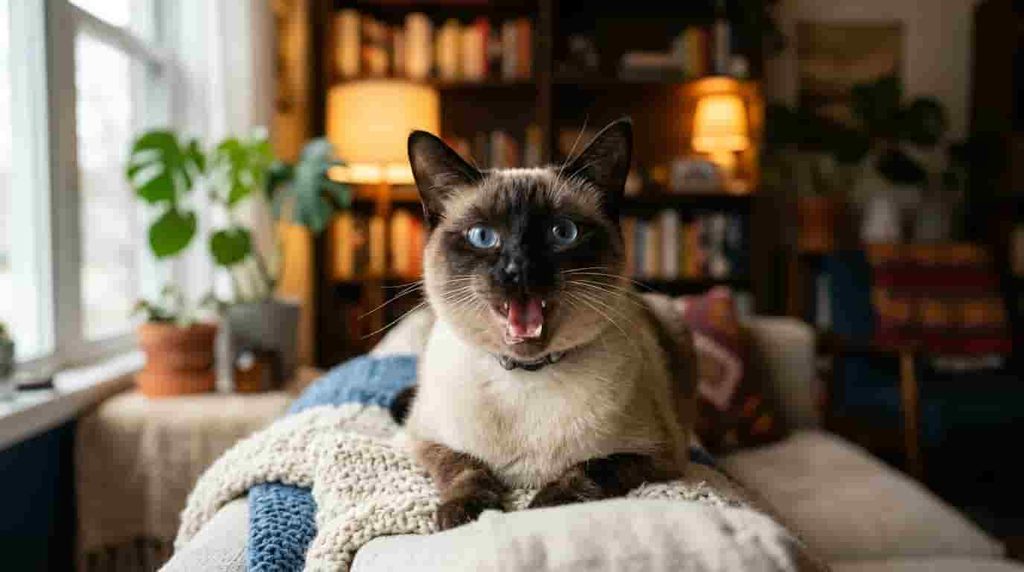
- Typical Vocal Style: Loud meows, distinct vowel-like calls, and chatty trills.
- Why Owners Notice It: They actively seek human interaction and expect a conversation.
- Best Fit: Owners who enjoy a deeply engaged and expressive feline companion.
2. Oriental Shorthair
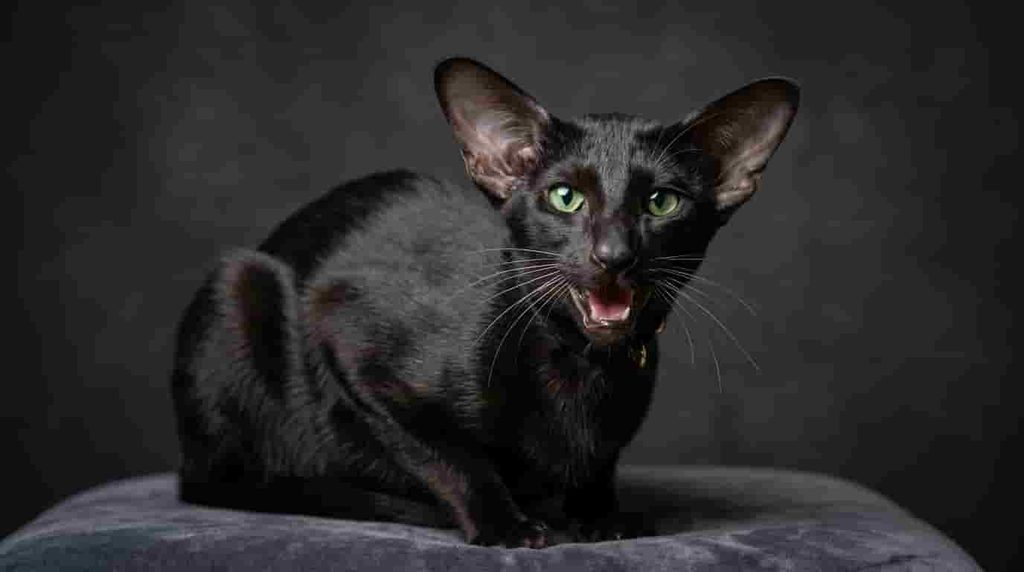
- Typical Vocal Style: Persistent meows, expressive chatter, and demanding calls.
- Why Owners Notice It: Closely related to the Siamese, they share a deep-seated genetic need to be heard and noticed.
- Best Fit: Social households where someone is frequently home to interact and play.
3. Balinese
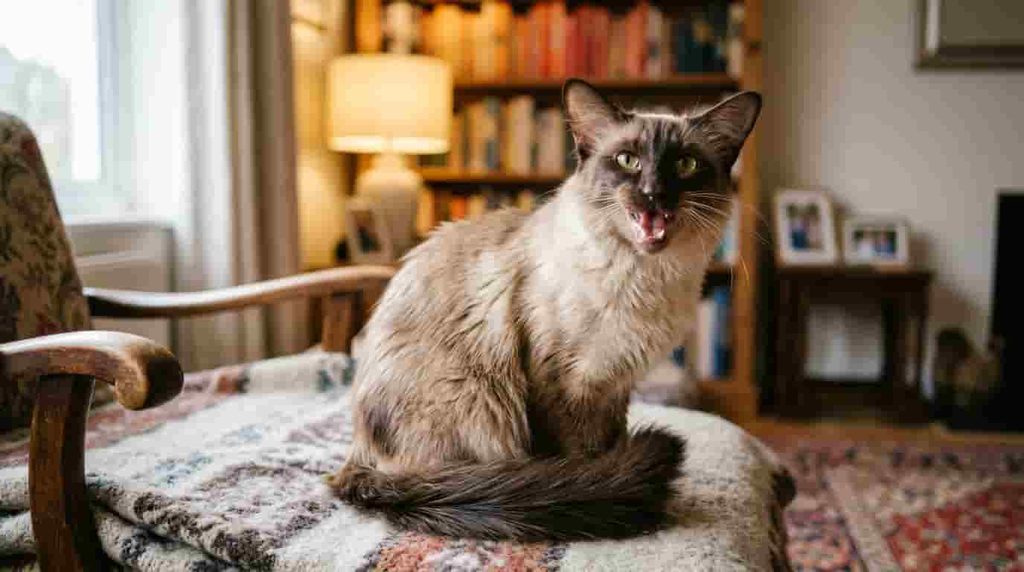
- Typical Vocal Style: Soft meows, trills, and gentle melodic chirps.
- Why Owners Notice It: As the long-haired relative of the Siamese, they combine a silky, flowing coat with a chatty personality, making them a prime example of a vocal long haired cat breed.
- Best Fit: People wanting a stunning long-haired companion who loves to talk.
4. Oriental Longhair
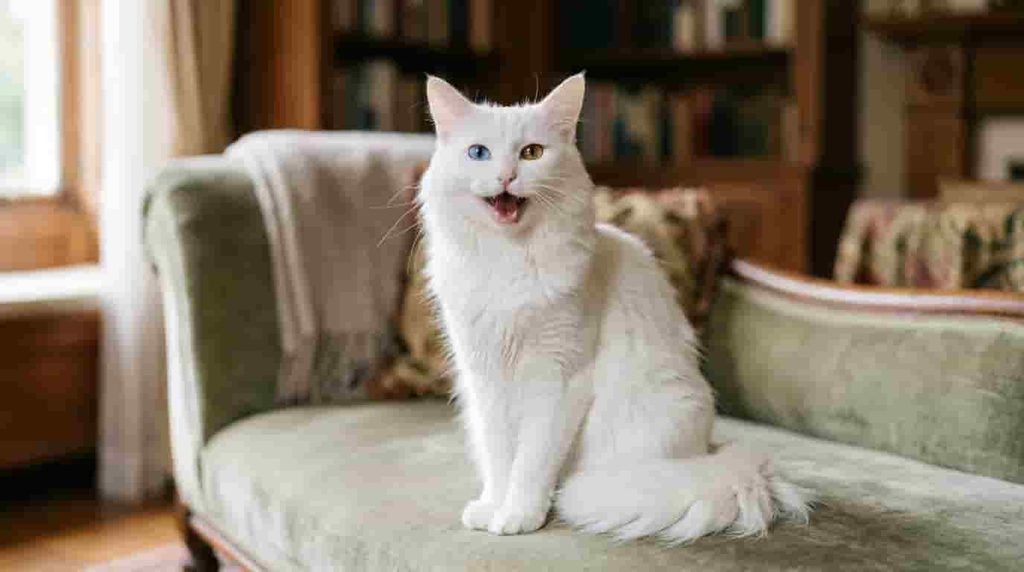
- Typical Vocal Style: Expressive calls, meows, and conversational chatter.
- Why Owners Notice It: They match the high communication energy of Oriental-type shorthairs wrapped in a luxurious, multi-colored coat.
- Best Fit: Owners looking for an outgoing, talkative long-haired cat with an energetic streak.
5. Burmese
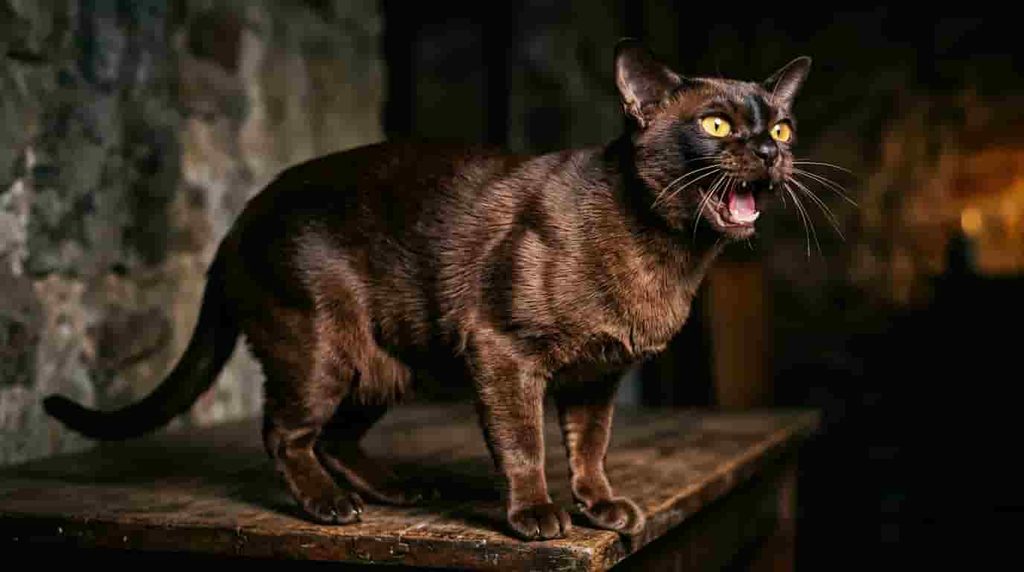
- Typical Vocal Style: Soft-to-moderate vocal interactions, sweet meows, and constant purrs.
- Why Owners Notice It: They use sound to guide their humans around the house, ensuring they are never left out of any domestic activity.
- Best Fit: Companion-focused homes seeking a loving, responsive pet.
6. Tonkinese
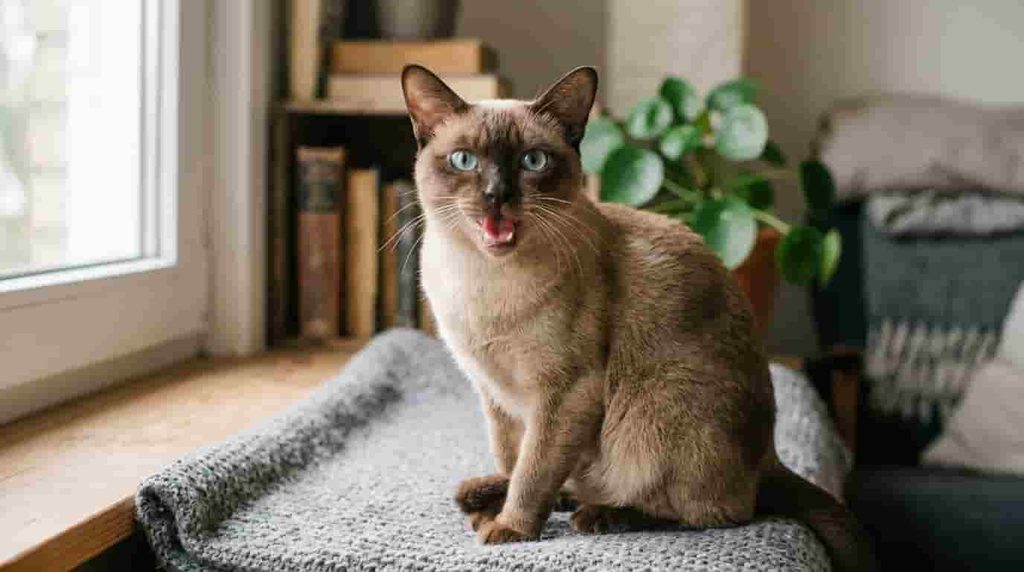
- Typical Vocal Style: Interactive meows, greeting sounds, and social chatter.
- Why Owners Notice It: Blending Siamese and Burmese ancestry, they love participating in daily household activities and greeting you at the door.
- Best Fit: Active households that appreciate an engaging, highly vocal partner.
7. Bengal
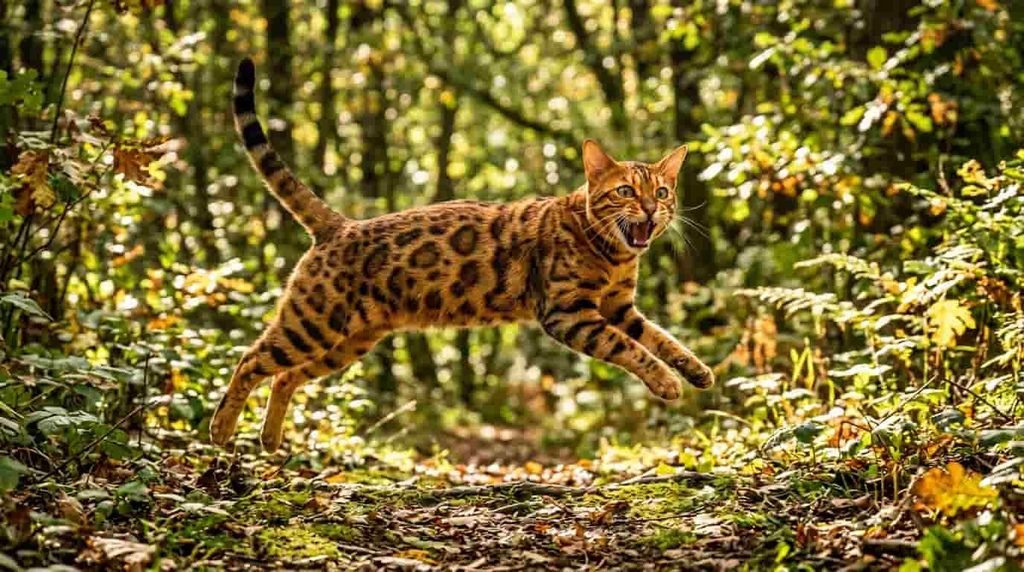
- Typical Vocal Style: Unique chirps, warbles, meows, and occasional high-energy calls.
- Why Owners Notice It: Their wild Asian Leopard Cat ancestry and high intelligence inspire powerful vocal expressions when they want to play, hunt, or explore. If you love high-energy behavior, you might also enjoy exploring insights in a What Is the Most Playful Cat Breed? Friendliest, Most Active and Mischievous Breeds overview.
- Best Fit: Engaged, active owners who can match their intense energy levels.
8. Sphynx

- Typical Vocal Style: Squeaky meows, social calls, and persistent demands for warmth and food.
- Why Owners Notice It: Their people-oriented nature means they vocalize whenever they want comfort, a sweater, or company.
- Best Fit: People-oriented homes where the cat can stay close and vocalize freely without disturbing neighbors.
9. Japanese Bobtail
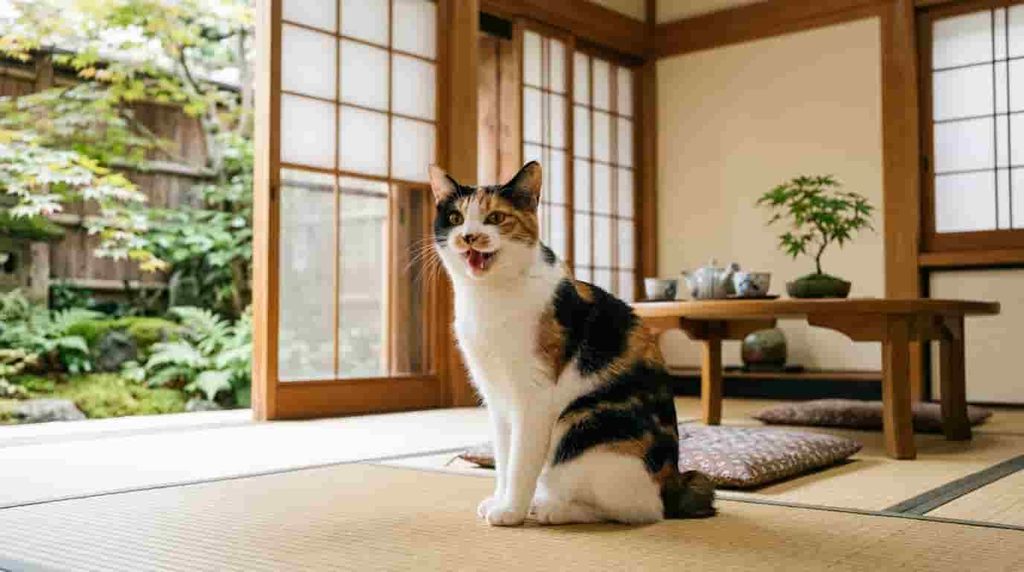
- Typical Vocal Style: A wide melodic range, soft chirps, and song-like trills.
- Why Owners Notice It: They use a diverse vocabulary to express their feelings rather than just shouting or yowling.
- Best Fit: Owners who enjoy an expressive cat with unique, musical vocal sounds.
10. Turkish Angora
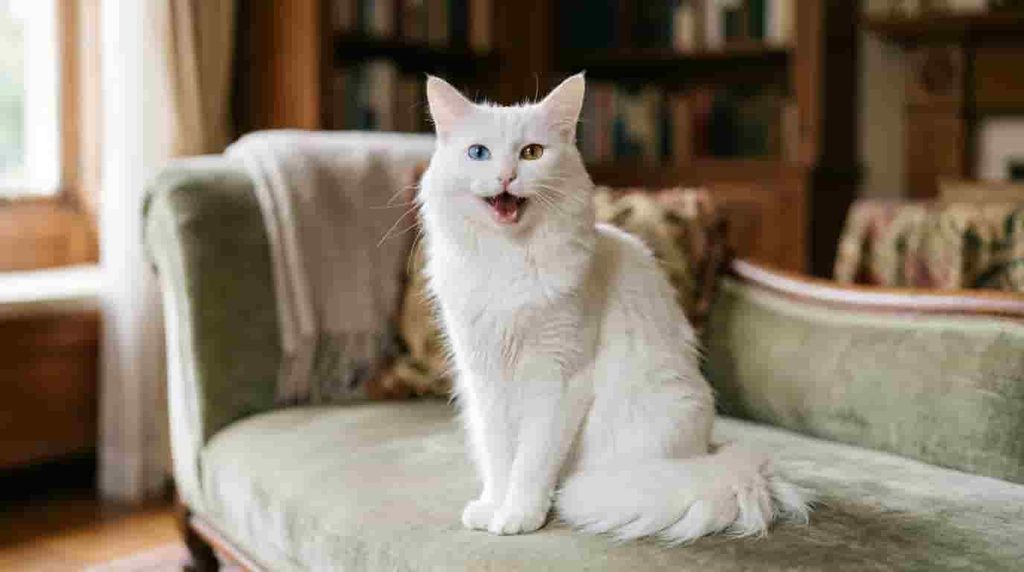
- Typical Vocal Style: Soft meows and gentle conversational responses.
- Why Owners Notice It: While vocality varies significantly between individuals, they love directing their humans with quiet, persistent vocal cues.
- Best Fit: Social households looking for an attentive, moderately talkative pet.
Summary Comparison Table
| Breed | Vocality | Common Style | Good For |
| Siamese | Very high | Loud meows, calls | Owners who enjoy conversation |
| Oriental Shorthair | Very high | Meows, calls, chatter | Social households |
| Balinese | High | Meows, trills | Interactive owners |
| Oriental Longhair | High | Meows, calls | People wanting a long-haired companion |
| Burmese | High | Soft-to-moderate vocal interaction | Companion-focused homes |
| Tonkinese | High | Meows and interactive sounds | Active households |
| Bengal | Moderate–high | Meows, chirps | Engaged, active owners |
| Sphynx | Moderate–high | Meows and social calls | People-oriented homes |
| Japanese Bobtail | Moderate–high | Varied sounds | Owners who enjoy expressive cats |
| Turkish Angora | Moderate | Meows and interaction | Social households |
Why Are Some Cats More Vocal Than Others?
To truly understand feline vocality, one must examine the underlying drivers behind why certain cats chatter endlessly while others remain sphinx-like and silent. Feline communication is a sophisticated evolutionary tool shaped by genetics, environment, and social conditioning.
Breed Tendencies and Genetics
Genetics and selective breeding play a massive role in shaping a cat’s baseline temperament. Over centuries, certain lines were developed with traits that encourage high social engagement, human dependency, and vocal communication. For instance, breeds originating from Southeast Asia, such as the Siamese and Burmese, developed in close proximity to human dwellings, where communicating effectively with people ensured food, shelter, and safety.
Individual Personality and Temperament
Just like humans, individual cats possess entirely unique personalities regardless of their breed. Some cats are naturally introverted, quiet observers who process their environment silently. Others are extroverted, dramatic performers who express every single emotion out loud. An individual kitten from a normally quiet breed can occasionally turn out to be a massive chatterbox, proving that personal disposition matters just as much as pedigree.
Environmental Factors and Stimulation
A cat’s physical and social environment heavily influences its vocal behavior. A cat that experiences boredom, lack of mental stimulation, or sudden environmental shifts may resort to vocalizing as an outlet for frustration or a plea for enrichment. Conversely, a cat living in a rich, stimulating environment with plenty of toys, vertical space, and window views may feel content and quiet for longer stretches of time.
Age-Related Vocalization
A cat’s age dictates much of its vocal pattern. Young kittens vocalize constantly to locate their mothers and signal hunger or distress. As cats enter adulthood, their vocals become targeted and intentional. However, older senior cats frequently experience age-related cognitive decline (feline cognitive dysfunction), sensory loss (such as deafness), or systemic illnesses (like hyperthyroidism or high blood pressure), all of which can cause them to yowl loudly, especially at night.
Learning and Positive Reinforcement
Cats are exceptionally smart creatures that quickly learn cause and effect. If a cat meows and immediately receives a scoop of food, a handful of treats, or a door opened to the balcony, the cat learns that vocalizing is a powerful tool. Over time, this behavior becomes heavily reinforced, turning a quiet kitten into an insistent, demanding adult talker.
What Is a Talkative Cat?
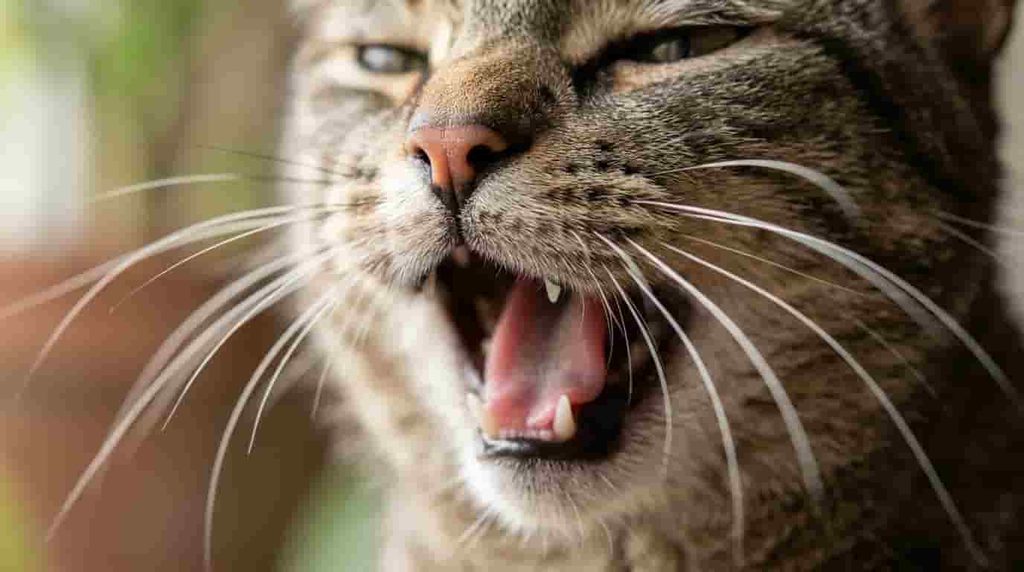
A talkative cat is one that frequently uses vocal sounds to communicate its needs, feelings, or simple morning greetings. Being talkative does not automatically mean being loud or obnoxious; many talkative cats rely on soft trills, gentle chirps, murmurs, and polite little squeaks rather than piercing screeches.
Common domestic sounds include standard meows, chattering teeth while watching birds through a window, and soothing purrs. Understanding context, combined with reading subtle feline body language like ear position, tail swishing, and pupil dilation, helps owners accurately interpret what their chatty companion is trying to express.
What Makes a Cat Breed “Noisy”?
It is easy for casual pet owners to conflate vocality with noise, but ethologists and behaviorists draw a clear line between the two concepts.
Vocality vs. Loudness
Frequency and volume are entirely different physical metrics. A cat might meow very frequently throughout the day (high vocality) but maintain a soft, breathy pitch that never disturbs anyone (low volume). Conversely, another cat might speak very rarely (low vocality) but unleash a deep, resonant yowl at 3:00 AM that wakes up the entire neighborhood (high loudness).
Common Types of Vocal Behavior
The standard repertoire of vocal felines includes attention-seeking meows, urgent food requests, greeting chirps upon your return from work, and nighttime calling. Understanding which category your cat falls into can help you manage your home environment more effectively.
Why “Noisy Cat Breed” Can Be Misleading
Relying solely on breed labels to predict noise levels can be misleading. While a Siamese is statistically more likely to talk than a British Shorthair, individual housing situations, owner responses, and daily routines play massive roles in how loud a cat actually appears in practice.
Singing Cat Breeds: Which Cats Make Musical Sounds?
An informal and charming description often applied to certain felines is the “singing cat breed.” This term usually refers to cats that produce complex, multi-tonal trills, chirps, warbles, and melodic patterns rather than traditional flat, monotonous meows.
Breeds like the Siamese, Balinese, and Japanese Bobtail are frequently celebrated for these musical, expressive utterances. When they greet you, they do not just say “meow”—they produce an ascending or descending melodic phrase that sounds remarkably like a song. The real appeal of these breeds lies in their unique acoustic variety and charm rather than any literal musical talent.
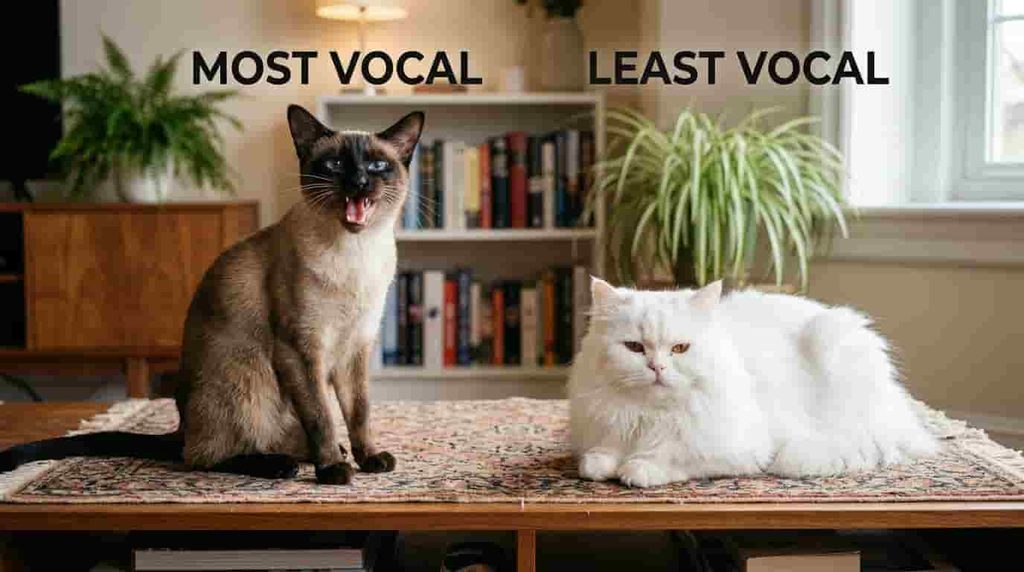
Most Vocal vs. Least Vocal Cat Breeds
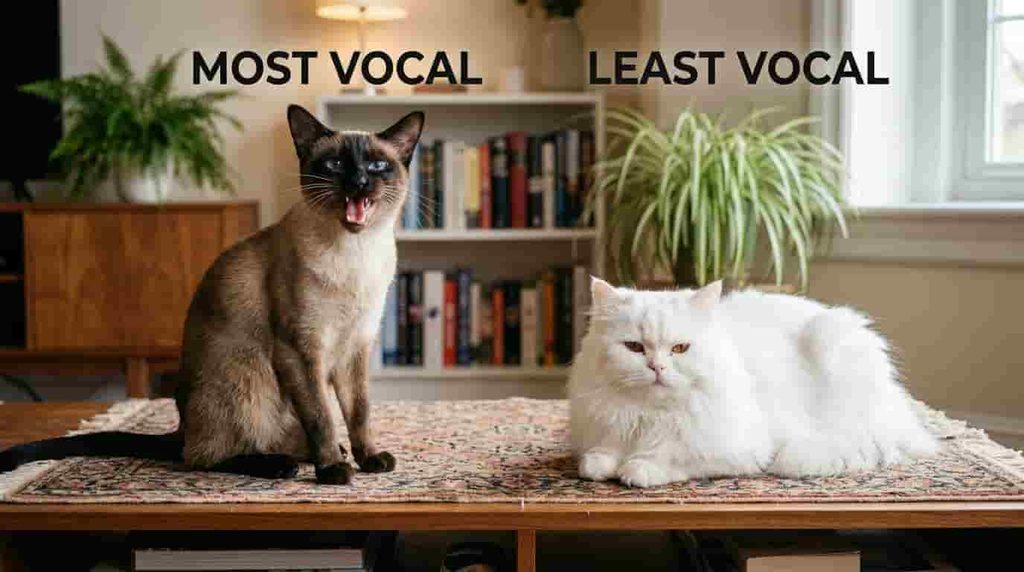
To find the right balance for your home, it helps to contrast the most talkative breeds with their quiet counterparts.
What Breed of Cat Is Less Vocal?
Breeds often described as relatively quiet, reserved, and placid include the British Shorthair, Persian, Ragdoll, and Russian Blue. These cats prefer peaceful observation, gentle physical touch, and quiet companionship over shouting for attention. However, it must be emphasized that “quiet” in the feline world never means completely silent—even a Persian will speak up when dinner is late.
Should You Choose a Quiet or Vocal Cat?
If you thrive on constant interaction and love a cat that acts like an interactive roommate, a vocal breed is a phenomenal match. If you value absolute quiet, work night shifts, or need uninterrupted rest, a calmer, less talkative individual cat or breed is usually a much better fit. For instance, if you prefer a self-sufficient pet that doesn’t constantly demand verbal attention, examining traits in a What Is the Most Independent Cat Breed? Best Breeds for Solo, Indoor and Low-Maintenance Living
guide can offer a great alternative perspective.
Extremely Vocal Cat Breeds: What Should Owners Expect?
Living with an extremely vocal cat means welcoming a vibrant, opinionated companion into your daily life. Expect a cat that announces their triumphant entry into every room, demands breakfast with absolute urgency, and loudly critiques your work-from-home schedule.
These high-energy, chatty cats thrive on intensive attention, interactive puzzle toys, and rich environmental enrichment. However, owners should never assume every loud outburst is simply “just the breed”—sudden, dramatic changes in vocal patterns can signal underlying medical issues that require professional veterinary attention.
When Excessive Meowing May Mean Something Is Wrong
While a naturally vocal breed chats out of habit and personality, a sudden, inexplicable spike in vocal noise can indicate hunger, chronic stress, physical pain, illness, or cognitive decline.
If a normally quiet, reserved cat starts yowling persistently, or if a talkative cat’s voice changes pitch, becomes hoarse, or increases dramatically in frequency, consult a qualified veterinarian immediately. Common culprits include urinary tract infections, dental disease, arthritis pain, kidney issues, and hyperthyroidism. Ruling out medical causes is always the first and most critical step in addressing excessive meowing.
Are Vocal Cats Good for Apartment Living?
A talkative cat can do remarkably well in an apartment setting, provided your neighbors cannot easily hear through shared walls and the cat receives plenty of indoor enrichment.
Many vocal breeds, such as the Siamese and Balinese, form intense bonds with their owners and actually prefer cozy indoor spaces where they can stay close to you. However, if your apartment building has strict noise bylaws or extremely thin walls, owning an exceptionally loud talkative breed might require extra training, soundproofing, or choosing a more reserved companion. Assessing an individual cat’s temperament prior to adoption matters far more than relying solely on generalized breed labels.
How to Choose the Right Vocal Cat for Your Lifestyle
When deciding whether to bring a talkative feline into your home, honest self-reflection is your best tool.
- Choose a vocal breed if you: Love constant interaction, want an interactive shadow that follows you from room to room, and do not mind regular meowing as part of your daily background noise.
- Think twice if you: Need total silence to concentrate, work irregular night shifts, or live in strict noise-restricted housing where loud feline calls could cause friction with landlords or neighbors.
Vocality Compares With Other Cat Personality Traits
Vocality represents only one fascinating facet of a cat’s complex character. A feline can be talkative yet fiercely independent, or quiet while remaining intensely playful. Understanding how vocalization relates to other core traits—such as the mental acuity analyzed in a What Is the Most Intelligent Cat Breed? Top Smartest Cat Breeds Ranked
review—helps build a complete, well-rounded picture of feline behavior before bringing a new pet home.
By analyzing how communication styles interact with playfulness, affection, independence, and intelligence, prospective cat owners can make deeply informed decisions that ensure a harmonious, joyful household for both human and feline alike.
Frequently Asked Questions
What is the most vocal cat breed?
The Siamese is universally recognized as the most vocal and chatty cat breed. Oriental Shorthairs and Balinese are close runners-up in terms of conversational frequency.
Which cat breed meows the most?
Siamese and Oriental-type cats are most frequently associated with constant meowing, vocal demanding, and highly communicative daily behavior.
What is the noisiest breed of cat?
Siamese and related breeds top lists for noise due to a combination of high vocal frequency, carrying pitch, and distinctive, demanding calls.
What breed of cat is less vocal?
Breeds like the British Shorthair, Persian, and Ragdoll tend to be much quieter, more reserved, and less demanding in their everyday vocalization.
Are vocal cats harder to live with?
They are not necessarily harder, but they do require dedicated owners who enjoy an interactive, communicative relationship and can handle having a chatty companion.
Conclusion — Choosing the Right Vocal Cat Breed
Finding the right Vocal Cat Breed comes down to balancing your personal noise tolerance with your deep desire for an engaging, interactive companion. Whether you fall completely in love with the iconic chatty nature of the Siamese, the flowing elegance of the Balinese, or the expressive sounds of other talkative breeds, understanding what to expect ensures a harmonious, happy home.
Take your time to evaluate individual personalities, test your personal preferences, and choose a cat that truly matches your lifestyle. What breed do you think is the most talkative, and is your own cat a chatty little chatterbox or a quiet, peaceful companion? Drop a comment below and share your experiences!