Cat Heat Stroke: Cooling down a panting pet during a power outage.
Introduction:
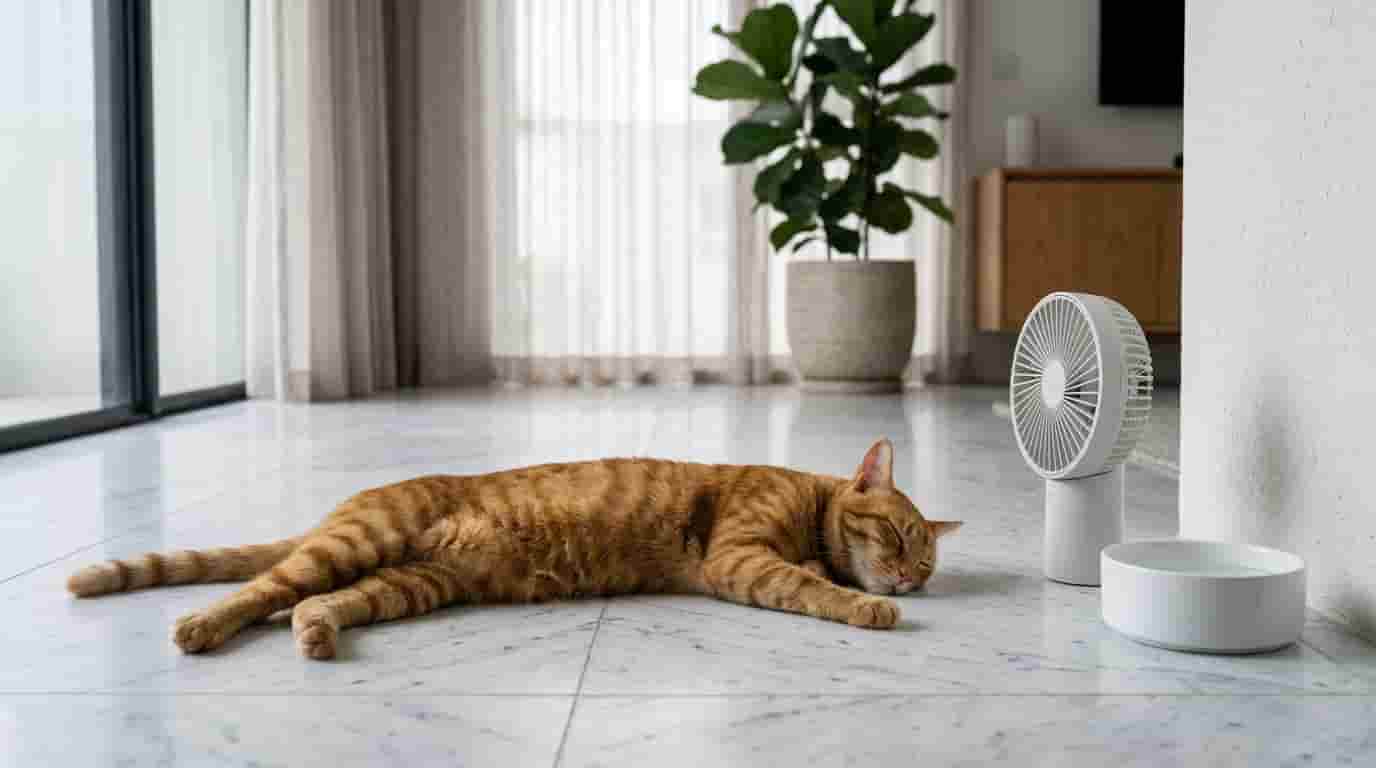
Cat Heat Stroke can happen faster than you think during a summer storm. Have you ever entered your home to find the AC dead and the air thick? Your cat lies on the floor, panting hard, and refuses to move. You feel panic rising as you realize the temperature keeps climbing.
What do you do when your feline friend begins to struggle in the heat? First, you must remain calm to help them effectively. We will look at how to identify this danger and save your pet. Therefore, keep reading to learn the vital steps for survival.
Understanding Cat Heat Stroke Risks
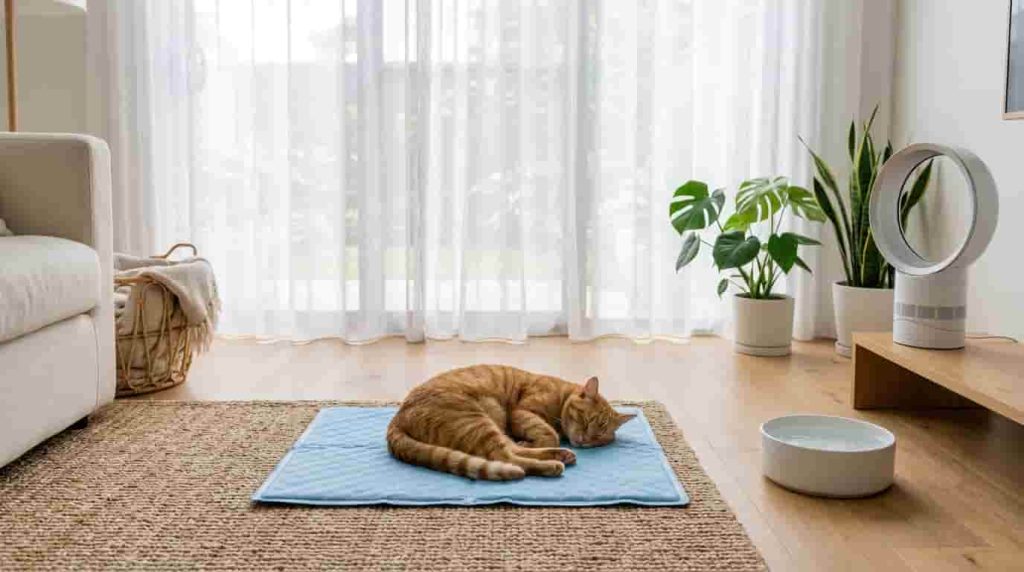
Cat heat stroke occurs when a feline body temperature rises above safe levels. Unlike humans, cats cannot sweat to cool themselves down easily. Instead, they rely on panting and grooming to release extra body heat. When these methods fail, overheating in cats becomes a serious threat.
You see symptoms of cat heat stroke appearing as the cat becomes lethargic. Their gums might turn deep red, and they might act confused or dizzy. Furthermore, they may drool excessively as their body struggles to maintain balance. You must recognize these signs of cat heat stroke immediately.
Recognizing Symptoms of Cat Heat Stroke
You look for specific signs of heat stroke in felines to act quickly. Rapid, heavy breathing or noisy panting suggests significant heat stress in cats. Additionally, a hot, dry nose or flushed skin signals that the body temperature is dangerous. You observe their behavior for any sudden changes in their alertness.
Many owners mistake cat heat exhaustion for simple tiredness after a long day. However, cat heat exhaustion progresses quickly into a life-threatening emergency. You should check their body temperature if you own a pet thermometer. A reading above 104 degrees Fahrenheit requires urgent intervention.
Emergency Steps for Cat Heat Stroke
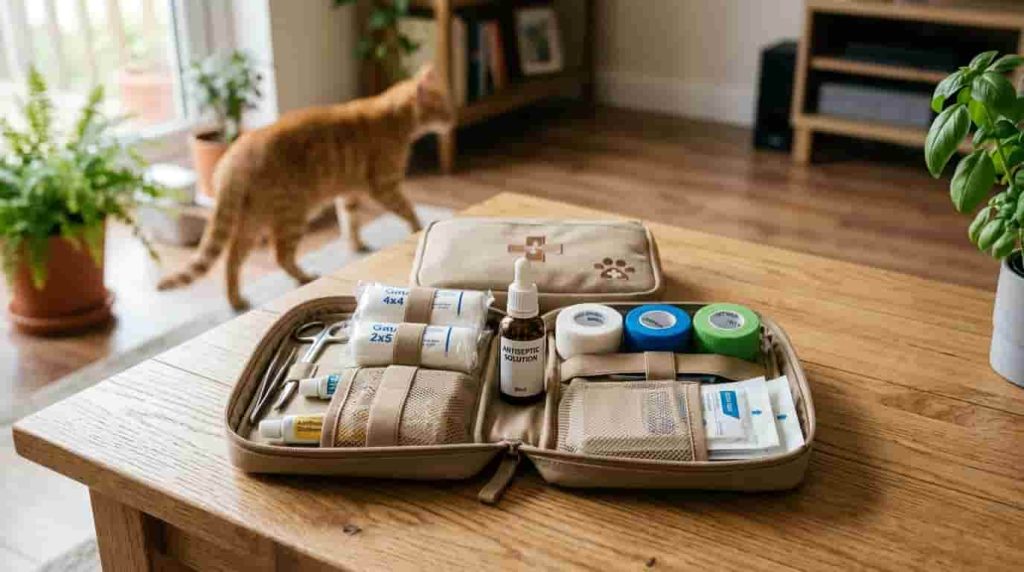
When you suspect Cat Heat Stroke, you must start cooling down a cat with heat stroke right away. Move your pet to the coolest area of the house immediately. If you have a battery-operated fan, place it where it blows directly on them. Therefore, you facilitate airflow to help lower their temperature.
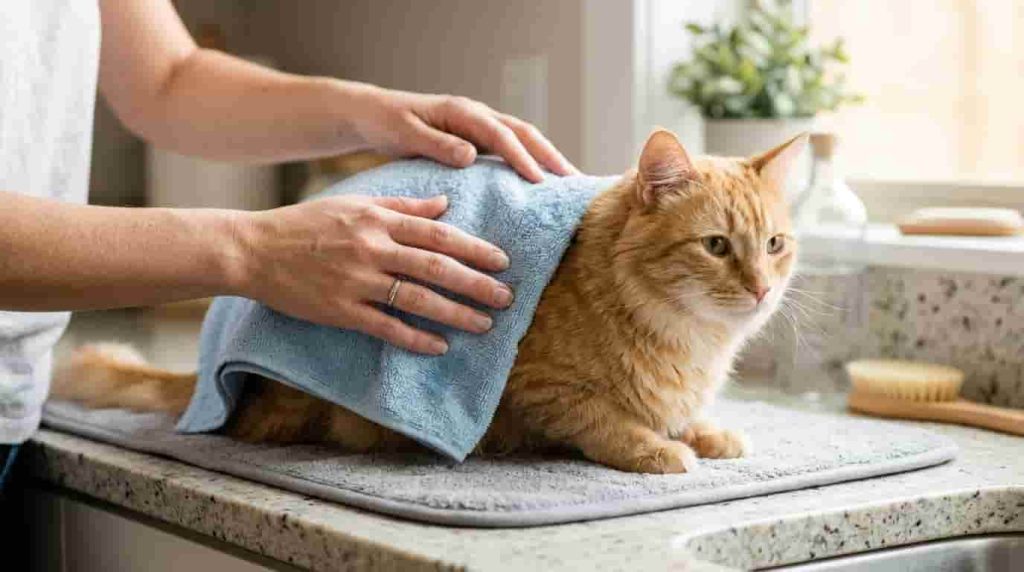
You place cool, wet towels on their paws and under their belly. Do not use ice-cold water, as this can cause shivering and trap heat. Instead, use lukewarm water to slowly bring their temperature down. Consistency is key when providing emergency care for your pet.
Professional Treatment for Cat Heat Stroke
Always call your veterinarian during a suspected Cat Heat Stroke emergency. Even if your cat seems to recover, internal damage might still exist. VCA Animal Hospitals explains that systemic shock can follow a heat crisis. A professional must assess their organ function to be sure.
You might have dealt with other accidents before, such as a Cat Snake Bites: Identifying venomous vs non venomous punctures. However, heat stroke impacts the whole body much faster than a localized bite. Time remains the most important factor in your success. Therefore, transport them to a clinic as soon as you stabilize them.
Prevention of Cat Heat Stroke
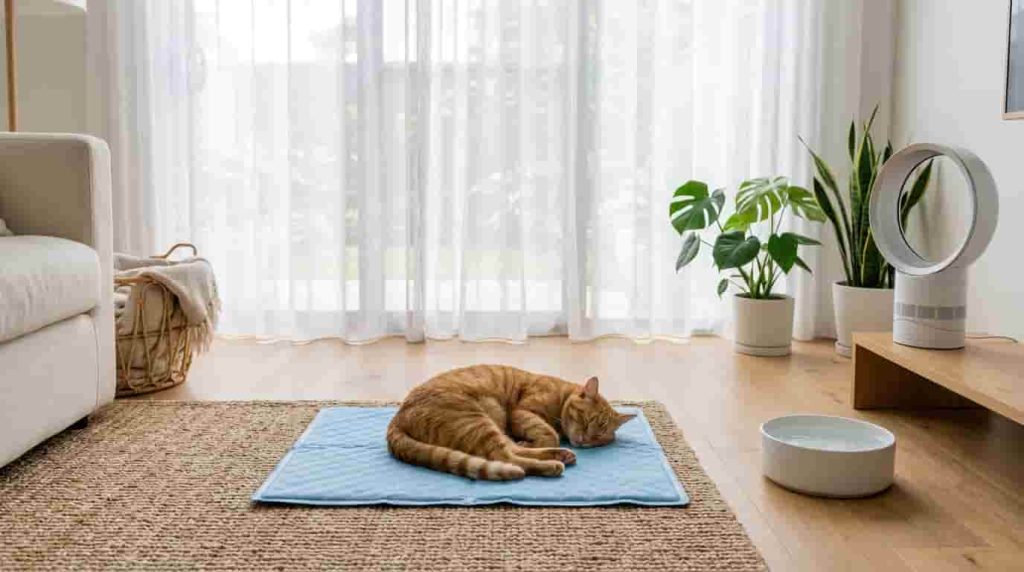
Prevention of cat heat stroke involves planning ahead for extreme weather. Always ensure your cat has access to multiple fresh water sources daily. You place these bowls in different rooms to encourage them to drink. Additionally, keep curtains closed during the peak heat of the day.
You avoid leaving your cat in a parked car for even one minute. Cars act like ovens and cause Cat Heat Stroke in just moments. Also, keep their play schedule limited to the cooler morning or evening hours. Taking these steps provides the best protection for your furry friend.
Monitoring Your Pet During Heat Stress in Cats
You stay vigilant when summer temperatures hit record highs this year. Watch for any signs of heat exhaustion, like hiding in dark, cool spots. Furthermore, observe if they refuse to eat or move around the house. If you see signs of heat stroke in cats, act immediately.
One owner, Sarah, noticed her cat, Luna, acting strange during a power outage. Luna laid flat and panted, so Sarah wiped her fur with cool water. Because Sarah acted fast, Luna recovered within an hour without needing a vet visit. You can save your pet by staying observant and ready.
Managing Other Common Pet Emergencies
You might face other issues while you navigate a hot day at home. For example, check for minor injuries if they climb near kitchen appliances. You might need to know about Cat Burn Treatment: What to do if a cat jumps on a hot stove. Safety around the house keeps them healthy year round.
Additionally, keep an eye out for insects if your cat enjoys the window. Read Cat Bee Sting: Managing swelling and checking for allergic shock. to prepare for potential stings. Knowing these treatments gives you confidence as a responsible pet owner. You handle emergencies with grace when you possess the right knowledge.
Recovery After Cat Heat Stroke
After your cat recovers from Cat Heat Stroke, monitor them for several days. They might feel weak or tired for a while after the event. Provide plenty of fluids to help them rehydrate naturally. Furthermore, keep their environment quiet and stress free.
You should consult your vet about any long term health impacts. Some cats suffer from lingering issues after severe overheating incidents. Your care makes a huge difference in their total recovery. Always keep them comfortable until they act like their normal selves again.
Final Thoughts on Cat Heat Stroke
Cat Heat Stroke is a scary experience that requires quick, decisive action. You now understand how to spot symptoms and provide the right cooling care. Remember that constant hydration and shade provide the best daily defense. Staying calm and acting fast saves lives when seconds count.
We want to hear how you keep your cat cool during hot spells! Do you have a favorite cooling tip to share with other owners? Please leave your thoughts, questions, or experiences in the comments below. Your story might just help someone else save their best friend!
Frequently Asked Questions
The first signs are often heavy panting and excessive grooming to cool down. You might also notice them becoming very restless or vocal.
You should avoid ice cubes as they can be too cold and trigger shivering. Use cool water instead to lower their body temperature slowly.
Recovery is marked by normal breathing, clear eyes, and a return to regular energy levels. Keep monitoring them for 24 to 48 hours.
Do not force your cat to drink, as this can cause them to choke or inhale water. Instead, encourage them by offering fresh, shallow bowls.
It is not always fatal, but it is a critical emergency that needs immediate care. Early detection and fast treatment increase the odds of survival.