
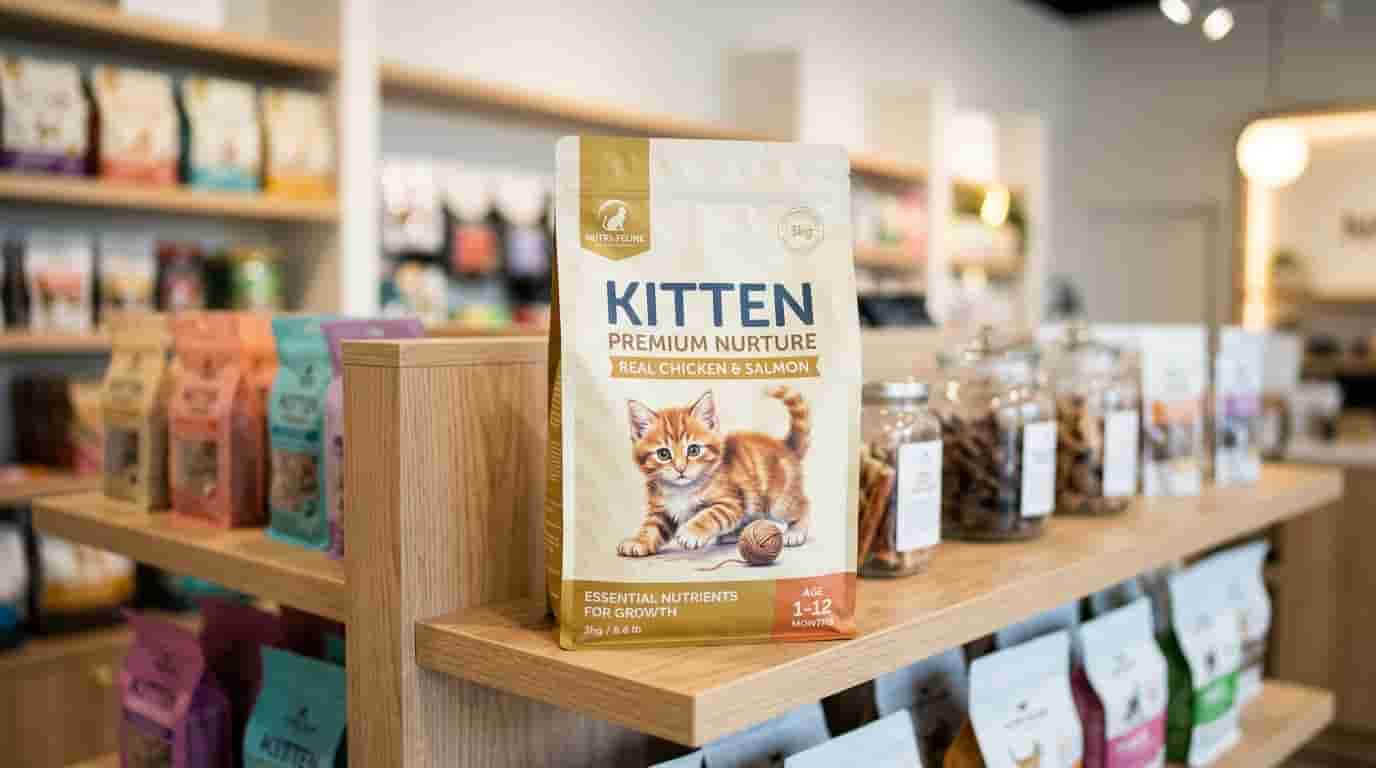
Cat Kitten Food: Why they need higher fat and protein.
Introduction:
Cat kitten food formulas provide essential fuel for tiny felines. Have you ever wondered why active baby cats burn energy so fast? Therefore, owners often marvel at endless kitten sprints. However, regular adult meals fail to support rapid physical growth. Standard bowls lack concentrated calories. Consequently, young pets need specialized diets packed with dense nutrients.
Selecting the right cat kitten food shapes lifelong wellness. Many new owners struggle to pick proper products from crowded store shelves. Therefore, understanding cat kitten food requirements changes everything. Let us examine why extra fat and protein matter.
Why Cat Kitten Food Requires Extra Energy

Cat kitten food demands higher nutrient density than adult formulas. Tiny bodies build bones, muscles, and organs simultaneously. Therefore, growing cats burn calories at an incredible rate. Dr. Joseph Wakshlag from the Cornell University College of Veterinary Medicine notes that growing felines need specialized energy profiles to support rapid development.
Feeding adult food stunts normal growth. Therefore, choosing the best cat food for kittens prevents future health complications. You must provide calorie-dense meals. Next, you will discover how protein builds strong muscles.
Building Strong Muscles With Protein

Protein acts as the fundamental building block for tissue growth. Young felines require high protein cat kitten food options to develop lean muscle mass. Furthermore, active play tears down muscle fibers rapidly.
Healthy food for cats repairs these tissues efficiently. Therefore, top-rated kitten food options list meat as the primary ingredient. Always check labels before purchasing bags.
The Crucial Role of Dietary Fat

Fat supplies concentrated energy for boundless kitten play. Growing bodies burn fat efficiently during daily acrobatics. Therefore, premium cat nutrition relies on healthy animal fats.
Kittens cannot store massive amounts of food in tiny stomachs. Consequently, high fat content delivers maximum calories in small portions. Organic cat food options often provide clean fat sources.
Navigating Nutrition Choices and Life Stages

Selecting natural ingredients for cats keeps digestion running smoothly. Young digestive tracts process wholesome proteins better than heavy fillers. Therefore, smart owners avoid cheap starches completely.
However, dietary needs shift as pets mature into adulthood. You can read Old cat Diet: Changing nutrients for cats over ten years to learn how aging bodies process proteins differently. Senior pets require adjusted nutrient ratios to protect kidney health.
Exploring Carbohydrate Impacts

Some owners wonder about grain content in early diets. Removing heavy starches mimics natural hunting patterns closely. You can read Cat Grain Free: The pros and cons of a carb free diet to explore how eliminating carbohydrates affects daily energy.
Furthermore, some owners prefer raw feeding methods for maximum biological value. You can read Cat Raw Feeding: A guide to the “biologically active” diet to discover alternative meal preparation strategies. Fresh ingredients eliminate processed binders entirely.
Finding Reliable Products on Store Shelves
Shopping requires careful label reading. Top cat kitten food brands list real meat above grain fillers. Therefore, finding affordable cat kitten food without cheap byproducts protects your pet.
Popular cat kitten food choices include both wet and dry varieties. Wet formulas boost daily hydration levels significantly. Furthermore, dry kibble helps clean tiny teeth during chewing.
Evaluating Wet Versus Dry Formulas
Wet kitten food provides essential moisture for developing kidneys. Many kittens ignore water bowls during active play. Therefore, canned meals prevent hidden dehydration issues.
Dry cat food for kittens offers convenient free-feeding options. However, combining both textures delivers optimal nutrition. Balance keeps young pets thriving.
Summary of Cat Kitten Food Requirements
Cat kitten food supports the most crucial developmental stage of a feline’s life. We explored protein muscle growth, healthy fat energy, life stage transitions, and wet food hydration. Each factor ensures your kitten grows strong.
Choosing vet-recommended cat kitten food takes careful research and veterinary guidance. Always prioritize high-quality animal proteins over plant fillers. Balanced meals build lifelong health.
What is your kitten’s favorite meal? Share your experience in the comments below!
Frequently Asked Questions
Why do kittens need extra protein?
Kittens build muscle, bone, and tissue rapidly every single day. High protein levels support this massive physical growth and high daily energy.
When should I switch to adult food?
Most cats transition to adult food around twelve months of age. Large breeds may require kitten formulas for up to eighteen months.
Is wet food better than dry food?
Wet food provides essential moisture for urinary tract health. Combining wet and dry food offers the best nutritional balance for growing pets.
Can adult cats eat kitten food?
Adult cats can eat kitten food occasionally, but the high calorie count causes weight gain. Long-term feeding leads to unhealthy obesity in older cats.
How often should I feed my kitten?
Young kittens need three to four small meals daily because of tiny stomachs. Older kittens transition smoothly to two scheduled meals per day.